Toxostoma redivivum
California Thrasher
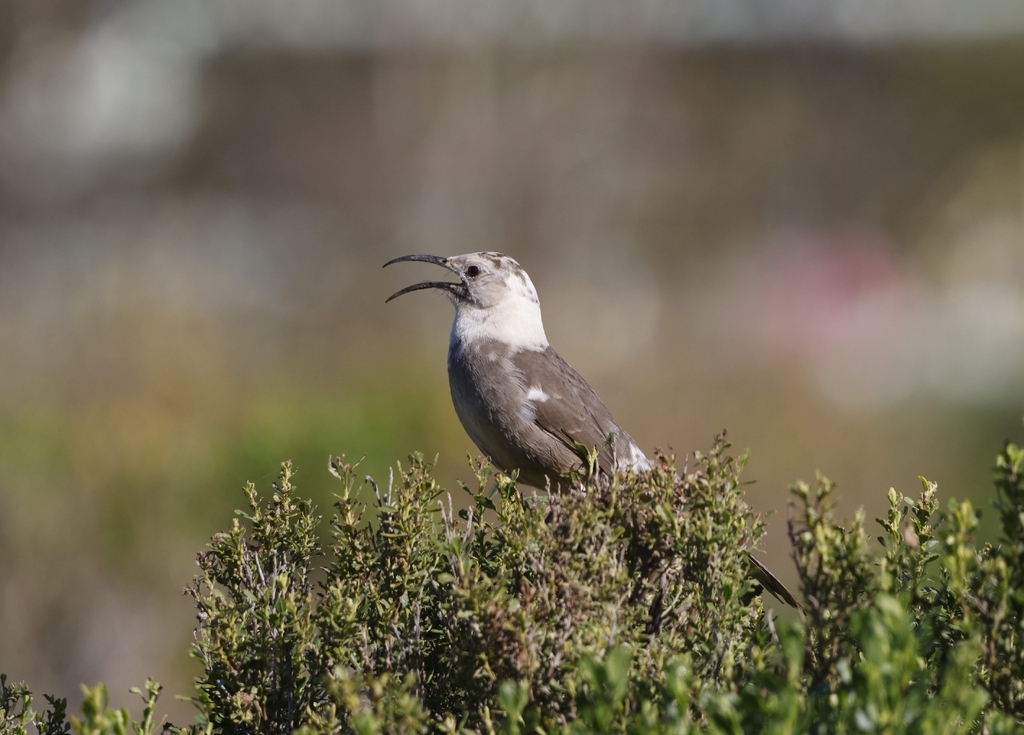
(c) Zack Abbey, some rights reserved (CC BY) · licence
Family: Mimidae · Class: Aves · Order: Passeriformes
Toxostoma redivivum (California Thrasher) is a California animal in the Mimidae family.
The California Thrasher is a large songbird endemic to California and Baja California, measuring 28 to 32 centimeters (11 to 12.6 inches) in length with a wingspan of approximately 37 centimeters (14.6 inches). Adults weigh between 65 and 85 grams (2.3 to 3.0 ounces). The species displays uniform grayish-brown plumage above with a slightly paler, buff-colored breast and belly. The most distinctive feature is its long, decurved bill, measuring 32 to 44 millimeters, which is black above and pale below. The tail is long and graduated, comprising nearly half the bird's total length. Males and females appear similar, though males average slightly larger. The California Thrasher inhabits chaparral and scrubland habitats throughout much of California, from sea level to elevations of 1,525 meters (5,000 feet). The species occurs from Sonoma and Solano counties south through the Coast Ranges and Sierra Nevada foothills to Baja California. Dense chaparral dominated by manzanita, ceanothus, scrub oak, and chamise provides optimal habitat. The species also utilizes riparian woodlands, oak woodlands, and suburban areas with dense native vegetation. California Thrashers are primarily terrestrial, spending most time foraging on the ground beneath dense shrubs. They use their curved bills to probe leaf litter and soft soil for invertebrates, including beetles, ants, moths, caterpillars, and spiders. The diet also includes small fruits and seeds, particularly from elderberry, poison oak, and various chaparral shrubs. The species is non-migratory but may move to lower elevations during winter. Breeding occurs from February through July, with peak activity in March through May. Males establish territories through song, delivered from prominent perches within dense cover. The nest is a bulky cup constructed of twigs, leaves, and bark strips, placed 0.6 to 2.4 meters (2 to 8 feet) above ground in dense shrubs. Females lay 2 to 4 pale blue eggs with brown speckles. Incubation lasts 12 to 14 days, performed primarily by the female. Both parents feed nestlings, which fledge after 12 to 14 days. Pairs typically raise one to two broods per season. The California Thrasher is not federally or state listed and maintains stable populations throughout most of its range. According to the North American Breeding Bird Survey, populations have remained relatively stable from 1966 to 2019, with some regional variations. Primary threats include habitat loss from urban development, particularly in coastal areas, and habitat fragmentation from fire suppression that reduces chaparral regeneration. Climate change may affect the species through altered precipitation patterns that influence chaparral ecosystems. The species benefits from conservation of large blocks of chaparral habitat and prescribed burning programs that maintain habitat diversity.
Classification
Class: Aves · Order: Passeriformes · Family: Mimidae
Frequently asked questions
How is Toxostoma redivivum classified?
Toxostoma redivivum belongs to class Aves, order Passeriformes, family Mimidae.
What family does Toxostoma redivivum belong to?
Toxostoma redivivum is in the Mimidae family.
What is Toxostoma redivivum?
The California Thrasher is a large songbird endemic to California and Baja California, measuring 28 to 32 centimeters (11 to 12.6 inches) in length with a wingspan of approximately 37 centimeters (14.6 inches).
Is Toxostoma redivivum found in California?
Yes. Toxostoma redivivum is recorded in California in The California Species Project's catalogue.
Related species
Other California species in the same genus, family, or bioregion.
Data from The California Species Project — 14,000+ California species with verified data from CNPS, CDFW, USFWS, and more.