Trachemys scripta
Pond Slider
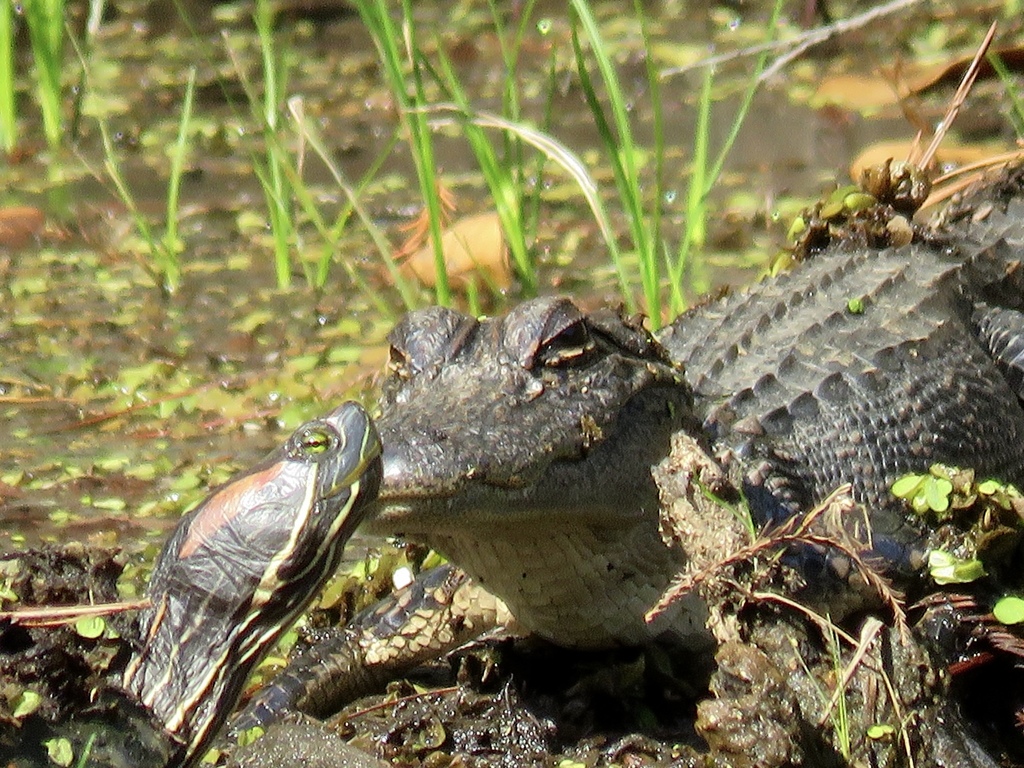
(c) Laura Clark, some rights reserved (CC BY) · licence
Family: Emydidae · Class: Reptilia · Order: Testudines
Trachemys scripta (Pond Slider) is a California animal in the Emydidae family.
The pond slider is a medium-sized freshwater turtle native to the Mississippi River valley and southeastern United States. Adult pond sliders range from approximately 127 to 279 mm (5 to 11 inches) in carapace length, with females typically larger than males. The carapace varies from olive to brown with yellow striping, while the plastron displays yellow coloration with dark markings along the seam borders. The species is distinguished by prominent red, orange, or yellow patches behind each eye, though some populations lack these markings entirely. Males possess elongated front claws, thicker tails, and are generally smaller than females. The marginal scutes of the carapace are serrated or slightly forked in appearance, contrasting with the smooth-edged shell of California's native western pond turtle. Historically restricted to the Mississippi Valley from Illinois to the Gulf of Mexico, extending east to West Virginia and west to eastern New Mexico, pond sliders have been widely introduced beyond their native range through the pet trade. In California, established populations occur in numerous counties including Butte, Contra Costa, Kern, Lake, Los Angeles, Marin, Riverside, Sacramento, San Diego, San Luis Obispo, San Francisco, Santa Barbara, Santa Clara, Shasta, Tulare, Ventura, Yuba, and Yolo counties, according to the California Department of Fish and Wildlife. The species is often found in close proximity to urban areas due to higher incidents of pet releases. Pond sliders occupy diverse freshwater habitats including streams, rivers, ponds, lakes, swamps, and marshes. They also utilize artificial water bodies such as irrigation ditches, canals, and urban park ponds. The species prefers slow-moving waters with soft substrates, abundant aquatic vegetation, and accessible basking sites. They require both aquatic and terrestrial habitats, using land areas for nesting, thermoregulation, and overwintering. Pond sliders are omnivorous, with juveniles consuming primarily invertebrates, small fish, and aquatic vegetation, while adults shift toward a more herbivorous diet. They are active during warmer months and may brumate during winter in colder climates. Mating occurs in spring, with females nesting from May through July. Females deposit 2 to 23 eggs in terrestrial nests excavated in sandy or loose soil, often with southern exposure. Incubation lasts 59 to 112 days, with temperature determining sex ratios. In captivity, pond sliders can live up to 40 years, while wild individuals typically survive 20 years. Pond sliders are not federally listed but are considered an invasive species in California and many other regions outside their native range. Their introduction threatens native turtle populations through competition for resources, habitat modification, and potential disease transmission. The species' adaptability, long lifespan, and continued release from the pet trade contribute to establishment success in non-native environments. Management efforts focus on preventing further introductions and controlling established populations to protect native ecosystems.
Classification
Class: Reptilia · Order: Testudines · Family: Emydidae
Frequently asked questions
How is Trachemys scripta classified?
Trachemys scripta belongs to class Reptilia, order Testudines, family Emydidae.
What family does Trachemys scripta belong to?
Trachemys scripta is in the Emydidae family.
What is Trachemys scripta?
The pond slider is a medium-sized freshwater turtle native to the Mississippi River valley and southeastern United States.
Is Trachemys scripta found in California?
Yes. Trachemys scripta is recorded in California in The California Species Project's catalogue.
Related species
Other California species in the same genus, family, or bioregion.
Data from The California Species Project — 14,000+ California species with verified data from CNPS, CDFW, USFWS, and more.