Trachusa gummifera
San Francisco Bay Area Leaf- Cutter Bee
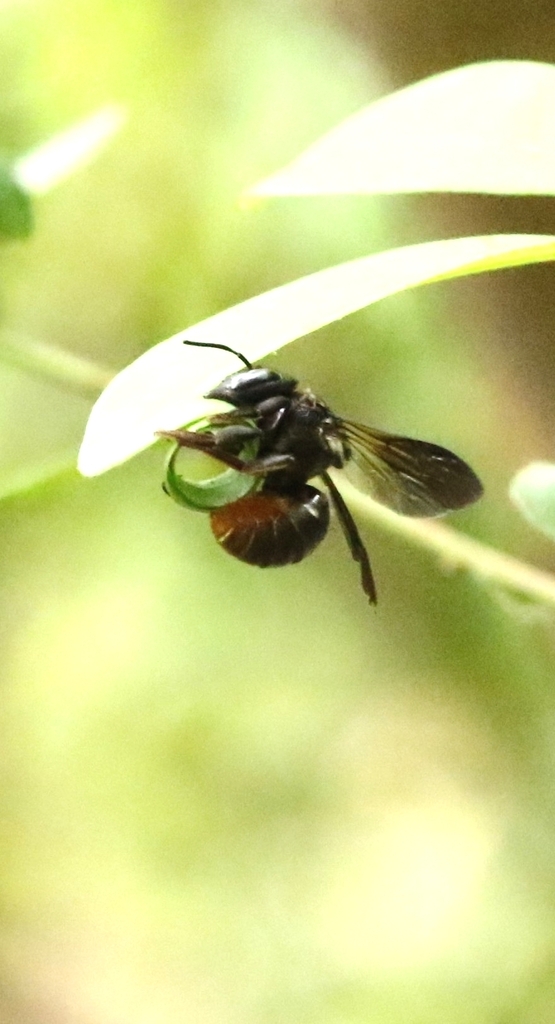
no rights reserved · CC0
Family: Megachilidae · Class: Insecta · Order: Hymenoptera
Conservation status: G1 S1
Trachusa gummifera (San Francisco Bay Area Leaf- Cutter Bee) is a California animal in the Megachilidae family.
The San Francisco Bay Area leaf-cutter bee (Trachusa gummifera) is a critically rare native solitary bee endemic to the San Francisco Bay Area. This species belongs to the family Megachilidae, which includes the leaf-cutter and mason bees known for their distinctive nesting behaviors using plant materials and other substrates. Like other members of the genus Trachusa, this species likely exhibits the characteristic leaf-cutting behavior of collecting circular pieces of leaves to construct brood cells within their nests. Female leaf-cutter bees use their mandibles to cut precise sections from leaves, which they then carry back to their nesting sites to line individual brood chambers. The specific physical characteristics of T. gummifera have not been well documented in available literature. This species has an extremely restricted range, occurring only in areas west of San Francisco Bay (BugGuide). The precise boundaries of its current distribution remain poorly defined, but historical records suggest it was found in coastal areas and possibly inland locations within the greater San Francisco Bay region. The species' limited range contributes significantly to its conservation concern. Specific habitat requirements for T. gummifera have not been thoroughly documented. As a leaf-cutter bee, the species likely requires access to suitable nesting sites such as soft wood, plant stems, or soil banks where females can excavate tunnels. The availability of appropriate host plants for leaf material collection would be essential, though specific plant preferences for this species are not well established in current literature. Coastal scrub, grasslands, and urban edge habitats in the San Francisco Bay Area may provide suitable conditions. The behavioral ecology and life cycle of this species remain largely unstudied. Like other leaf-cutter bees, T. gummifera is presumed to be a solitary species where individual females construct and provision their own nests. Females likely collect pollen and nectar from local flowering plants to provision brood cells, though specific foraging preferences and flight periods have not been documented. The species probably has one generation per year, typical of temperate leaf-cutter bee species. Trachusa gummifera is ranked globally as G1, indicating it is critically imperiled with a high risk of extinction due to extreme rarity (NatureServe). The species also holds an S1 ranking in California, reflecting its critical status within the state (Xerces Society 2019). The combination of extremely limited range and apparent rarity places this species among California's most endangered native bees. Primary threats likely include habitat loss from urban development, changes in plant communities that affect nesting sites and food resources, and the small population size that makes the species vulnerable to stochastic events. Scientific documentation for this species remains extremely limited despite its critical conservation status. Enhanced research into its distribution, habitat requirements, and ecology is urgently needed to develop effective conservation strategies. Current knowledge gaps include basic biological information such as host plant preferences, nesting requirements, flight periods, and population estimates.
Classification
Class: Insecta · Order: Hymenoptera · Family: Megachilidae
Conservation status
G1 S1
Frequently asked questions
How is Trachusa gummifera classified?
Trachusa gummifera belongs to class Insecta, order Hymenoptera, family Megachilidae.
What family does Trachusa gummifera belong to?
Trachusa gummifera is in the Megachilidae family.
Is Trachusa gummifera protected or of conservation concern?
Trachusa gummifera carries the following status: G1 S1.
What is Trachusa gummifera?
The San Francisco Bay Area leaf-cutter bee (Trachusa gummifera) is a critically rare native solitary bee endemic to the San Francisco Bay Area.
Is Trachusa gummifera found in California?
Yes. Trachusa gummifera is recorded in California in The California Species Project's catalogue.
Related species
Other California species in the same genus, family, or bioregion.
Data from The California Species Project — 14,000+ California species with verified data from CNPS, CDFW, USFWS, and more.