Traskorchestia traskiana
Pacific beach hopper
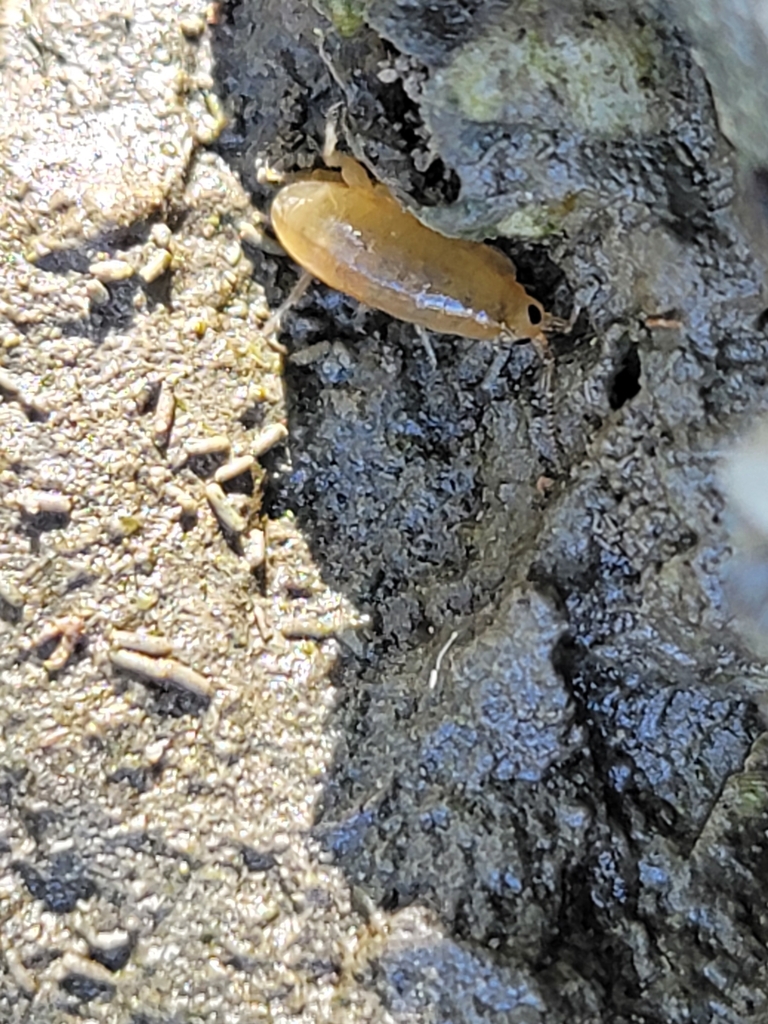
no rights reserved · CC0
Family: Talitridae · Class: Malacostraca · Order: Amphipoda
Traskorchestia traskiana (Pacific beach hopper) is a California animal in the Talitridae family.
The Pacific beach hopper is a small terrestrial amphipod crustacean belonging to the family Talitridae. Adults typically measure 10 to 20 mm (0.4 to 0.8 inches) in length, with a laterally compressed body characteristic of amphipods. The species exhibits sexual dimorphism, with males generally larger than females and possessing enlarged second antennae used in courtship displays. The body coloration ranges from pale gray to brown, providing camouflage against sandy substrates and organic debris. Traskorchestia traskiana occurs along the Pacific coast from British Columbia, Canada, south to Baja California, Mexico. In California, the species is found along sandy beaches from the Oregon border south to the Mexican border, with documented populations on mainland beaches and offshore islands including the Channel Islands. The species shows a patchy distribution pattern, being more abundant in areas with suitable wrack accumulation zones. Pacific beach hoppers inhabit the supralittoral zone of sandy beaches, specifically the area above the high tide line where organic debris accumulates. They require beaches with adequate wrack deposits consisting of kelp, eelgrass, and other marine vegetation that washes ashore. The species prefers beaches with gentle slopes and fine to medium sand substrates. Optimal habitat includes areas with some moisture retention but not permanent standing water, typically found beneath accumulated seaweed and driftwood. These amphipods are primarily nocturnal, emerging at night to feed on decomposing organic matter within beach wrack. Their diet consists of decaying kelp, eelgrass, and other marine macroalgae, along with bacteria and fungi associated with decomposing plant material. Pacific beach hoppers play a crucial role in beach ecosystem nutrient cycling, breaking down marine-derived organic matter and transferring nutrients from marine to terrestrial environments. They serve as important prey for shorebirds, particularly during chick-rearing periods when protein-rich invertebrates are essential for juvenile development. Reproduction occurs primarily during spring and summer months, with females carrying developing embryos in ventral brood pouches. The species exhibits strong burrowing behavior, creating shallow depressions in sand beneath wrack for protection from desiccation and predation. Currently, Traskorchestia traskiana does not hold federal or state conservation status listings. However, the species faces increasing pressure from coastal development, beach grooming practices, and climate change impacts. Beach cleaning activities that remove wrack deposits eliminate essential habitat, while sea level rise and increased storm intensity may alter beach morphology and wrack deposition patterns. Coastal armoring and development reduce natural sediment transport processes necessary for maintaining suitable beach habitats. The species serves as an indicator of beach ecosystem health, as populations decline when natural wrack accumulation is disrupted. Conservation efforts focus on promoting natural beach processes and reducing mechanical beach cleaning in critical habitat areas. Some coastal restoration projects now include wrack inoculation with beach hoppers to enhance food webs for threatened shorebird species.
Classification
Class: Malacostraca · Order: Amphipoda · Family: Talitridae
Frequently asked questions
How is Traskorchestia traskiana classified?
Traskorchestia traskiana belongs to class Malacostraca, order Amphipoda, family Talitridae.
What family does Traskorchestia traskiana belong to?
Traskorchestia traskiana is in the Talitridae family.
What is Traskorchestia traskiana?
The Pacific beach hopper is a small terrestrial amphipod crustacean belonging to the family Talitridae.
Is Traskorchestia traskiana found in California?
Yes. Traskorchestia traskiana is recorded in California in The California Species Project's catalogue.
Related species
Other California species in the same genus, family, or bioregion.
Data from The California Species Project — 14,000+ California species with verified data from CNPS, CDFW, USFWS, and more.