Trialeurodes vaporariorum
Greenhouse Whitefly
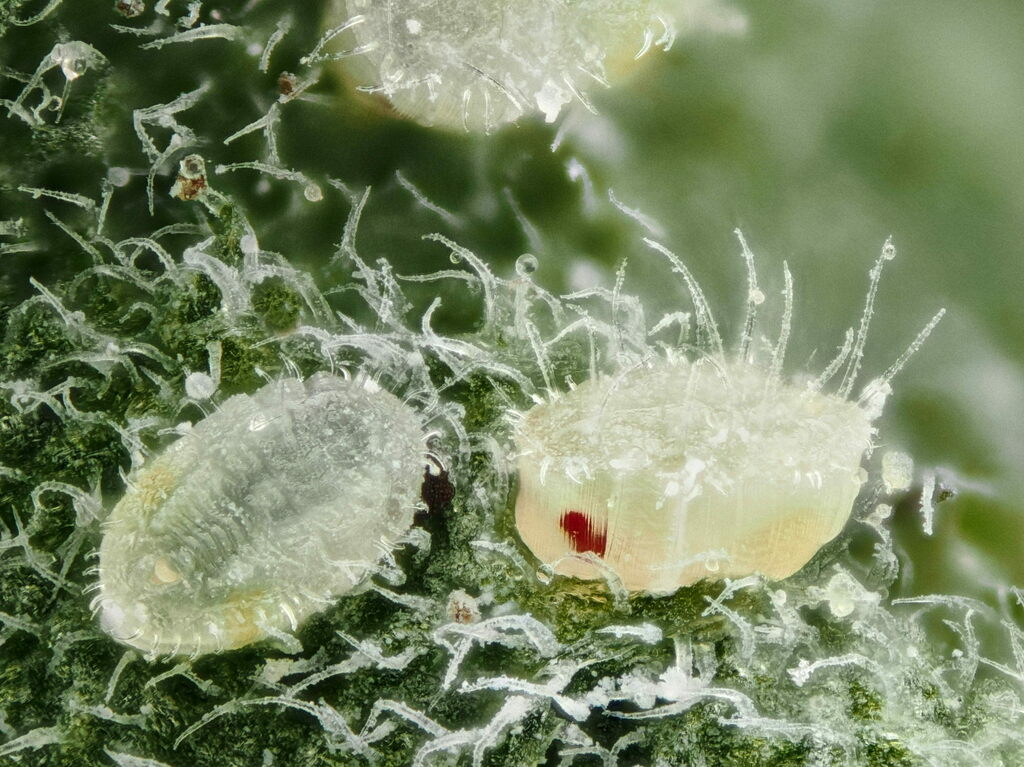
(c) Gilles San Martin, some rights reserved (CC BY-SA) · licence
Family: Aleyrodidae · Class: Insecta · Order: Hemiptera
Trialeurodes vaporariorum (Greenhouse Whitefly) is a California animal in the Aleyrodidae family.
The greenhouse whitefly is a small, soft-bodied insect belonging to the family Aleyrodidae. Adults measure approximately 1.5 to 2.0 mm (0.06 to 0.08 inches) in length and are characterized by their pale yellow body and four white, waxy wings. The wings are held horizontally over the body when at rest, giving the insect a triangular appearance. Both sexes are similar in size, though females are slightly larger. Nymphs are oval, flattened, and scale-like, initially mobile but becoming sessile after the first molt. Originally native to tropical and subtropical regions, the greenhouse whitefly has become a cosmopolitan pest species found throughout North America, including California. The species occurs in all suitable habitats across the state, from coastal areas to inland valleys. It has also established populations in Europe, Asia, and other temperate regions worldwide through human transport and trade. This species thrives in warm, humid environments and is particularly associated with protected cultivation systems such as greenhouses, conservatories, and indoor growing facilities. Outdoors, greenhouse whiteflies colonize a wide range of host plants in gardens, agricultural fields, and ornamental landscapes. They prefer areas with consistent moisture and protection from extreme weather conditions. The species cannot survive prolonged exposure to freezing temperatures, limiting its year-round outdoor establishment in colder climates. Greenhouse whiteflies are highly polyphagous, feeding on over 250 plant species across numerous families. Common hosts include tomatoes, cucumbers, peppers, eggplants, beans, ornamental plants such as poinsettias and begonias, and various weeds. Adults and nymphs feed by inserting their stylet-like mouthparts into plant tissues to extract phloem sap. Heavy infestations can cause yellowing, wilting, and stunting of host plants. The species also produces honeydew, a sticky secretion that promotes sooty mold growth and reduces photosynthesis. Reproduction is rapid, with females depositing 100 to 300 eggs on leaf undersides in circular patterns. Development from egg to adult takes 18 to 36 days depending on temperature, with optimal development occurring at 21 to 30°C (70 to 86°F). As a non-native species, the greenhouse whitefly is not protected under conservation legislation and is instead managed as an agricultural and horticultural pest. The species has developed resistance to various insecticide classes, including neonicotinoids (Gorman et al. 2007). Integrated pest management approaches emphasize biological control using natural enemies such as the parasitoid wasp Encarsia formosa, predatory beetles, and minute pirate bugs (Orius species). Cultural control methods include removal of infested plant material, use of reflective mulches, and exclusion using fine mesh screens. The species' widespread distribution and adaptability to diverse environments ensure its continued presence as a significant pest in both commercial and residential settings.
Classification
Class: Insecta · Order: Hemiptera · Family: Aleyrodidae
Frequently asked questions
How is Trialeurodes vaporariorum classified?
Trialeurodes vaporariorum belongs to class Insecta, order Hemiptera, family Aleyrodidae.
What family does Trialeurodes vaporariorum belong to?
Trialeurodes vaporariorum is in the Aleyrodidae family.
What is Trialeurodes vaporariorum?
The greenhouse whitefly is a small, soft-bodied insect belonging to the family Aleyrodidae.
Is Trialeurodes vaporariorum found in California?
Yes. Trialeurodes vaporariorum is recorded in California in The California Species Project's catalogue.
Related species
Other California species in the same genus, family, or bioregion.
Data from The California Species Project — 14,000+ California species with verified data from CNPS, CDFW, USFWS, and more.