Trichobaris compacta
Datura Weevil
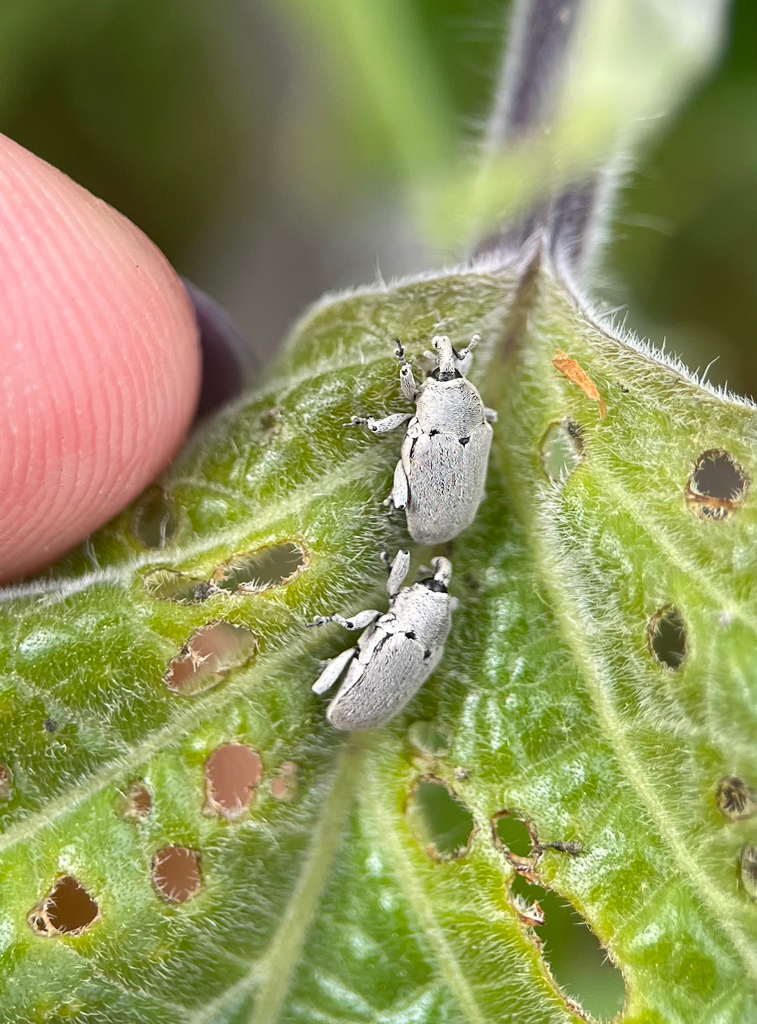
(c) Rachel Allingham, some rights reserved (CC BY) · licence
Family: Curculionidae · Class: Insecta · Order: Coleoptera
Trichobaris compacta (Datura Weevil) is a California animal in the Curculionidae family.
The Datura weevil is a small beetle in the family Curculionidae, subfamily Baridinae. First described by Casey in 1892, this species is also known as the western jimsonweed weevil or angel trumpet weevil (BugGuide 2025). As a member of the snout beetle family, it possesses the characteristic elongated rostrum typical of weevils, though specific morphological measurements have not been well documented in the scientific literature. Trichobaris compacta occurs throughout the southwestern United States, ranging from California east to western Texas and north to southern Utah, extending south into Mexico (BugGuide 2025). In California, the species has been documented in coastal and inland areas where its host plants are present. The weevil's distribution closely follows that of its primary host plants in the genus Datura. This species is closely associated with plants in the nightshade family (Solanaceae), particularly species of Datura including jimsonweed (Datura stramonium) and sacred datura (Datura wrightii). In southern California, Datura wrightii appears to be the primary host, as confirmed by field observations in San Diego County (BugGuide 2012). These host plants typically grow in disturbed soils, vacant lots, agricultural margins, and natural desert washes, indicating the weevil's adaptation to both natural and human-modified environments. As a specialized herbivore, the Datura weevil feeds on various parts of its host plants throughout its life cycle. Adult weevils feed on foliage and may also consume flowers and developing seed pods. Larvae likely develop within plant tissues, though specific details about larval feeding sites and developmental timing remain poorly documented. The species' close association with toxic Datura plants suggests it has evolved physiological adaptations to tolerate the potent alkaloids these plants produce for defense against herbivores. Like many weevils, adults are likely capable of flight and may disperse to locate new host plants or suitable oviposition sites. The conservation status of Trichobaris compacta has not been formally evaluated by state or federal agencies. The species does not appear on federal or California state lists of threatened or endangered species. Its widespread distribution across the southwestern United States and close association with weedy host plants that thrive in disturbed habitats suggest stable populations. However, comprehensive population studies and trend analyses have not been conducted. The weevil's dependence on Datura species means its conservation status is likely linked to the availability and distribution of these host plants. Detailed ecological studies of this species remain limited. The information presented here synthesizes available data from taxonomic databases and community observations. Research gaps include specific habitat requirements, life cycle timing, population dynamics, and potential ecological interactions beyond the host plant relationship. Additional field studies and taxonomic work would enhance understanding of this specialized herbivore's role in southwestern ecosystems.
Classification
Class: Insecta · Order: Coleoptera · Family: Curculionidae
Frequently asked questions
How is Trichobaris compacta classified?
Trichobaris compacta belongs to class Insecta, order Coleoptera, family Curculionidae.
What family does Trichobaris compacta belong to?
Trichobaris compacta is in the Curculionidae family.
What is Trichobaris compacta?
The Datura weevil is a small beetle in the family Curculionidae, subfamily Baridinae.
Is Trichobaris compacta found in California?
Yes. Trichobaris compacta is recorded in California in The California Species Project's catalogue.
Related species
Other California species in the same genus, family, or bioregion.
Data from The California Species Project — 14,000+ California species with verified data from CNPS, CDFW, USFWS, and more.