Trichocnemis spiculatus
Spined Woodborer
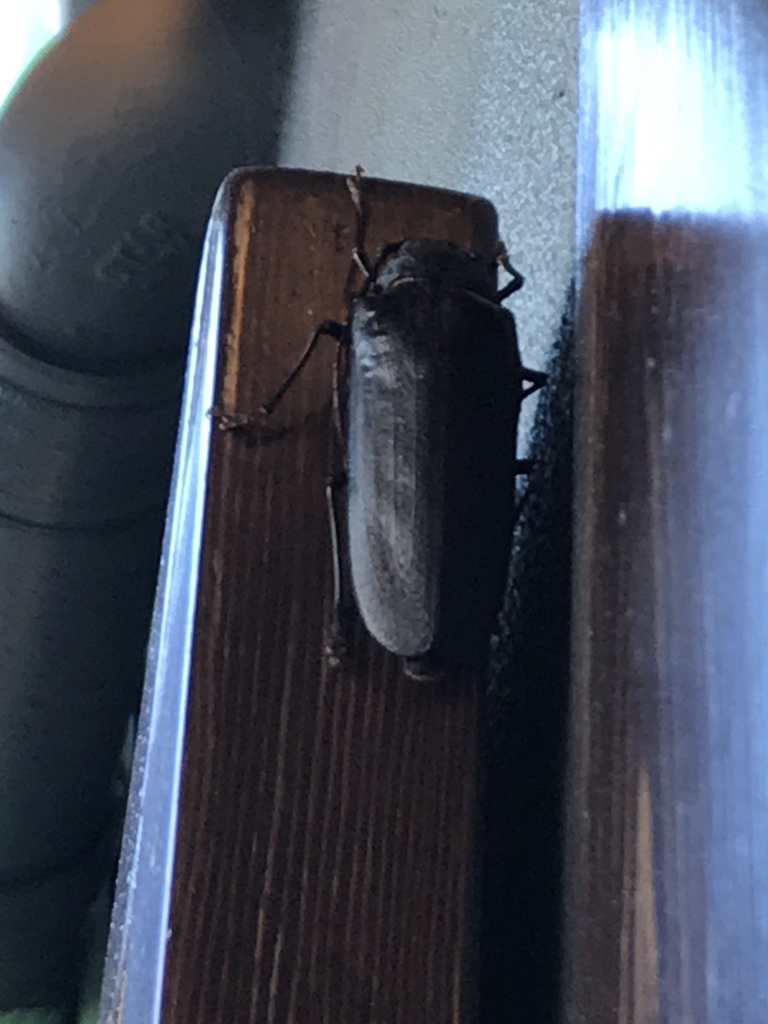
no rights reserved · CC0
Family: Cerambycidae · Class: Insecta · Order: Coleoptera
Trichocnemis spiculatus (Spined Woodborer) is a California animal in the Cerambycidae family.
The Spined Woodborer is a large longhorn beetle in the family Cerambycidae, subfamily Prioninae. Adults are among the largest beetles in North America, with specimens reaching up to 3 inches (76 mm) in length (BugGuide). The robust body is dark brown to black with a somewhat flattened appearance typical of the subfamily. The species exhibits sexual dimorphism, with females generally larger than males. The mandibles are prominent and well-developed, particularly in males, and the antennae are relatively short compared to other longhorn beetles. Trichocnemis spiculatus occurs throughout western North America, with documented populations from British Columbia south through California, Arizona, and New Mexico. The species is also known from other western states including Oregon, Washington, Idaho, Montana, Colorado, and Utah. In California, the beetle has been recorded from the Sierra Nevada and other mountainous regions where suitable coniferous host trees occur. This species inhabits coniferous forests, particularly those dominated by pine species. Adults are most commonly found in ponderosa pine woodlands at elevations ranging from approximately 4,000 to 9,000 feet. The beetle shows a strong association with pine forests, including areas with Douglas fir, and is typically found where dead, dying, or stressed conifers are present. Adults are nocturnal and are often attracted to lights, with peak activity occurring during summer months. Larvae develop as wood borers in the trunks and large branches of various coniferous trees, primarily pines. The larval stage can extend over multiple years, during which the grubs create extensive galleries in the wood. Adults emerge through characteristic round exit holes in the bark. The species plays an ecological role as a decomposer, helping to break down dead and dying coniferous material. Adults are active primarily from June through August, with flight activity typically occurring in the evening hours. Trichocnemis spiculatus is not currently listed under state or federal endangered species legislation. The species appears to maintain stable populations throughout its range, though like many forest-dependent insects, it may be affected by forest management practices, wildfire suppression, and climate change impacts on coniferous ecosystems. The beetle's dependence on dead and dying conifers means that forest health management practices that remove potential breeding material could impact local populations. However, the species' wide distribution and apparent adaptability to various coniferous hosts suggest it is not currently at conservation risk. The species was originally described by John Lawrence LeConte in 1851 and was formerly classified in the genus Ergates. Modern taxonomic treatments recognize subspecies variation across the range, including T. s. neomexicanus from the southwestern United States. The beetle's role as a wood decomposer makes it an important component of western coniferous forest ecosystems.
Classification
Class: Insecta · Order: Coleoptera · Family: Cerambycidae
Frequently asked questions
How is Trichocnemis spiculatus classified?
Trichocnemis spiculatus belongs to class Insecta, order Coleoptera, family Cerambycidae.
What family does Trichocnemis spiculatus belong to?
Trichocnemis spiculatus is in the Cerambycidae family.
What is Trichocnemis spiculatus?
The Spined Woodborer is a large longhorn beetle in the family Cerambycidae, subfamily Prioninae.
Is Trichocnemis spiculatus found in California?
Yes. Trichocnemis spiculatus is recorded in California in The California Species Project's catalogue.
Related species
Other California species in the same genus, family, or bioregion.
Data from The California Species Project — 14,000+ California species with verified data from CNPS, CDFW, USFWS, and more.