Trichoplusia ni
Cabbage Looper Moth
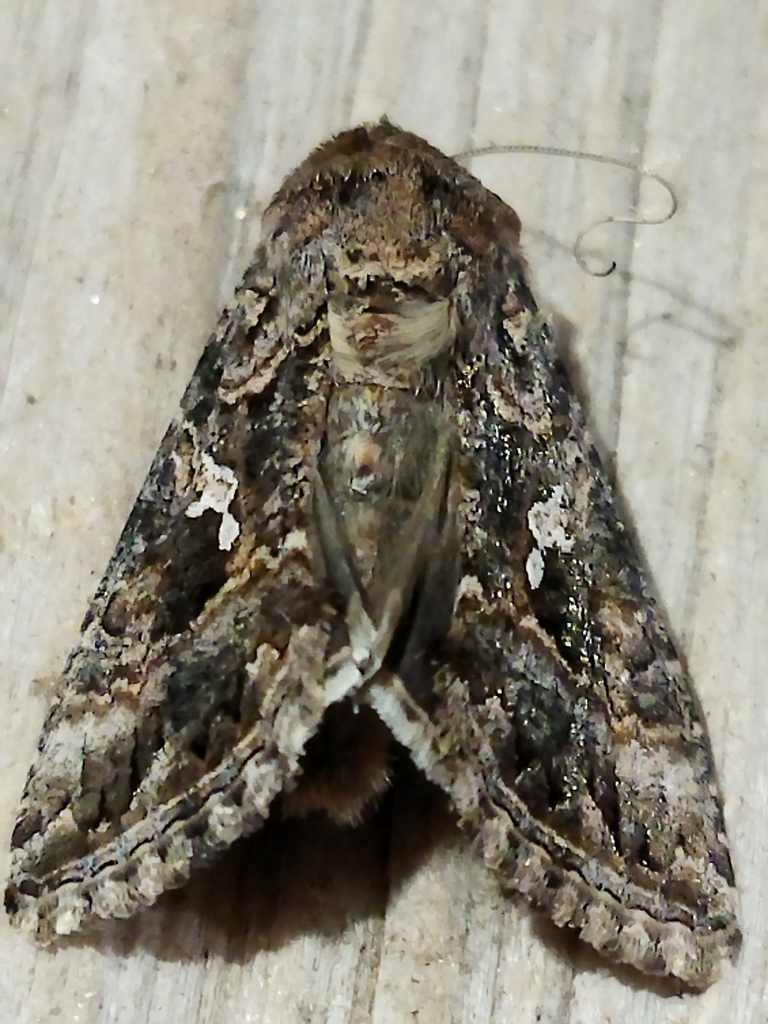
(c) SteveM4560, some rights reserved (CC BY) · licence
Family: Noctuidae · Class: Insecta · Order: Lepidoptera
Trichoplusia ni (Cabbage Looper Moth) is a California animal in the Noctuidae family.
The cabbage looper moth (Trichoplusia ni) is a medium-sized nocturnal moth in the family Noctuidae with a wingspan ranging from 32 to 38 millimeters (1.3 to 1.5 inches). Adults display mottled brown and gray forewings with distinctive silver or white markings, including a characteristic figure-eight or loop-shaped spot near the center of each forewing. The hindwings are pale brown to grayish-white with darker marginal bands. Males are typically smaller than females and possess feathery antennae, while females have thread-like antennae. This species has a cosmopolitan distribution and is found throughout California from sea level to approximately 2,000 meters (6,500 feet) elevation. The moth occurs in all counties of the state, ranging from coastal areas to inland valleys and foothills. Globally, the cabbage looper moth is distributed across North and South America, Europe, Asia, Africa, and Australia, making it one of the most widespread lepidopteran species. Cabbage looper moths inhabit agricultural areas, gardens, weedy fields, and disturbed habitats where host plants are abundant. Adults are active primarily at night and are attracted to artificial lights. The species thrives in areas with moderate temperatures and adequate moisture, though it can tolerate drought conditions. In California, the moth is most commonly found in the Central Valley, coastal plains, and other agricultural regions where cruciferous crops are cultivated. The larval stage, known as the cabbage looper caterpillar, is characterized by its distinctive looping locomotion caused by the absence of prolegs on abdominal segments three and four. Larvae are pale green with white longitudinal stripes and can reach 40 millimeters (1.6 inches) in length when fully mature. The species is multivoltine, producing three to six generations per year in California depending on temperature and location. Adults emerge in spring and continue breeding through fall, with peak activity during summer months. Females lay spherical, pale yellow eggs singly on the undersides of host plant leaves. Development from egg to adult takes approximately 30 to 45 days under optimal conditions. Cabbage looper moths feed on a wide range of host plants, with larvae particularly favoring members of the Brassicaceae family including cabbage, broccoli, cauliflower, kale, and mustard species. They also utilize plants in the Fabaceae, Solanaceae, and Asteraceae families. Adults feed on nectar from various flowering plants. This species is not listed under federal or state endangered species legislation and is considered secure throughout its range. As an agricultural pest, the cabbage looper moth is subject to various management strategies including biological control agents, pheromone traps, and integrated pest management practices. The species faces no significant conservation threats and maintains stable populations across California and globally.
Classification
Class: Insecta · Order: Lepidoptera · Family: Noctuidae
Frequently asked questions
How is Trichoplusia ni classified?
Trichoplusia ni belongs to class Insecta, order Lepidoptera, family Noctuidae.
What family does Trichoplusia ni belong to?
Trichoplusia ni is in the Noctuidae family.
What is Trichoplusia ni?
The cabbage looper moth (Trichoplusia ni) is a medium-sized nocturnal moth in the family Noctuidae with a wingspan ranging from 32 to 38 millimeters (1.3 to 1.5 inches).
Is Trichoplusia ni found in California?
Yes. Trichoplusia ni is recorded in California in The California Species Project's catalogue.
Related species
Other California species in the same genus, family, or bioregion.
Data from The California Species Project — 14,000+ California species with verified data from CNPS, CDFW, USFWS, and more.