Tridentiger bifasciatus
Shimofuri goby
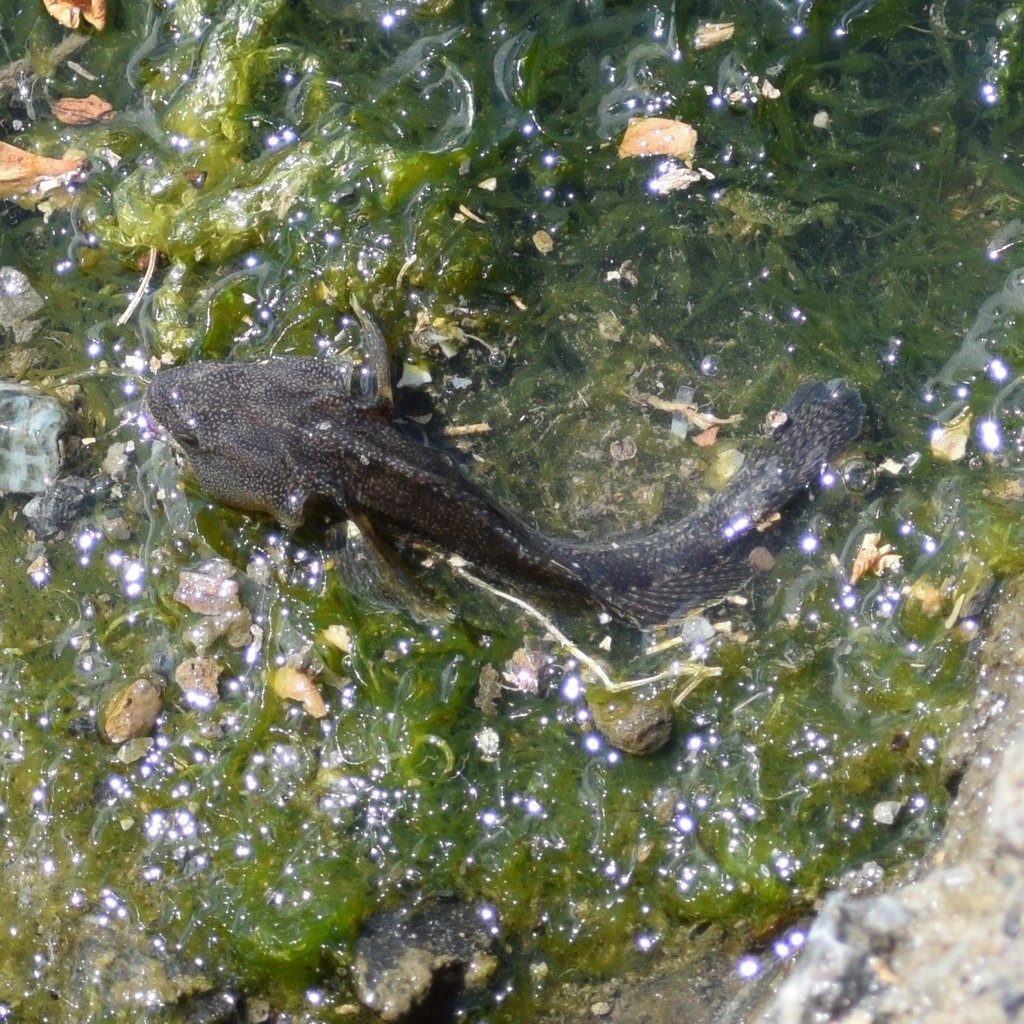
no rights reserved · CC0
Family: Gobiidae · Class: Actinopterygii · Order: Perciformes
Tridentiger bifasciatus (Shimofuri goby) is a California animal in the Gobiidae family.
The shimofuri goby is a small marine fish in the family Gobiidae, native to the western Pacific Ocean. Adults typically measure 40 to 80 millimeters (1.6 to 3.1 inches) in total length, with a maximum recorded length of approximately 110 millimeters (4.3 inches). The body is elongated and laterally compressed, with a large head comprising about one-quarter of the total body length. The species displays distinctive coloration patterns, featuring dark vertical bands across a pale background, giving rise to its common name "shimofuri," which refers to marbled patterns in Japanese. The first dorsal fin contains six spines, while the second dorsal fin has one spine and 8 to 10 soft rays. Historically confined to coastal waters of Japan, Korea, and eastern China, Tridentiger bifasciatus has expanded its range through human-mediated introduction. The species was first documented in California waters in 1985 in San Francisco Bay, likely introduced through ballast water discharge from transpacific shipping. Since establishment, populations have spread throughout San Francisco Bay and into adjacent estuarine systems. The species has also been reported from the Sacramento-San Joaquin Delta and several coastal embayments along the central California coast. Shimofuri gobies inhabit shallow estuarine and nearshore marine environments, typically at depths less than 10 meters (33 feet). The species demonstrates broad salinity tolerance, occurring in waters ranging from nearly fresh to full seawater conditions. Preferred substrates include muddy and sandy bottoms with low to moderate current flow. Adults are commonly found among submerged structures, including piers, rocky reefs, and artificial substrates such as concrete riprap. This species exhibits benthic feeding behavior, consuming small invertebrates including polychaete worms, amphipods, copepods, and small mollusks. Reproduction occurs during warmer months, with spawning typically beginning in late spring and continuing through early fall. Males establish territories and construct nests under rocks, shells, or artificial structures. Females deposit adhesive eggs in these nests, where males provide parental care until hatching occurs after 10 to 14 days, depending on water temperature. Larvae undergo a planktonic phase before settling to benthic habitats. As a non-native species in California waters, the shimofuri goby is not protected under federal or state endangered species legislation. The species is considered established and locally abundant in San Francisco Bay, where it may compete with native gobiid species for food and habitat resources. According to the California Department of Fish and Wildlife, monitoring efforts focus on tracking population distribution and assessing potential impacts on native fish communities. The species' tolerance for varying environmental conditions and successful reproduction in California waters suggest continued establishment and potential further range expansion along the Pacific coast.
Classification
Class: Actinopterygii · Order: Perciformes · Family: Gobiidae
Frequently asked questions
How is Tridentiger bifasciatus classified?
Tridentiger bifasciatus belongs to class Actinopterygii, order Perciformes, family Gobiidae.
What family does Tridentiger bifasciatus belong to?
Tridentiger bifasciatus is in the Gobiidae family.
What is Tridentiger bifasciatus?
The shimofuri goby is a small marine fish in the family Gobiidae, native to the western Pacific Ocean.
Is Tridentiger bifasciatus found in California?
Yes. Tridentiger bifasciatus is recorded in California in The California Species Project's catalogue.
Related species
Other California species in the same genus, family, or bioregion.
Data from The California Species Project — 14,000+ California species with verified data from CNPS, CDFW, USFWS, and more.