Trigonoscuta dorothea dorothea
Dorothy's El Segundo Dune Weevil
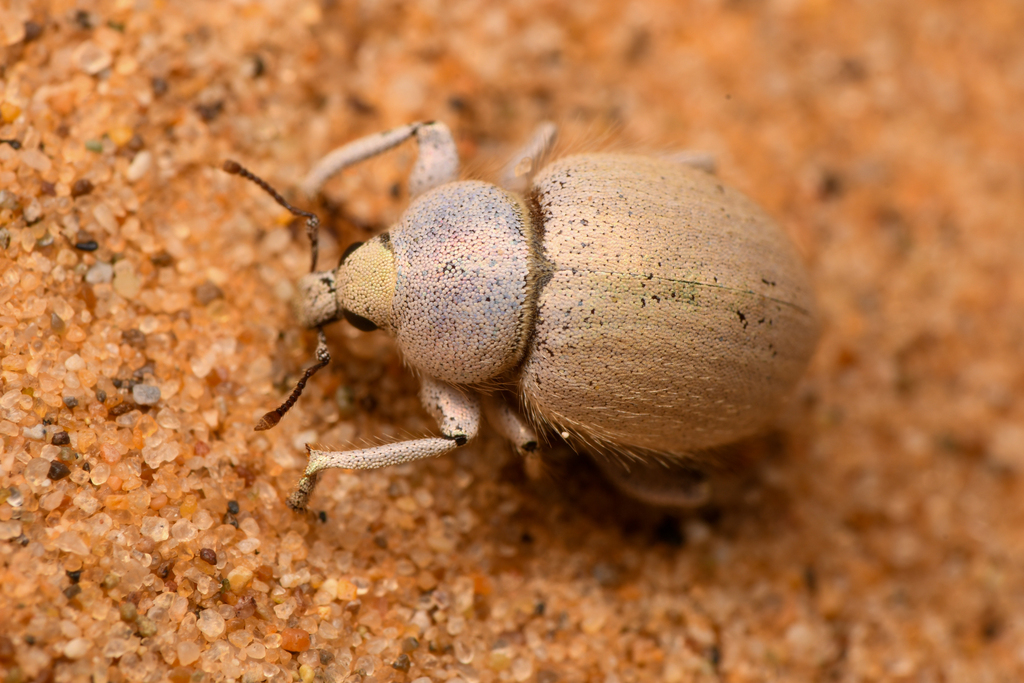
(c) Trevor Van Loon, some rights reserved (CC BY) · licence
Family: Curculionidae · Class: Insecta · Order: Coleoptera
Conservation status: G1T1 S1
Trigonoscuta dorothea dorothea (Dorothy's El Segundo Dune Weevil) is a California animal in the Curculionidae family.
Dorothy's El Segundo Dune Weevil is a small beetle in the family Curculionidae, subfamily Entiminae. As a member of the genus Trigonoscuta, it belongs to a group of sand dune weevils adapted to sandy coastal habitats in western North America (Pierce 1975). The species exhibits the characteristic features of broad-nosed weevils, with a robust body and shortened rostrum typical of the Entiminae subfamily. This subspecies is endemic to the coastal dune systems of southwestern Los Angeles County, California. Dorothy's El Segundo Dune Weevil occurs in the highly urbanized El Segundo area, where it is restricted to remnant coastal dune habitats. The species represents one of several endemic arthropods associated with the El Segundo dune ecosystem, which historically extended from the Ballona Wetlands south to the El Segundo Sand Dunes and Del Rey Bluffs. The weevil inhabits sandy coastal dune environments characterized by loose, well-drained substrates. These habitats support specialized plant communities adapted to salt spray, wind exposure, and shifting sands. The El Segundo dune system experiences a Mediterranean climate with mild year-round temperatures, averaging 69°F (21°C) in summer and 57°F (14°C) in winter, with seasonal coastal fog and winter precipitation of approximately 8.26 inches annually. The species likely requires specific microhabitat conditions within the dune matrix, including areas with appropriate moisture levels and substrate composition. Like other members of the genus Trigonoscuta, Dorothy's El Segundo Dune Weevil is presumably adapted to sandy habitats where adults and larvae develop in association with dune vegetation (Pierce 1975). Specific details regarding host plant relationships, feeding behavior, and reproductive ecology remain poorly documented in the scientific literature. The taxonomic status of many Trigonoscuta taxa requires reassessment, indicating ongoing challenges in understanding the systematics and biology of this group. Dorothy's El Segundo Dune Weevil is classified as G1T1 S1, indicating it is critically imperiled globally and within California. This ranking reflects the subspecies' extremely restricted range and the severe habitat loss within the El Segundo dune system. The original coastal dune habitat has been largely eliminated by urban development, with only small, fragmented remnants persisting in this heavily developed area of Los Angeles County. The species faces ongoing threats from habitat destruction, fragmentation, invasive species, and human disturbance. Protection and management of remaining dune habitat is critical for the subspecies' persistence. The weevil occurs alongside other rare endemic arthropods of the El Segundo dunes, including Lange's El Segundo Dune Weevil (Onychobaris langei), Belkin's Dune Tabanid Fly (Brennania belkini), and the El Segundo Flower-loving Fly (Rhaphiomidas terminatus terminatus). Conservation efforts for the broader El Segundo dune ecosystem may benefit multiple endemic species simultaneously. However, the extremely limited habitat availability and continued urban pressures make this one of California's most vulnerable insect subspecies. This species is included on the California Department of Fish and Wildlife's Special Animals List.
Classification
Class: Insecta · Order: Coleoptera · Family: Curculionidae
Conservation status
G1T1 S1
Frequently asked questions
How is Trigonoscuta dorothea dorothea classified?
Trigonoscuta dorothea dorothea belongs to class Insecta, order Coleoptera, family Curculionidae.
What family does Trigonoscuta dorothea dorothea belong to?
Trigonoscuta dorothea dorothea is in the Curculionidae family.
Is Trigonoscuta dorothea dorothea protected or of conservation concern?
Trigonoscuta dorothea dorothea carries the following status: G1T1 S1.
What is Trigonoscuta dorothea dorothea?
Dorothy's El Segundo Dune Weevil is a small beetle in the family Curculionidae, subfamily Entiminae.
Is Trigonoscuta dorothea dorothea found in California?
Yes. Trigonoscuta dorothea dorothea is recorded in California in The California Species Project's catalogue.
Related species
Other California species in the same genus, family, or bioregion.
Data from The California Species Project — 14,000+ California species with verified data from CNPS, CDFW, USFWS, and more.