Trigonoscuta rothi algodones
Algodones Dune Weevil
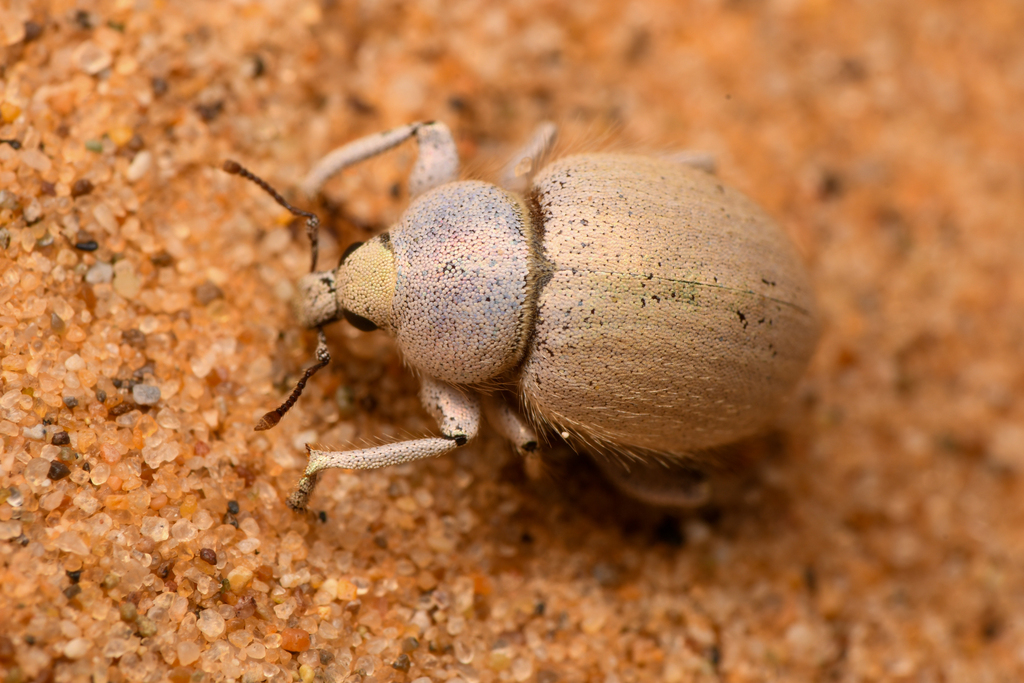
(c) Trevor Van Loon, some rights reserved (CC BY) · licence
Family: Curculionidae · Class: Insecta · Order: Coleoptera
Conservation status: G1G2T1 S1
Trigonoscuta rothi algodones (Algodones Dune Weevil) is a California animal in the Curculionidae family.
The Algodones Dune Weevil (Trigonoscuta rothi algodones) is a subspecies of weevil endemic to the Algodones Dunes of southeastern California. This small beetle belongs to the family Curculionidae and represents one of several endemic insect taxa adapted to the unique sand dune environment of the Colorado Desert region. The subspecies is restricted to the Algodones Dunes complex in Imperial County, California, near the Arizona border. This dune system, also known as the Imperial Sand Dunes, spans approximately 40 miles north to south and represents the largest mass of sand dunes in California. The weevil's distribution appears to be confined entirely within this specialized habitat, making it one of the most geographically restricted insects in North America. The Algodones Dunes provide a harsh desert environment characterized by active sand movement, extreme temperature fluctuations, and sparse vegetation. Elevations range from near sea level to approximately 300 feet above sea level. The dune system supports a unique assemblage of psammophytic (sand-adapted) plants, including species of Abronia, Croton, and other desert shrubs that have evolved to tolerate burial and exposure cycles. The weevil likely inhabits areas with stabilized sand surfaces where host vegetation occurs. Specific ecological requirements and life history details for this subspecies remain poorly documented in the scientific literature. Like other weevils, adults likely feed on plant material and may be associated with specific host plants within the dune ecosystem. The timing of reproduction, larval development, and seasonal activity patterns have not been thoroughly studied. The subspecies presumably exhibits adaptations to the extreme desert conditions, including mechanisms to avoid sand burial and cope with temperature extremes that can exceed 60°C (140°F) at the surface. The taxonomic validity of Trigonoscuta rothi algodones has been questioned by federal authorities. In 2006, the U.S. Fish and Wildlife Service determined that a petition to list four subspecies of Roth's dune weevil, including T. r. algodones, did not provide substantial scientific information that these subspecies are scientifically accepted taxa (Federal Register 2006). This taxonomic uncertainty has prevented formal conservation assessment under the Endangered Species Act. Despite this, the subspecies carries a NatureServe conservation rank of G1G2T1 S1, indicating it is critically imperiled both globally and within California. The primary threat to this subspecies is habitat disturbance from off-road vehicle recreation, which is intensive throughout much of the Algodones Dunes. Vehicle traffic can directly crush individuals, alter sand movement patterns, and destroy the sparse vegetation upon which the weevil depends. The Bureau of Land Management manages the dune complex as the Imperial Sand Dunes Recreation Area, where motorized recreation is the primary land use. Without taxonomic resolution and formal protection status, conservation measures for this subspecies remain limited. Scientific documentation of this subspecies remains incomplete, and additional research is needed to clarify its taxonomic status, ecological requirements, and population trends.
Classification
Class: Insecta · Order: Coleoptera · Family: Curculionidae
Conservation status
G1G2T1 S1
Frequently asked questions
How is Trigonoscuta rothi algodones classified?
Trigonoscuta rothi algodones belongs to class Insecta, order Coleoptera, family Curculionidae.
What family does Trigonoscuta rothi algodones belong to?
Trigonoscuta rothi algodones is in the Curculionidae family.
Is Trigonoscuta rothi algodones protected or of conservation concern?
Trigonoscuta rothi algodones carries the following status: G1G2T1 S1.
What is Trigonoscuta rothi algodones?
The Algodones Dune Weevil (Trigonoscuta rothi algodones) is a subspecies of weevil endemic to the Algodones Dunes of southeastern California.
Is Trigonoscuta rothi algodones found in California?
Yes. Trigonoscuta rothi algodones is recorded in California in The California Species Project's catalogue.
Related species
Other California species in the same genus, family, or bioregion.
Data from The California Species Project — 14,000+ California species with verified data from CNPS, CDFW, USFWS, and more.