Trigonoscuta rothi imperialis
Imperial Dune Weevil
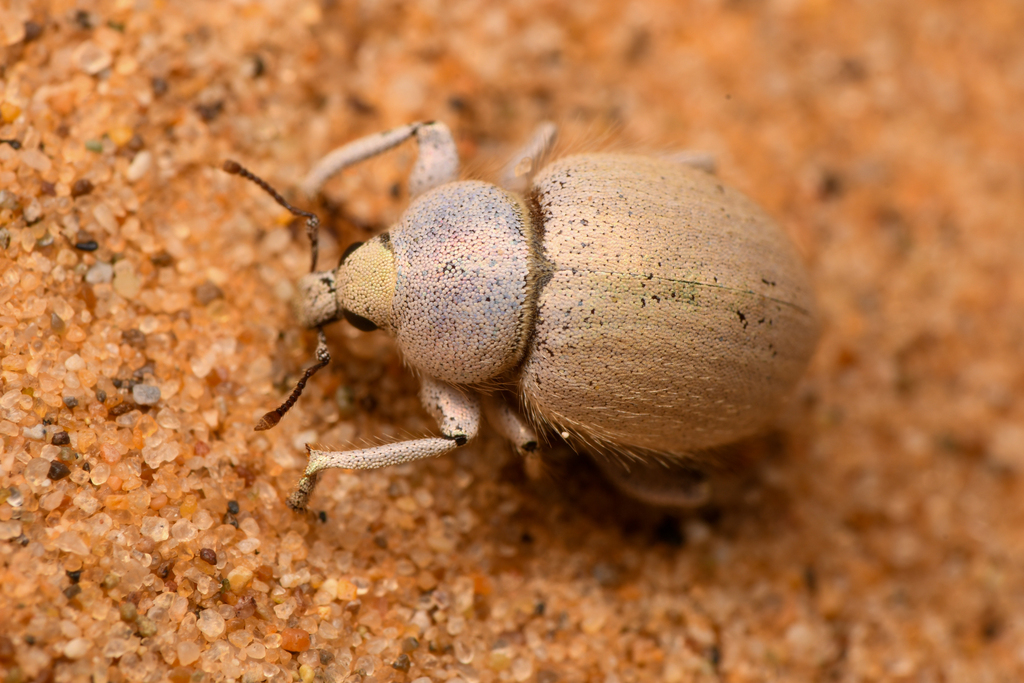
(c) Trevor Van Loon, some rights reserved (CC BY) · licence
Family: Curculionidae · Class: Insecta · Order: Coleoptera
Conservation status: G1G2T1 S1
Trigonoscuta rothi imperialis (Imperial Dune Weevil) is a California animal in the Curculionidae family.
Trigonoscuta rothi imperialis, commonly known as the Imperial Dune Weevil, is one of four recognized subspecies of Roth's dune weevil endemic to the Algodones Dunes system in Imperial County, California. This small weevil is adapted to the specialized sand dune environment of southeastern California's desert region. Adult weevils typically measure 3-6 millimeters in length and display the characteristic elongated snout and robust body structure typical of the Curculionidae family. The species exhibits cryptic coloration that blends with the sandy substrate of its dune habitat. The Imperial Dune Weevil is restricted to the Algodones Dunes complex in Imperial County, one of the largest active sand dune systems in North America. This subspecies occupies a very limited geographic range within the broader dune complex, contributing to its extremely restricted distribution. The Algodones Dunes extend approximately 45 miles north to south and 6 miles east to west, forming part of the larger Sonoran Desert ecosystem along the California-Arizona border. Habitat requirements for T. r. imperialis are highly specialized, with the subspecies occurring in troughs of loose, drifting sand between active dunes. These interdune areas accumulate organic matter and detritus that are essential for the species' survival and reproduction. The weevil requires areas with sufficient accumulation of dead plant material and organic debris, which serve as both food sources and microhabitat for immature stages. The dynamic nature of the dune system creates a mosaic of suitable and unsuitable habitat patches that shift over time with wind patterns and sand movement. Like other members of the T. rothi complex, the Imperial Dune Weevil likely feeds on decomposing organic matter and plant detritus found in sand troughs. The immature stages are believed to develop within accumulated organic material in interdune areas, though specific life history details remain poorly documented. Adults are probably most active during cooler periods and may burrow into sand to avoid extreme desert temperatures. Reproductive timing and larval development periods are not well established for this subspecies. The conservation status of T. r. imperialis reflects extreme rarity, with a global rank of G1G2T1 and state rank of S1, indicating it is critically imperiled. The U.S. Fish and Wildlife Service determined in 2006 that the four Trigonoscuta rothi subspecies, including T. r. imperialis, were not scientifically accepted taxa suitable for listing under the Endangered Species Act. However, the subspecies faces significant threats from recreational vehicle use in the Algodones Dunes, which disrupts the accumulation of organic matter essential for the species' survival. Off-road vehicle activity compacts sand, prevents formation of suitable interdune troughs, and destroys the microhabitat conditions required by immature stages. Climate change may exacerbate habitat challenges through altered precipitation patterns affecting organic matter accumulation and dune stability. Detailed ecological studies of this subspecies remain limited. The information presented synthesizes available taxonomic and habitat data from federal assessments and regional surveys. Additional research is needed to fully understand the species' biology, population status, and specific conservation requirements within the Algodones Dunes ecosystem.
Classification
Class: Insecta · Order: Coleoptera · Family: Curculionidae
Conservation status
G1G2T1 S1
Frequently asked questions
How is Trigonoscuta rothi imperialis classified?
Trigonoscuta rothi imperialis belongs to class Insecta, order Coleoptera, family Curculionidae.
What family does Trigonoscuta rothi imperialis belong to?
Trigonoscuta rothi imperialis is in the Curculionidae family.
Is Trigonoscuta rothi imperialis protected or of conservation concern?
Trigonoscuta rothi imperialis carries the following status: G1G2T1 S1.
What is Trigonoscuta rothi imperialis?
Trigonoscuta rothi imperialis, commonly known as the Imperial Dune Weevil, is one of four recognized subspecies of Roth's dune weevil endemic to the Algodones Dunes system in Imperial County, California.
Is Trigonoscuta rothi imperialis found in California?
Yes. Trigonoscuta rothi imperialis is recorded in California in The California Species Project's catalogue.
Related species
Other California species in the same genus, family, or bioregion.
Data from The California Species Project — 14,000+ California species with verified data from CNPS, CDFW, USFWS, and more.