Trigonoscuta rothi rothi
Roth's Dune Weevil
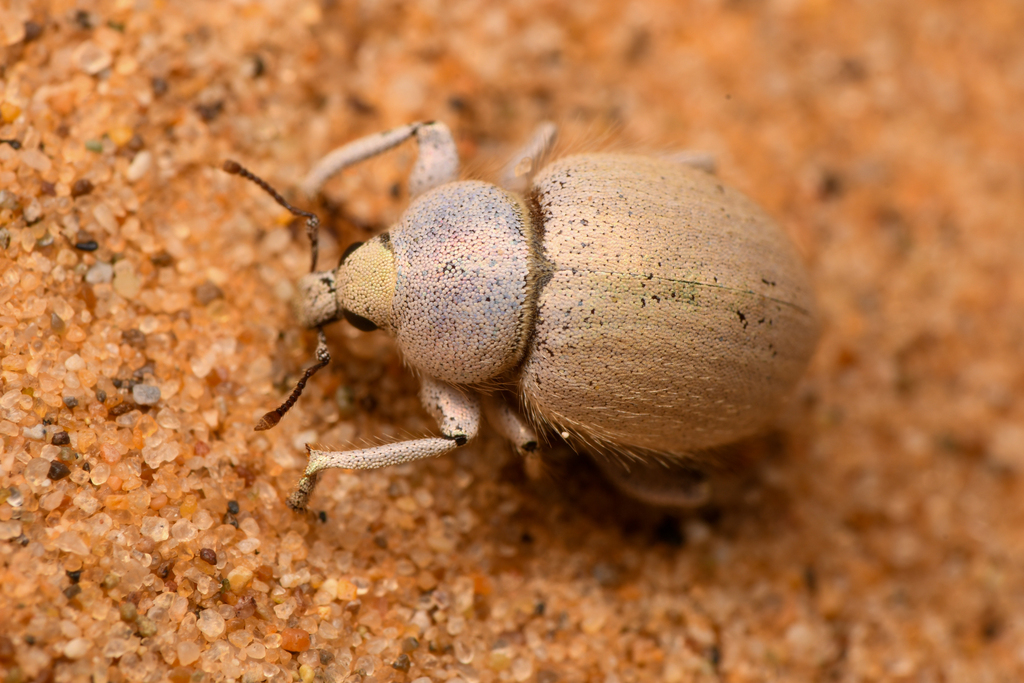
(c) Trevor Van Loon, some rights reserved (CC BY) · licence
Family: Curculionidae · Class: Insecta · Order: Coleoptera
Conservation status: G1G2T1 S1
Trigonoscuta rothi rothi (Roth's Dune Weevil) is a California animal in the Curculionidae family.
Roth's dune weevil (Trigonoscuta rothi rothi) is a small beetle subspecies endemic to the sand dune systems of southern California and adjacent areas. This weevil belongs to the family Curculionidae and represents one of four recognized subspecies within the Trigonoscuta rothi complex. The subspecies is distinguished by morphological characteristics typical of weevils, including an elongated snout or rostrum used for feeding and egg-laying, though detailed physical descriptions remain limited in the scientific literature. The nominate subspecies T. r. rothi occurs in sandy habitats of southern California, though its precise current range requires further documentation. Historical records suggest distribution within the coastal and desert dune systems of the region. The subspecies is part of a complex that includes T. r. algodones, T. r. imperialis, and T. r. punctata, each associated with specific dune habitats across California and adjacent states. The Algodones Dunes region appears to be a center of diversity for this weevil complex. Roth's dune weevil inhabits sandy dune environments characterized by sparse vegetation and shifting substrates. These specialized ecosystems support unique assemblages of endemic arthropods adapted to extreme temperature fluctuations, low moisture availability, and unstable sandy soils. The weevil likely requires specific host plants for reproduction and development, as is typical for curculionid beetles, though documented host associations for this subspecies remain poorly known. Dune habitats in southern California face ongoing pressures from development, recreational activities, and climate change. Like other weevils, this species likely exhibits a lifecycle involving egg-laying in or near host plant tissues, followed by larval development within plant structures. Adult weevils probably emerge seasonally, with activity patterns influenced by temperature and moisture conditions. The species' feeding ecology and reproductive behavior require further study, as does its role within the broader dune ecosystem. Seasonal activity patterns and population dynamics remain largely undocumented. The conservation status of Trigonoscuta rothi rothi reflects significant concern for this rare subspecies. With a global rank of G1G2T1 S1, the subspecies is considered critically imperiled both globally and within California. This ranking indicates extremely high risk of extinction due to rarity, very steep declines, or other factors. In 2006, a petition to list four Trigonoscuta rothi subspecies under the Endangered Species Act was reviewed by the U.S. Fish and Wildlife Service, but the agency determined that substantial scientific information was lacking to demonstrate these subspecies represented scientifically accepted taxa (Federal Register 2006). The subspecies faces threats typical of dune-endemic species, including habitat loss, fragmentation, and degradation of specialized sandy environments. Climate change may further stress these already vulnerable populations through altered precipitation patterns and increased temperature extremes. Conservation of remaining dune habitats and research into the subspecies' basic biology and taxonomy represent critical needs for this imperiled taxon.
Classification
Class: Insecta · Order: Coleoptera · Family: Curculionidae
Conservation status
G1G2T1 S1
Frequently asked questions
How is Trigonoscuta rothi rothi classified?
Trigonoscuta rothi rothi belongs to class Insecta, order Coleoptera, family Curculionidae.
What family does Trigonoscuta rothi rothi belong to?
Trigonoscuta rothi rothi is in the Curculionidae family.
Is Trigonoscuta rothi rothi protected or of conservation concern?
Trigonoscuta rothi rothi carries the following status: G1G2T1 S1.
What is Trigonoscuta rothi rothi?
Roth's dune weevil (Trigonoscuta rothi rothi) is a small beetle subspecies endemic to the sand dune systems of southern California and adjacent areas.
Is Trigonoscuta rothi rothi found in California?
Yes. Trigonoscuta rothi rothi is recorded in California in The California Species Project's catalogue.
Related species
Other California species in the same genus, family, or bioregion.
Data from The California Species Project — 14,000+ California species with verified data from CNPS, CDFW, USFWS, and more.