Trigonoscuta sp.
Doyen's Trigonoscuta Dune Weevil
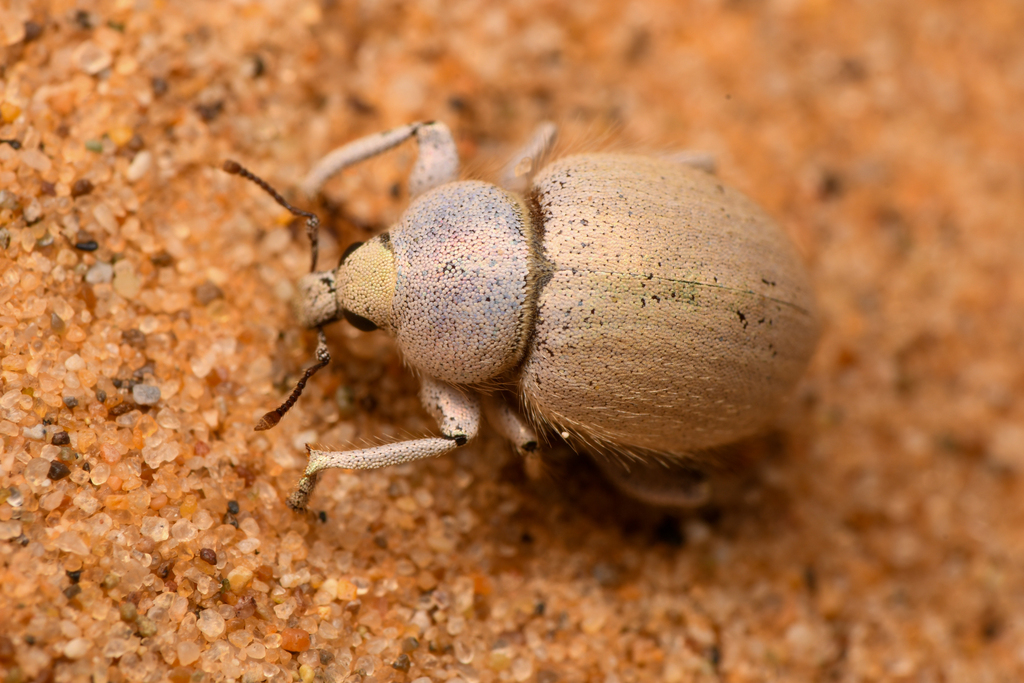
(c) Trevor Van Loon, some rights reserved (CC BY) · licence
Family: Curculionidae · Class: Insecta · Order: Coleoptera
Conservation status: G1Q S1
Trigonoscuta sp. (Doyen's Trigonoscuta Dune Weevil) is a California animal in the Curculionidae family.
Doyen's Trigonoscuta Dune Weevil (Trigonoscuta sp.) is a small beetle species endemic to coastal dune systems of California. This weevil belongs to the family Curculionidae and represents one of several specialized dune-dwelling species within the genus Trigonoscuta. The species exhibits typical weevil morphology with an elongated rostrum (snout) and elbowed antennae, though detailed morphological descriptions remain limited in the scientific literature. The species is currently known only from California's coastal regions, where it occupies a highly restricted range within specialized dune habitats. According to the U.S. Fish and Wildlife Service, Doyen's Trigonoscuta Dune Weevil is classified as a Species of Concern, reflecting significant conservation concerns despite lacking formal Endangered Species Act protection. The species' extremely limited distribution is reflected in its Global rank of G1Q, indicating it is critically imperiled globally with taxonomic questions, and State rank of S1, denoting critical imperilment within California. This weevil species inhabits active coastal sand dune systems, where it has evolved specialized adaptations to survive in the harsh, shifting substrate environment. Coastal dunes represent a dynamic ecosystem characterized by salt spray, temperature extremes, limited vegetation cover, and constant sand movement. These habitats support a unique assemblage of endemic arthropods, including several other rare weevil species such as Dorothy's El Segundo dune weevil (Trigonoscuta dorothea dorothea) and other members of the Trigonoscuta genus complex. Like other dune-adapted weevils, Doyen's Trigonoscuta Dune Weevil likely exhibits specialized feeding relationships with native dune vegetation, though specific host plant associations have not been well documented. The species presumably undergoes complete metamorphosis typical of weevils, with larvae developing within plant tissues or root systems of host plants. Adult beetles likely emerge during specific seasonal windows when environmental conditions are optimal for reproduction and dispersal. The conservation status of Doyen's Trigonoscuta Dune Weevil reflects the broader threats facing California's coastal dune ecosystems. Urban development, recreational activities, invasive plant species, and coastal erosion have significantly reduced and fragmented suitable habitat throughout the species' range. Climate change poses additional threats through sea level rise, altered precipitation patterns, and increased storm intensity affecting coastal dune stability. The species was included in a 2006 petition to the U.S. Fish and Wildlife Service for listing under the Endangered Species Act, along with other rare dune insects, though the petition was not successful due to taxonomic uncertainties at the species level. The taxonomic designation "Trigonoscuta sp." indicates that while this weevil is recognized as a distinct entity worthy of conservation concern, formal taxonomic description and naming remain incomplete. This situation hampers conservation efforts and reflects the broader challenge of protecting invertebrate biodiversity in threatened ecosystems. Current conservation priorities include habitat protection, invasive species control, and completion of taxonomic studies necessary for potential future listing consideration.
Classification
Class: Insecta · Order: Coleoptera · Family: Curculionidae
Conservation status
G1Q S1
Frequently asked questions
How is Trigonoscuta sp. classified?
Trigonoscuta sp. belongs to class Insecta, order Coleoptera, family Curculionidae.
What family does Trigonoscuta sp. belong to?
Trigonoscuta sp. is in the Curculionidae family.
Is Trigonoscuta sp. protected or of conservation concern?
Trigonoscuta sp. carries the following status: G1Q S1.
What is Trigonoscuta sp.?
Doyen's Trigonoscuta Dune Weevil (Trigonoscuta sp.) is a small beetle species endemic to coastal dune systems of California.
Is Trigonoscuta sp. found in California?
Yes. Trigonoscuta sp. is recorded in California in The California Species Project's catalogue.
Related species
Other California species in the same genus, family, or bioregion.
Data from The California Species Project — 14,000+ California species with verified data from CNPS, CDFW, USFWS, and more.