Trigonoscuta stantoni
Santa Cruz Island Shore Weevil
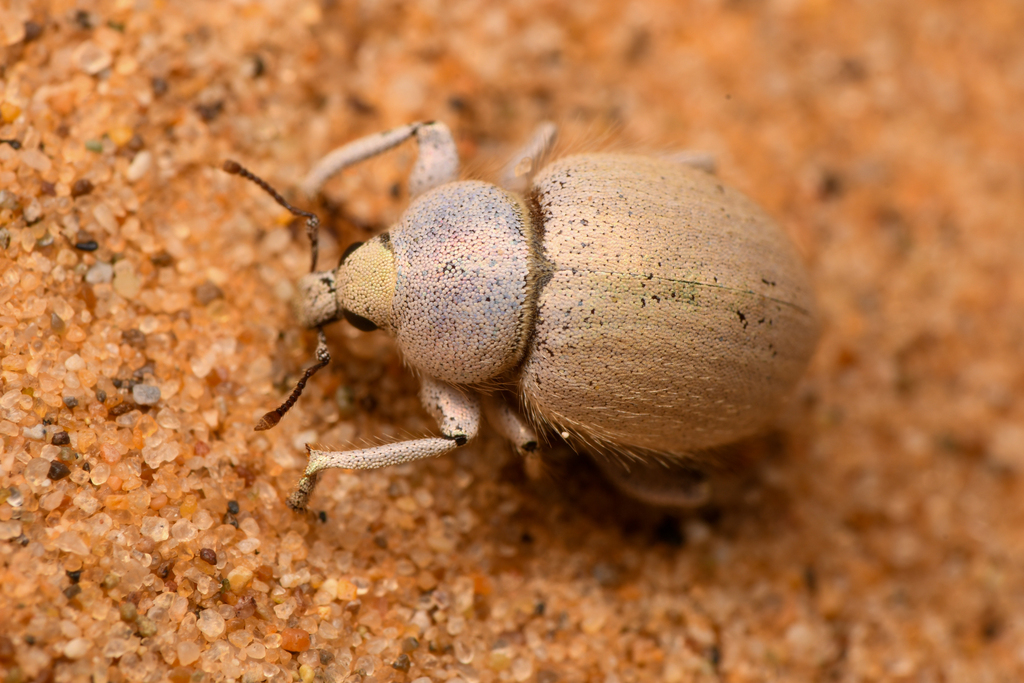
(c) Trevor Van Loon, some rights reserved (CC BY) · licence
Family: Curculionidae · Class: Insecta · Order: Coleoptera
Conservation status: G1 S1
Trigonoscuta stantoni (Santa Cruz Island Shore Weevil) is a California animal in the Curculionidae family.
The Santa Cruz Island shore weevil (Trigonoscuta stantoni) is a small beetle in the family Curculionidae, endemic to Santa Cruz Island off the coast of California. This weevil represents one of the most geographically restricted insects in North America, with its entire known range limited to a single island in the Channel Islands archipelago. As a member of the weevil family, T. stantoni possesses the characteristic elongated snout (rostrum) typical of curculionids. Detailed morphological descriptions of this species remain limited in published literature, reflecting the general lack of comprehensive taxonomic studies on many Channel Islands endemic insects. The species belongs to the genus Trigonoscuta, which contains several other rare weevil species found in California's coastal and island environments. The Santa Cruz Island shore weevil occurs exclusively on Santa Cruz Island, the largest of California's Channel Islands, located approximately 25 miles off the coast of Ventura County. This 96-square-mile island provides the species' entire known habitat range. The island's Mediterranean climate, characterized by mild, wet winters and dry summers, creates unique ecological conditions that support numerous endemic species. Specific habitat requirements for T. stantoni have not been thoroughly documented in available scientific literature. As suggested by its common name "shore weevil," the species likely inhabits coastal or near-coastal environments on the island. Santa Cruz Island's diverse habitats include coastal scrub, chaparral, grasslands, and oak woodlands, though the precise microhabitat preferences of this weevil remain unclear. Many Channel Islands weevils are associated with specific plant hosts, but documented host plant relationships for T. stantoni are not available in current literature. Ecological information about the Santa Cruz Island shore weevil's behavior, life cycle, and feeding habits is extremely limited. Like other weevils, adults likely feed on plant material, with larvae potentially developing within plant tissues. The species' reproductive biology, seasonal activity patterns, and specific dietary preferences require further scientific investigation. The Santa Cruz Island shore weevil carries a global conservation rank of G1 (critically imperiled) and a state rank of S1 (critically imperiled in California), indicating extreme rarity and high extinction risk. This ranking reflects the species' extremely limited distribution and small population size. The U.S. Fish and Wildlife Service maintains a species profile for T. stantoni, though the species does not currently appear on the federal endangered species list as of December 2025. Primary conservation concerns include the species' restricted range, which makes it vulnerable to habitat loss, invasive species, and environmental changes. Santa Cruz Island has experienced significant ecological alterations due to past livestock grazing and introduced species, though ongoing restoration efforts by The Nature Conservancy have removed feral animals and are working to restore native plant communities. Climate change poses additional threats through potential alterations to the island's precipitation patterns and vegetation communities. Scientific documentation for this species remains limited. The information presented here is based on available sources including the U.S. Fish and Wildlife Service species profile and taxonomic databases. Enhanced field surveys and ecological studies are needed to better understand this endemic weevil's biology, habitat requirements, and conservation needs.
Classification
Class: Insecta · Order: Coleoptera · Family: Curculionidae
Conservation status
G1 S1
Frequently asked questions
How is Trigonoscuta stantoni classified?
Trigonoscuta stantoni belongs to class Insecta, order Coleoptera, family Curculionidae.
What family does Trigonoscuta stantoni belong to?
Trigonoscuta stantoni is in the Curculionidae family.
Is Trigonoscuta stantoni protected or of conservation concern?
Trigonoscuta stantoni carries the following status: G1 S1.
What is Trigonoscuta stantoni?
The Santa Cruz Island shore weevil (Trigonoscuta stantoni) is a small beetle in the family Curculionidae, endemic to Santa Cruz Island off the coast of California.
Is Trigonoscuta stantoni found in California?
Yes. Trigonoscuta stantoni is recorded in California in The California Species Project's catalogue.
Related species
Other California species in the same genus, family, or bioregion.
Data from The California Species Project — 14,000+ California species with verified data from CNPS, CDFW, USFWS, and more.