Trimerotropis fontana
Fontana Grasshopper
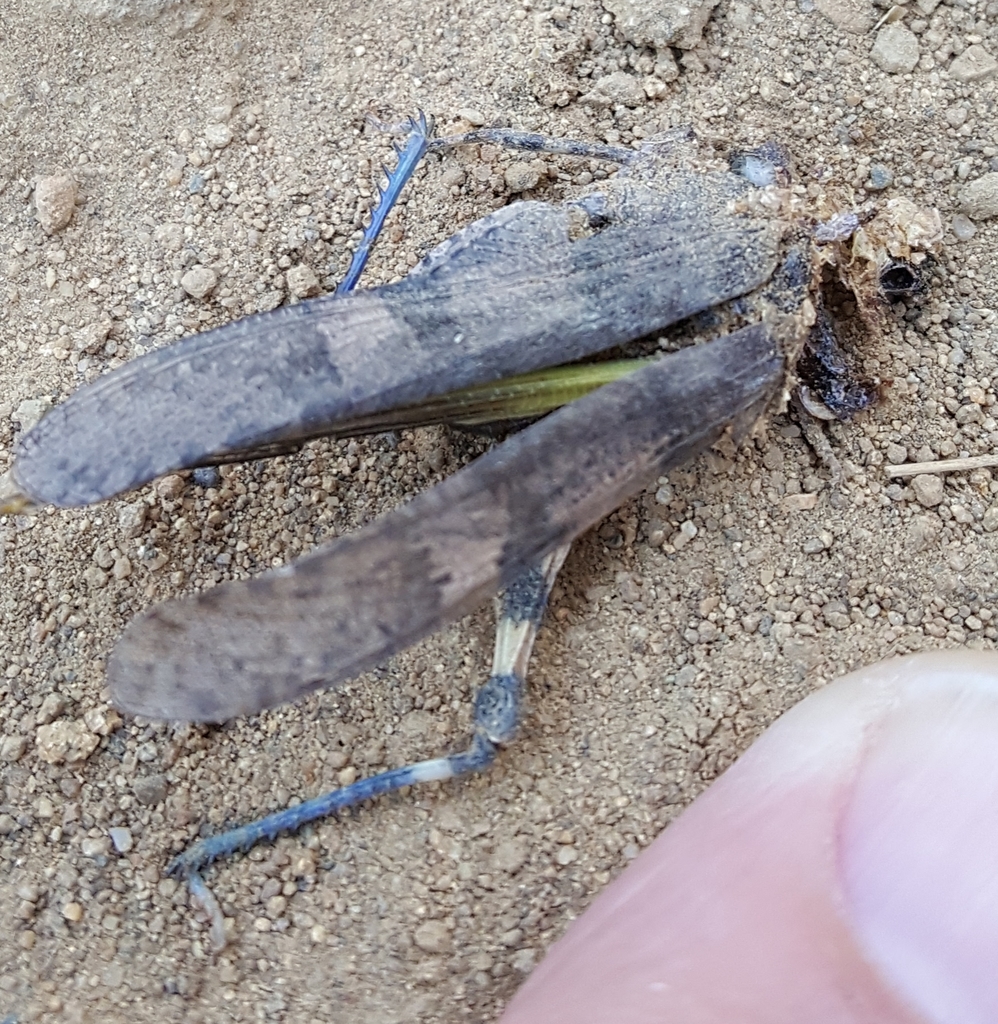
(c) Justin Johnsen, some rights reserved (CC BY) · licence
Family: Acrididae · Class: Insecta · Order: Orthoptera
Trimerotropis fontana (Fontana Grasshopper) is a California animal in the Acrididae family.
The Fontana grasshopper is a medium-sized band-winged grasshopper in the family Acrididae. Adults typically measure approximately 30 mm (1.2 inches) in length, with females generally larger than males. The species exhibits considerable color variation, ranging from light brown to notably dark coloration, with some individuals appearing nearly black (BugGuide). The wings display the characteristic banded pattern typical of the subfamily Oedipodinae, though the contrast and prominence of these bands can vary among individuals. Trimerotropis fontana occurs in California, with documented populations in multiple counties including Ventura, Los Angeles, and Shasta counties. The species has been recorded from Mount Pinos in Ventura County at summit elevations, Webb Canyon in Los Angeles County at approximately 610 meters (2,000 feet) elevation, and areas near French Gulch in Shasta County (BugGuide). The species appears to have a relatively broad elevational range, from lowland areas to montane zones. This grasshopper inhabits open, rocky terrain and mixed scrub habitats. Documented habitat types include open rocky areas surrounded by conifer woodland, mixed chaparral communities, and fire roads through chaparral vegetation (BugGuide). The species appears well-adapted to disturbed habitats, with observations indicating populations thrive in areas that have experienced recent wildfire. In post-fire environments, individuals are found both in barren burned areas and along the edges where vegetation remains intact. The preference for gravel and rocky substrates suggests the species may be somewhat specialized for these habitat types. Fontana grasshoppers are active during late summer and fall months, with documented observations from September and October. Like other band-winged grasshoppers, they likely produce sound through crepitation - rattling or crackling sounds made by rubbing their wings together during flight. Adults are presumed to feed on various grasses and forbs typical of their chaparral and scrubland habitats, though specific dietary preferences have not been well documented. Reproductive behavior and timing follow typical acridid patterns, though detailed life history information remains limited. The conservation status of Trimerotropis fontana has not been formally assessed by state or federal agencies. The species lacks official conservation rankings or protective status designations. Current population trends are unknown, though the species' apparent tolerance for fire-disturbed habitats may provide some resilience to natural disturbance cycles common in California's Mediterranean climate ecosystems. The broad geographic distribution across multiple California counties suggests the species is not immediately threatened, though habitat loss from urban development in chaparral regions could pose localized impacts. Climate change effects on chaparral ecosystems may influence future population stability, but specific vulnerability assessments have not been conducted. Taxonomic relationships within the genus Trimerotropis remain somewhat unclear, with T. fontana closely related to T. cincta and potentially other western species. Some authorities suggest certain populations may represent color variants rather than distinct species, indicating the need for additional taxonomic research.
Classification
Class: Insecta · Order: Orthoptera · Family: Acrididae
Frequently asked questions
How is Trimerotropis fontana classified?
Trimerotropis fontana belongs to class Insecta, order Orthoptera, family Acrididae.
What family does Trimerotropis fontana belong to?
Trimerotropis fontana is in the Acrididae family.
What is Trimerotropis fontana?
The Fontana grasshopper is a medium-sized band-winged grasshopper in the family Acrididae.
Is Trimerotropis fontana found in California?
Yes. Trimerotropis fontana is recorded in California in The California Species Project's catalogue.
Related species
Other California species in the same genus, family, or bioregion.
Data from The California Species Project — 14,000+ California species with verified data from CNPS, CDFW, USFWS, and more.