Trimerotropis occulens
Lompoc Grasshopper
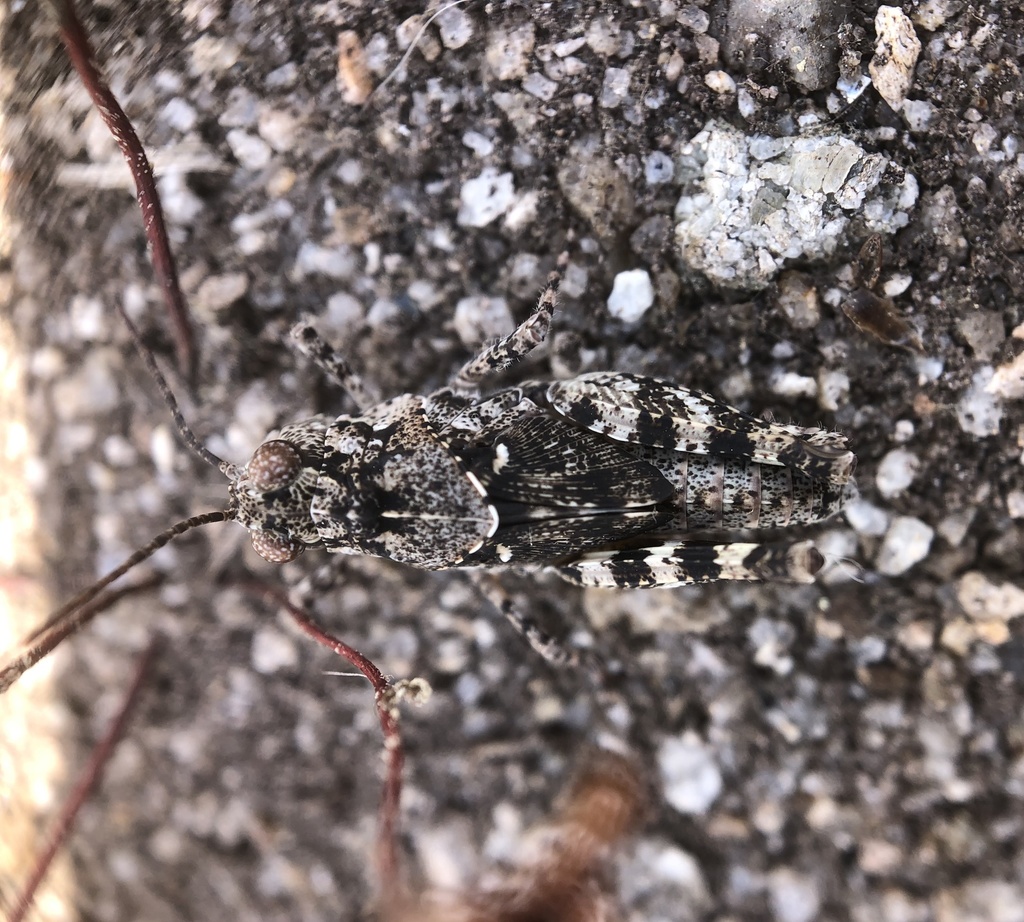
(c) James Kindt, some rights reserved (CC BY) · licence
Family: Acrididae · Class: Insecta · Order: Orthoptera
Conservation status: G1G2 S1S2
Trimerotropis occulens (Lompoc Grasshopper) is a California animal in the Acrididae family.
The Lompoc grasshopper is a small band-winged grasshopper endemic to a highly restricted range in western Santa Barbara County, California. This species belongs to the tribe Trimerotropini within the subfamily Oedipodinae and represents one of the smallest members of the genus Trimerotropis. Males typically measure smaller than most congeners, with a somewhat flattened dorso-ventral profile and proportionately shorter wings characteristic of coastal Trimerotropis species. The species exhibits the typical band-winged grasshopper morphology but is distinguished from similar species by its smaller size and specific coloration patterns. The wings display variable coloration, and the species can be differentiated from the closely related T. helferi, which is larger with usually proportionately longer wings that are typically pale green to bluish with dark bands absent or very faint (BugGuide). The inner hind femur shows distinctive black markings that help separate it from related species. Trimerotropis occulens is apparently highly restricted to western Santa Barbara County, California, making it one of the most geographically limited grasshopper species in North America (BugGuide). The species occurs within the broader Guadalupe-Nipomo Dunes Complex region, an 18-mile-long coastal dunes landscape that occupies approximately 20,000 acres of southwestern San Luis Obispo County and northwestern Santa Barbara County. This complex represents one of the largest coastal dune landscapes along the west coast of North America. The Lompoc grasshopper inhabits pale gravelly and rocky ground within coastal dune environments (BugGuide). Like other Trimerotropis species, it requires open, sunny, and relatively bare exposed environments with some degree of bare ground or rock exposure. The coastal habitat provides the specific substrate conditions necessary for this specialized species, distinguishing it from inland grasshopper communities. As with most band-winged grasshoppers, T. occulens likely exhibits typical orthopteran behaviors including territorial displays involving wing-flashing and stridulation. The species presumably feeds on available vegetation within its coastal habitat, though specific dietary preferences have not been well documented. Reproductive behavior and seasonal activity patterns remain poorly studied, representing significant knowledge gaps for this endemic species. The conservation status of T. occulens reflects its extremely limited distribution. The species carries a global rank of G1G2 and state rank of S1S2 (NatureServe), indicating it is critically imperiled to imperiled both globally and within California. The species is likely threatened by habitat degradation and ongoing land development within its restricted coastal range (BugGuide). The U.S. Fish and Wildlife Service lists T. occulens as a Species of Concern (USFWS 2008), recognizing the need for monitoring and potential conservation action. The coastal development pressures in Santa Barbara County pose ongoing threats to the specialized dune habitats required by this endemic grasshopper. Given its extremely limited range and vulnerability to habitat loss, T. occulens represents a conservation priority for California's coastal ecosystems.
Classification
Class: Insecta · Order: Orthoptera · Family: Acrididae
Conservation status
G1G2 S1S2
Frequently asked questions
How is Trimerotropis occulens classified?
Trimerotropis occulens belongs to class Insecta, order Orthoptera, family Acrididae.
What family does Trimerotropis occulens belong to?
Trimerotropis occulens is in the Acrididae family.
Is Trimerotropis occulens protected or of conservation concern?
Trimerotropis occulens carries the following status: G1G2 S1S2.
What is Trimerotropis occulens?
The Lompoc grasshopper is a small band-winged grasshopper endemic to a highly restricted range in western Santa Barbara County, California.
Is Trimerotropis occulens found in California?
Yes. Trimerotropis occulens is recorded in California in The California Species Project's catalogue.
Related species
Other California species in the same genus, family, or bioregion.
Data from The California Species Project — 14,000+ California species with verified data from CNPS, CDFW, USFWS, and more.