Trimerotropis pallidipennis
Pallid-winged Grasshopper
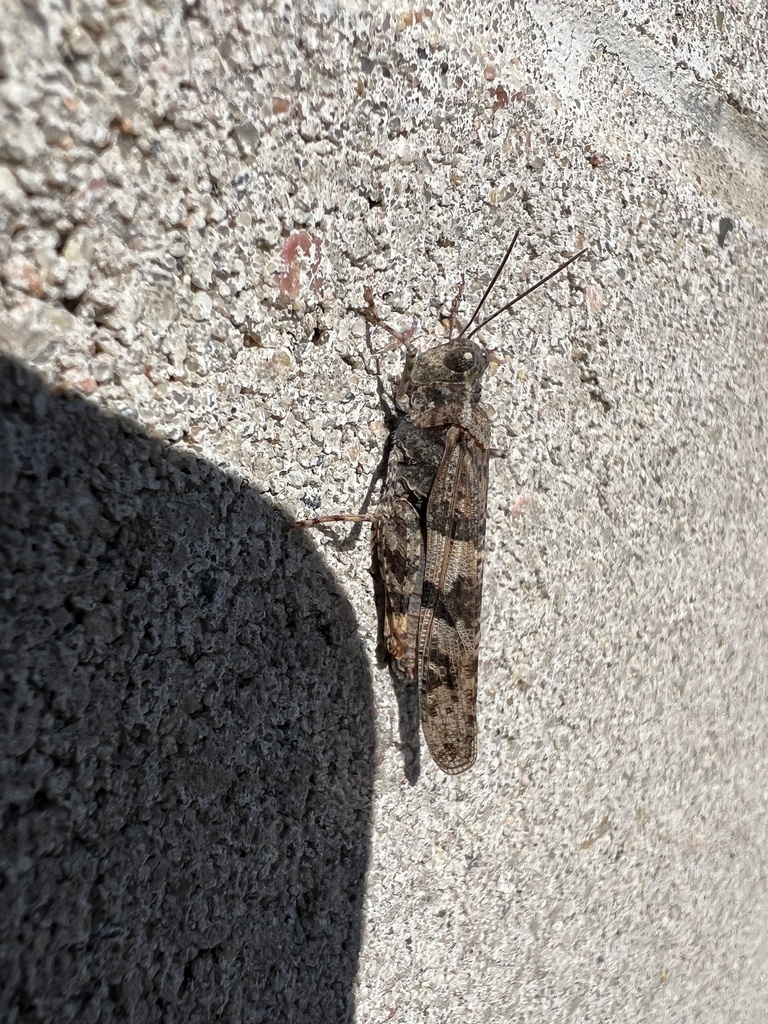
(c) Robin Morehouse, some rights reserved (CC BY) · licence
Family: Acrididae · Class: Insecta · Order: Orthoptera
Trimerotropis pallidipennis (Pallid-winged Grasshopper) is a California animal in the Acrididae family.
The pallid-winged grasshopper is a medium-sized band-winged grasshopper in the subfamily Oedipodinae. Adults typically measure 20-30 mm (0.8-1.2 inches) in body length, with females generally larger than males. The species displays cryptic coloration with pale brown mottled patterns that blend effectively with bare soil and sandy substrates. The hindwings are pale or pallid in appearance, giving the species its common name, and become visible during flight when the grasshopper exhibits characteristic band-winged behavior. Trimerotropis pallidipennis has an extensive distribution across western North America, occurring from California eastward through Nevada, Arizona, Colorado, Kansas, Nebraska, and north to Idaho and Montana (BugGuide 2025). In California, the species has been documented in Santa Cruz County, including the Ben Lomond and Zayante Sandhills region, where it occurs alongside but remains morphologically distinct from the federally endangered Zayante band-winged grasshopper (Trimerotropis infantilis). Observations indicate the species may prefer different microhabitats than its endangered congener, often occurring in anthropogenically disturbed areas such as mine pits and dirt roads. The species inhabits arid and semi-arid environments, showing a preference for open areas with sparse vegetation and exposed sandy or gravelly soils. Unlike some related species that require specific undisturbed habitats, T. pallidipennis demonstrates tolerance for human-modified landscapes and can colonize disturbed sites. This habitat flexibility may contribute to its broader geographic range compared to more specialized band-winged grasshoppers in the region. Based on observational data from citizen science platforms, the pallid-winged grasshopper shows peak adult activity from April through June, with secondary activity periods extending through September (BugGuide 2025). The species likely overwinters as eggs in soil, following the typical life cycle pattern of temperate band-winged grasshoppers. Adults are strong fliers and may form occasional swarms, as documented in Las Vegas during 2019 when large aggregations attracted public attention despite causing minimal ecological or economic impact (Xerces Society 2025). The species feeds on various grasses and forbs typical of its arid habitat preferences. Trimerotropis pallidipennis does not currently hold federal or state conservation status and appears to maintain stable populations across its range. Its ability to utilize disturbed habitats may provide resilience against habitat loss, contrasting with more specialized relatives like the Zayante band-winged grasshopper. The species serves as an important component of western grassland and shrubland ecosystems, contributing to food webs as both herbivore and prey species. Its presence in the Santa Cruz Mountains sandhills habitat highlights the complex grasshopper assemblages that characterize these endemic-rich ecosystems, where multiple Trimerotropis species coexist with distinct ecological requirements and conservation needs.
Classification
Class: Insecta · Order: Orthoptera · Family: Acrididae
Frequently asked questions
How is Trimerotropis pallidipennis classified?
Trimerotropis pallidipennis belongs to class Insecta, order Orthoptera, family Acrididae.
What family does Trimerotropis pallidipennis belong to?
Trimerotropis pallidipennis is in the Acrididae family.
What is Trimerotropis pallidipennis?
The pallid-winged grasshopper is a medium-sized band-winged grasshopper in the subfamily Oedipodinae.
Is Trimerotropis pallidipennis found in California?
Yes. Trimerotropis pallidipennis is recorded in California in The California Species Project's catalogue.
Related species
Other California species in the same genus, family, or bioregion.
Data from The California Species Project — 14,000+ California species with verified data from CNPS, CDFW, USFWS, and more.