Tringa glareola
Wood Sandpiper
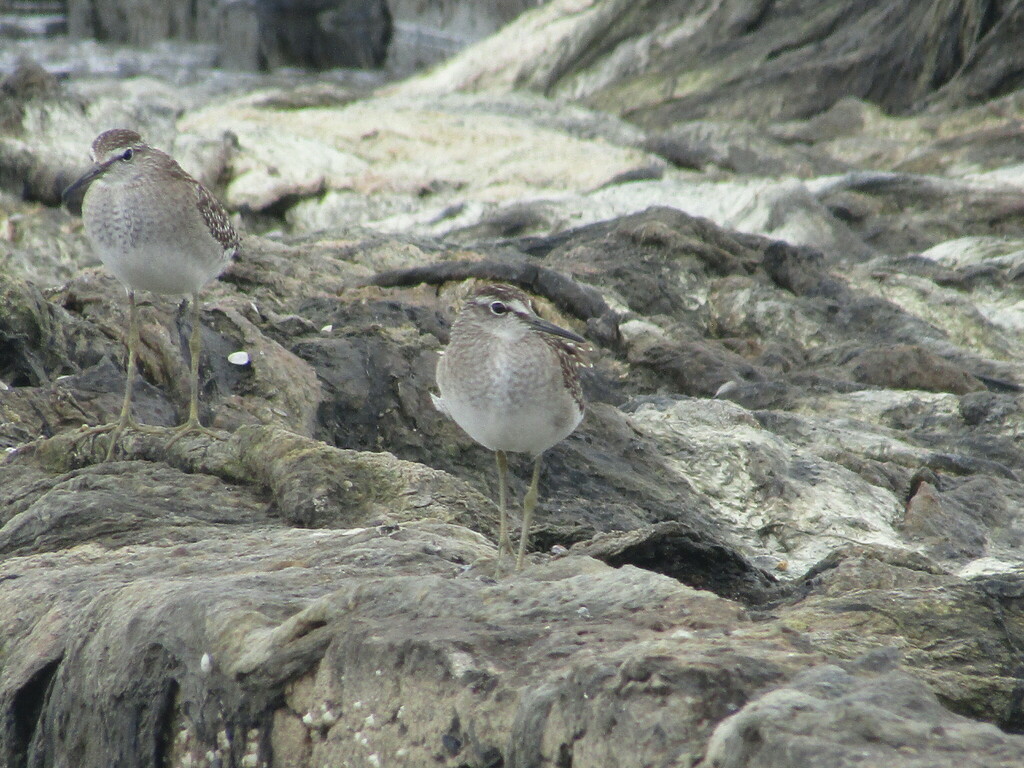
(c) SteveM4560, some rights reserved (CC BY) · licence
Family: Scolopacidae · Class: Aves · Order: Charadriiformes
Tringa glareola (Wood Sandpiper) is a California animal in the Scolopacidae family.
The Wood Sandpiper is a medium-sized shorebird measuring 19 to 21 cm (7.5 to 8.3 inches) in length with a wingspan of 36 to 40 cm (14 to 16 inches). Adults weigh 50 to 90 grams (1.8 to 3.2 ounces). In breeding plumage, the upperparts display dark brown feathers with white spotting and streaking, while the underparts are white with dark streaking on the breast and flanks. The species has a straight, dark bill measuring approximately 30 mm, yellow-green legs, and a distinctive white rump patch visible in flight. Non-breeding adults show grayer upperparts with reduced streaking below. A prominent white eyebrow stripe extends from the bill to behind the eye, contrasting with a dark eye stripe. The Wood Sandpiper breeds across the boreal forests of northern Eurasia, from Scandinavia through Siberia to the Pacific coast. In North America, this species occurs primarily as a vagrant, with most records from Alaska's western and northern coasts, particularly the Aleutian Islands and Bering Sea region. California records are extremely rare, with fewer than 10 documented occurrences since the 1970s. Most California sightings have occurred along the coast during fall migration, typically between August and October. During the breeding season, Wood Sandpipers inhabit wet meadows, bogs, and marshy areas within the taiga zone, often utilizing old thrush nests in trees or bushes. On migration and in wintering areas, they frequent freshwater wetlands including shallow ponds, flooded fields, sewage treatment facilities, and muddy margins of lakes and rivers. In California, vagrants have been observed at coastal estuaries, freshwater marshes, and managed wetlands. Wood Sandpipers are active foragers, probing soft substrates and picking invertebrates from the surface. Their diet consists primarily of insects, larvae, worms, small crustaceans, and occasionally small fish. The species exhibits a characteristic feeding behavior of quick, jerky movements while walking through shallow water. Breeding occurs from May through July, with females typically laying four eggs in a shallow scrape lined with grass and leaves. The incubation period lasts 22 to 23 days, and chicks fledge after approximately 28 days. Globally, the Wood Sandpiper is not considered threatened, with stable populations across its extensive breeding range. The species is not federally or state-listed in the United States. Population estimates suggest 1 to 2 million breeding pairs worldwide, with no significant conservation concerns identified. Climate change may affect northern breeding habitats, but the species' adaptability and broad range provide some resilience. In California, the Wood Sandpiper remains an exceptionally rare vagrant, with birders considering any sighting noteworthy due to the species' irregular occurrence pattern along the Pacific Coast.
Classification
Class: Aves · Order: Charadriiformes · Family: Scolopacidae
Frequently asked questions
How is Tringa glareola classified?
Tringa glareola belongs to class Aves, order Charadriiformes, family Scolopacidae.
What family does Tringa glareola belong to?
Tringa glareola is in the Scolopacidae family.
What is Tringa glareola?
The Wood Sandpiper is a medium-sized shorebird measuring 19 to 21 cm (7.5 to 8.3 inches) in length with a wingspan of 36 to 40 cm (14 to 16 inches).
Is Tringa glareola found in California?
Yes. Tringa glareola is recorded in California in The California Species Project's catalogue.
Related species
Other California species in the same genus, family, or bioregion.
Data from The California Species Project — 14,000+ California species with verified data from CNPS, CDFW, USFWS, and more.