Tringa solitaria cinnamomea
Solitary Sandpiper (Western)
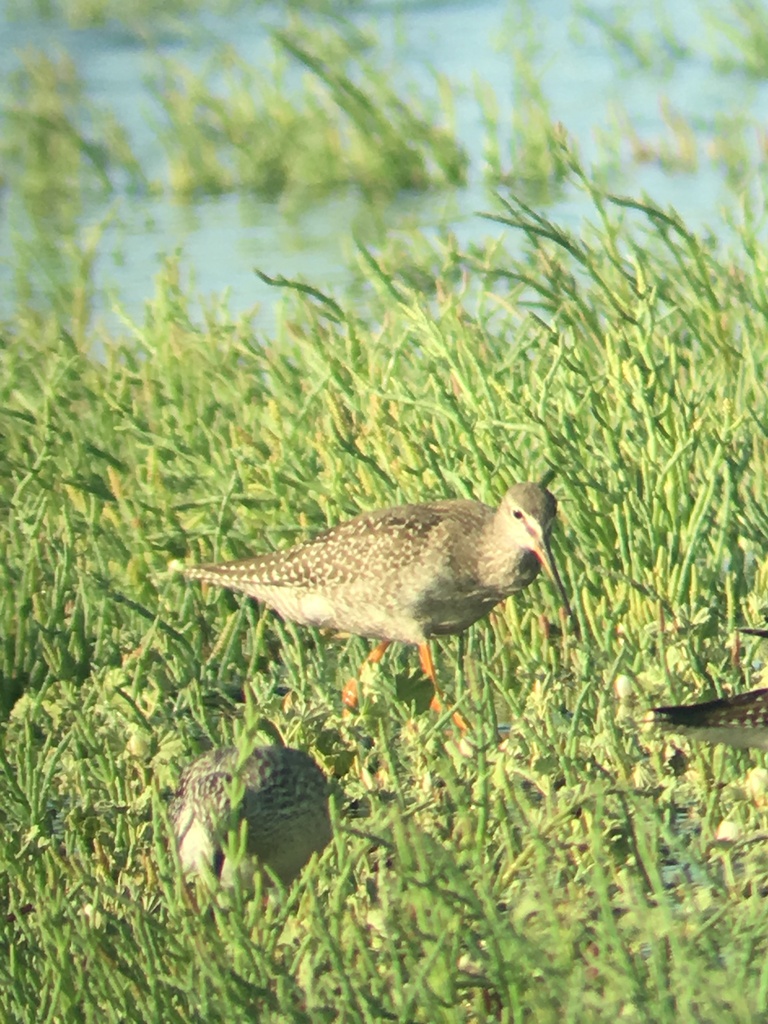
(c) Adam J. Searcy, some rights reserved (CC BY) · licence
Family: Scolopacidae · Class: Aves · Order: Charadriiformes
Tringa solitaria cinnamomea (Solitary Sandpiper (Western)) is a California animal in the Scolopacidae family.
The Western Solitary Sandpiper (Tringa solitaria cinnamomea) is a medium-sized shorebird subspecies distinguished from the nominate eastern form by slightly larger size and more cinnamon-buff coloration on the underparts. Adults measure 18-23 cm (7.1-9.1 inches) in length with a wingspan of 46-50 cm (18-20 inches). The species displays brownish-gray upperparts with fine white spotting, white underparts, and distinctive white eye-rings. The bill is straight and dark, measuring approximately 3.2-4.1 cm, while the legs are greenish-yellow to olive. In flight, the species shows dark wings with no wing stripe and a dark rump with white outer tail feathers. The Western Solitary Sandpiper breeds across boreal forests from Alaska through western Canada, extending south into the northern Rocky Mountains. During migration and winter, this subspecies occurs primarily in western North America, from British Columbia through Central America to northern South America. In California, the subspecies appears as an uncommon migrant through interior valleys and mountain regions, with records from the Central Valley, Sierra Nevada foothills, and southern California mountains. The species typically avoids coastal areas, unlike many other shorebirds. This subspecies inhabits freshwater wetland environments almost exclusively, showing strong preference for shallow ponds, marshes, muddy shores of lakes and streams, and flooded fields. During breeding season, it occupies boreal forest clearings with small ponds and wet meadows, often in areas with scattered trees or shrubs. The species generally avoids saltwater habitats and large open water bodies, preferring sheltered locations with muddy or soft substrates rich in invertebrate prey. Solitary Sandpipers are unique among North American shorebirds for nesting in trees, utilizing abandoned songbird nests typically 1-7 meters above ground in spruce or other conifers. Females lay 4 olive-buff eggs with dark markings, incubating for 23-24 days. The species feeds primarily on aquatic invertebrates including chironomid larvae, beetles, flies, and small crustaceans, employing a distinctive feeding behavior of picking prey from the water surface or probing shallow mud. Migration timing shows the subspecies moving through California primarily from late April through May and again from July through September. The Western Solitary Sandpiper is currently listed on the U.S. Fish and Wildlife Service Birds of Conservation Concern 2021 for Bird Conservation Region 4, reflecting concerns about population trends and habitat security (USFWS 2021). While not federally protected under the Endangered Species Act, the subspecies faces threats from wetland habitat loss, climate change impacts on boreal breeding areas, and degradation of stopover sites along migration routes. The species' reliance on freshwater habitats makes it particularly vulnerable to drought conditions and water diversions in western regions. Population monitoring remains limited due to the species' secretive nature and preference for scattered, small wetland sites rather than large congregational areas used by other shorebirds.
Classification
Class: Aves · Order: Charadriiformes · Family: Scolopacidae
Frequently asked questions
How is Tringa solitaria cinnamomea classified?
Tringa solitaria cinnamomea belongs to class Aves, order Charadriiformes, family Scolopacidae.
What family does Tringa solitaria cinnamomea belong to?
Tringa solitaria cinnamomea is in the Scolopacidae family.
What is Tringa solitaria cinnamomea?
The Western Solitary Sandpiper (Tringa solitaria cinnamomea) is a medium-sized shorebird subspecies distinguished from the nominate eastern form by slightly larger size and more cinnamon-buff coloration on the underparts.
Is Tringa solitaria cinnamomea found in California?
Yes. Tringa solitaria cinnamomea is recorded in California in The California Species Project's catalogue.
Related species
Other California species in the same genus, family, or bioregion.
Data from The California Species Project — 14,000+ California species with verified data from CNPS, CDFW, USFWS, and more.