Triopha catalinae
Clown Dorid
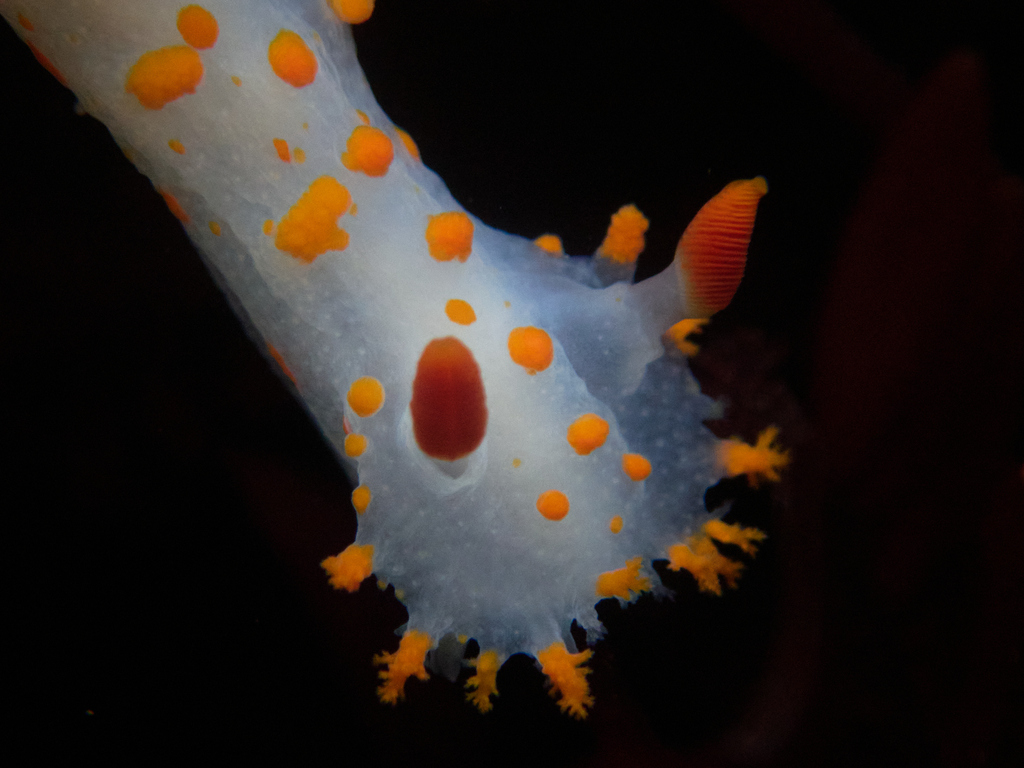
(c) Ken-ichi Ueda, some rights reserved (CC BY) · licence
Family: Polyceridae · Class: Gastropoda · Order: Nudibranchia
Triopha catalinae (Clown Dorid) is a California animal in the Polyceridae family.
The clown dorid (Triopha catalinae) is a colorful marine nudibranch, or shell-less sea slug, belonging to the family Polyceridae. This species displays distinctive dorsal projections called cerata that are typically orange to reddish in coloration with white or pale tips, giving it a clown-like appearance that inspired its common name. The body is translucent white to pale yellow, and adults typically measure 15-40 mm in length. The rhinophores (sensory tentacles) are orange and perfoliate, while the gill cluster at the posterior end consists of multiple branched structures. Triopha catalinae ranges along the eastern Pacific coast from southeast Alaska to the northern Gulf of California (Reef Life Survey). Along the California coast, this species occurs from the intertidal zone to depths of approximately 40 meters. It has been documented at locations including the Farallon Islands, Monterey Bay, and various rocky shores throughout central and northern California. The species appears to be most abundant in central California waters. This nudibranch inhabits rocky intertidal and subtidal environments, typically on hard substrates including rock faces, kelp holdfasts, and pier pilings. Triopha catalinae prefers areas with moderate to strong water movement and is commonly found in association with sponge communities. The species occurs in both protected bays and exposed coastal areas, showing considerable tolerance for varying wave action and salinity conditions. Triopha catalinae is a specialized predator that feeds primarily on encrusting bryozoans, particularly species in the genera Membranipora and Electra. The radula (feeding structure) is adapted for scraping these colonial organisms from hard surfaces. Like other nudibranchs, T. catalinae is hermaphroditic, with individuals capable of both male and female reproductive functions. Mating involves reciprocal sperm transfer, after which distinctive white, ribbon-like egg masses are deposited in spiral coils on hard substrates. The species exhibits typical nudibranch development with a planktonic larval stage before settling and metamorphosing into the adult form. Seasonal abundance patterns suggest peak reproductive activity during spring and summer months. Triopha catalinae currently holds no federal or state conservation listing status. The species appears to maintain stable populations throughout its range, though like many marine invertebrates, it may be affected by habitat degradation, pollution, and climate change impacts on ocean chemistry. According to the Walla Walla University invertebrate database, this species is usually one of the most common nudibranchs found in certain locations, such as near Rosario, suggesting relatively healthy population levels. The species' dependence on bryozoan prey makes it potentially vulnerable to changes in hard-substrate communities caused by ocean acidification or invasive species colonization. Continued monitoring of rocky intertidal communities will be important for assessing long-term population trends of this and other nudibranch species.
Classification
Class: Gastropoda · Order: Nudibranchia · Family: Polyceridae
Frequently asked questions
How is Triopha catalinae classified?
Triopha catalinae belongs to class Gastropoda, order Nudibranchia, family Polyceridae.
What family does Triopha catalinae belong to?
Triopha catalinae is in the Polyceridae family.
What is Triopha catalinae?
The clown dorid (Triopha catalinae) is a colorful marine nudibranch, or shell-less sea slug, belonging to the family Polyceridae.
Is Triopha catalinae found in California?
Yes. Triopha catalinae is recorded in California in The California Species Project's catalogue.
Related species
Other California species in the same genus, family, or bioregion.
Data from The California Species Project — 14,000+ California species with verified data from CNPS, CDFW, USFWS, and more.