Trioza adventicia
Syzygium Leaf Psyllid
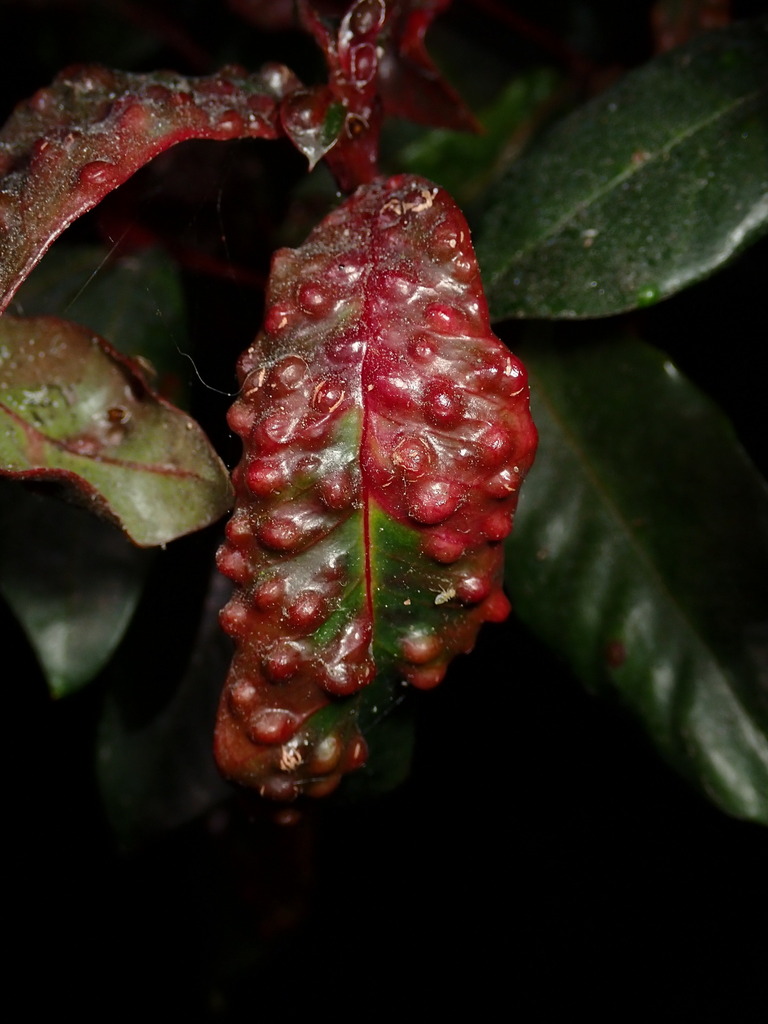
(c) Cricket Raspet, some rights reserved (CC BY) · licence
Family: Triozidae · Class: Insecta · Order: Hemiptera
Trioza adventicia (Syzygium Leaf Psyllid) is a California animal in the Triozidae family.
The Syzygium leaf psyllid (Trioza adventicia), also known as the Eugenia psyllid, is a small sap-sucking insect in the family Triozidae. Adults typically measure 2-3 mm in length and display the characteristic jumping ability common to psyllids. The species exhibits typical psyllid morphology with enlarged hind legs adapted for jumping, prominent compound eyes, and transparent to translucent wings held roof-like over the body when at rest. Body coloration ranges from pale green to yellowish-brown, allowing camouflage on host plant foliage. Trioza adventicia is an introduced species that has established populations in various regions where its host plants occur. The species was first documented in North America and has since expanded its range to areas with suitable Syzygium and related Myrtaceae host plants. In California, the psyllid's distribution correlates closely with the presence of ornamental Syzygium species, particularly in urban and suburban landscapes where these plants are commonly cultivated. This psyllid species demonstrates a strong host plant specificity, feeding primarily on members of the Myrtaceae family, with particular preference for Syzygium species. According to BugGuide, the species shows adaptation to various Syzygium cultivars used in landscaping. The insect inhabits areas where these host plants are established, including residential gardens, commercial landscapes, parks, and botanical collections. Adults and nymphs are typically found on new growth, leaf undersides, and tender shoots of their host plants. Syzygium leaf psyllids exhibit typical psyllid life cycle patterns with egg, five nymphal instars, and adult stages. Females deposit small, stalked eggs on young leaves and growing tips of host plants. Nymphs develop through five molts while feeding on plant sap, creating characteristic honeydew secretions that can lead to sooty mold development on leaf surfaces. Adults are capable of flight and can disperse to new host plants within their range. Multiple generations occur annually in suitable climates, with reproduction closely tied to host plant phenology and environmental conditions. As an introduced species, Trioza adventicia represents an example of successful establishment following human-mediated introduction. The psyllid's conservation status reflects its role as a non-native species that has adapted to anthropogenic landscapes. While not considered a major agricultural pest, the species can cause aesthetic damage to ornamental Syzygium plantings through feeding damage, honeydew production, and associated sooty mold growth. Population monitoring focuses on understanding distribution patterns and potential impacts on native plant communities, particularly in areas where native Myrtaceae species might serve as alternative hosts. Management strategies typically involve integrated pest management approaches when populations reach economically damaging levels on valuable ornamental plantings.
Classification
Class: Insecta · Order: Hemiptera · Family: Triozidae
Frequently asked questions
How is Trioza adventicia classified?
Trioza adventicia belongs to class Insecta, order Hemiptera, family Triozidae.
What family does Trioza adventicia belong to?
Trioza adventicia is in the Triozidae family.
What is Trioza adventicia?
The Syzygium leaf psyllid (Trioza adventicia), also known as the Eugenia psyllid, is a small sap-sucking insect in the family Triozidae.
Is Trioza adventicia found in California?
Yes. Trioza adventicia is recorded in California in The California Species Project's catalogue.
More California species
This species has no close relatives in our California data — here are other species to explore.
Data from The California Species Project — 14,000+ California species with verified data from CNPS, CDFW, USFWS, and more.