Triphosa haesitata
Tissue Moth
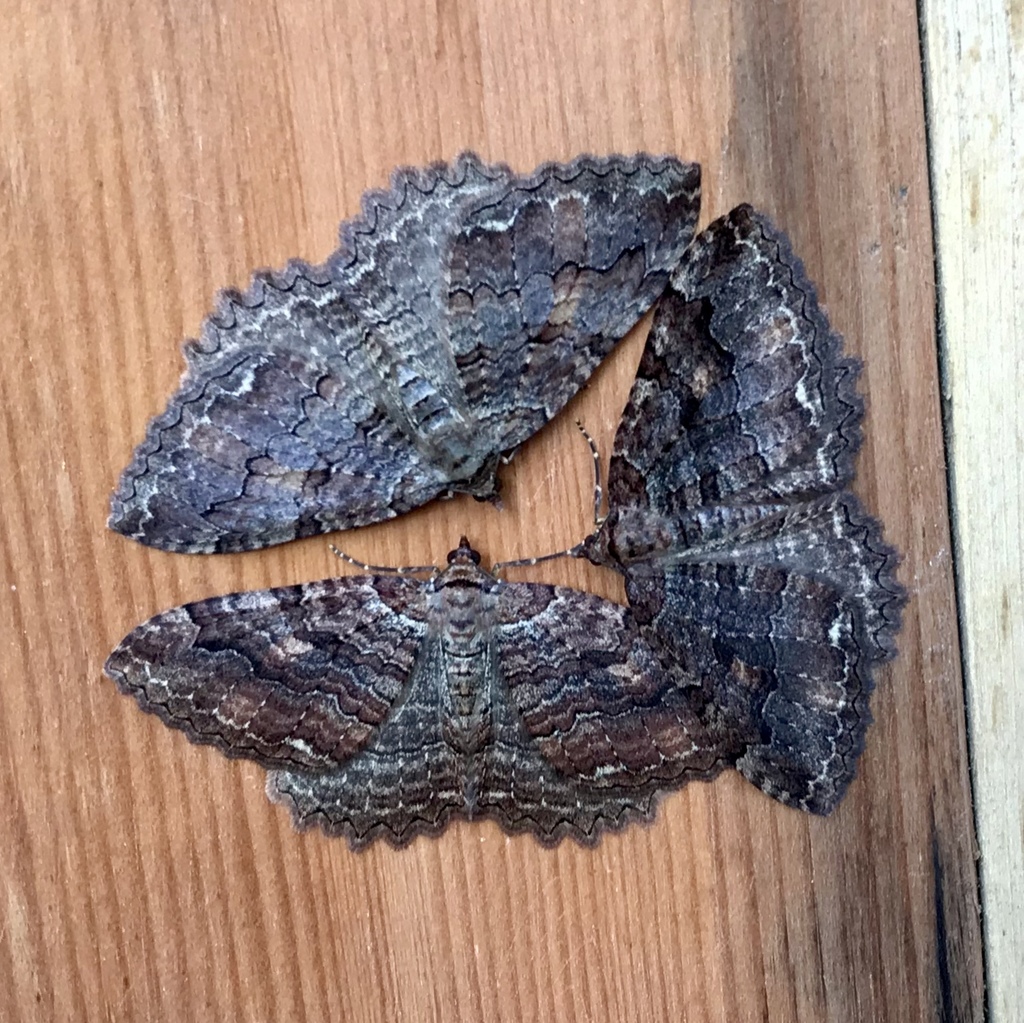
no rights reserved · CC0
Family: Geometridae · Class: Insecta · Order: Lepidoptera
Triphosa haesitata (Tissue Moth) is a California animal in the Geometridae family.
The tissue moth (Triphosa haesitata) is a medium-sized geometrid moth belonging to the family Geometridae. Adults have a wingspan typically ranging from 25 to 35 mm (1.0 to 1.4 inches). The forewings are pale gray to brownish-gray with distinctive darker crosslines and a prominent discal spot. The hindwings are lighter, often whitish or pale gray, with subtle markings. The species exhibits the characteristic looping locomotion of geometrid larvae, commonly known as inchworms or measuring worms. Adults have feathery antennae in males and thread-like antennae in females, typical of the family. Triphosa haesitata occurs across western North America, with populations documented from British Columbia south to California and east to Colorado and New Mexico. In California, the species is found primarily in mountainous regions where its host plant occurs, including the Sierra Nevada, Cascade Range, and coastal mountain ranges. The distribution closely follows that of cascara buckthorn, reflecting the moth's specialized host plant relationship. The species inhabits mixed coniferous and deciduous forests, typically at elevations ranging from 300 to 2,100 meters (1,000 to 6,900 feet). Adults are found in areas supporting cascara (Rhamnus purshiana), which grows in moist, shaded forest understories and along stream corridors. The moth favors forest edges, clearings, and riparian zones where cascara is abundant. Cascara typically grows in areas with rich, well-drained soils and consistent moisture availability. The tissue moth is univoltine, producing one generation per year. Adults are active from late spring through early summer, typically May through July, depending on elevation and local climate conditions. Females deposit eggs on cascara foliage, and larvae feed exclusively on this host plant. The caterpillars consume leaves throughout the summer months, reaching maturity by late summer or early fall. Pupation occurs in the soil or leaf litter, with adults emerging the following spring. The species overwinters in the pupal stage. Adults are primarily nocturnal and are attracted to artificial lights. Larvae are specialized feeders on cascara buckthorn, making them entirely dependent on this native shrub or small tree. The caterpillars typically feed on the undersides of leaves and can completely defoliate small plants when populations are high. Adult moths likely feed on nectar from various flowering plants, though specific nectar sources have not been extensively documented. The tissue moth does not currently hold any federal or state conservation listing status. However, like many forest-dwelling species, it may face pressure from habitat loss due to logging, development, and forest management practices that reduce cascara populations. Climate change may also affect the species through alterations to forest composition and the distribution of its host plant. The moth's specialized relationship with cascara makes it vulnerable to factors that impact buckthorn populations, including browsing pressure from introduced ungulates and competition from invasive plant species in some areas.
Classification
Class: Insecta · Order: Lepidoptera · Family: Geometridae
Frequently asked questions
How is Triphosa haesitata classified?
Triphosa haesitata belongs to class Insecta, order Lepidoptera, family Geometridae.
What family does Triphosa haesitata belong to?
Triphosa haesitata is in the Geometridae family.
What is Triphosa haesitata?
The tissue moth (Triphosa haesitata) is a medium-sized geometrid moth belonging to the family Geometridae.
Is Triphosa haesitata found in California?
Yes. Triphosa haesitata is recorded in California in The California Species Project's catalogue.
Related species
Other California species in the same genus, family, or bioregion.
Data from The California Species Project — 14,000+ California species with verified data from CNPS, CDFW, USFWS, and more.