Tropidischia xanthostoma
Square-legged Camel Cricket
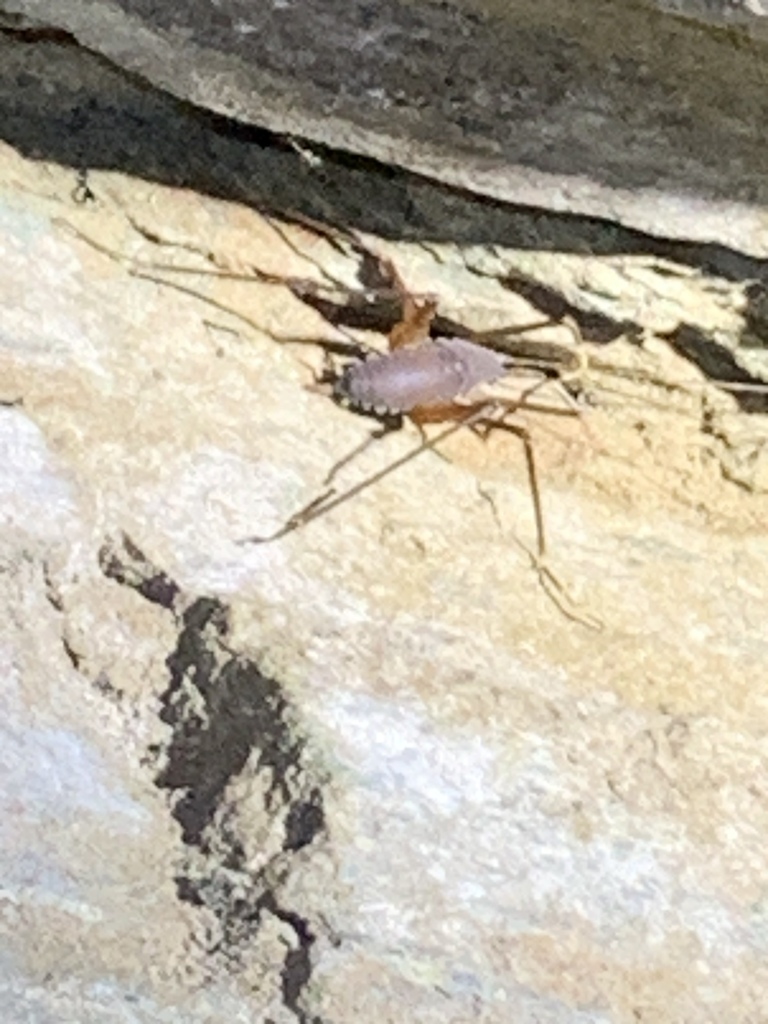
(c) Liam Steele, some rights reserved (CC BY) · licence
Family: Rhaphidophoridae · Class: Insecta · Order: Orthoptera
Tropidischia xanthostoma (Square-legged Camel Cricket) is a California animal in the Rhaphidophoridae family.
The Square-legged Camel Cricket (Tropidischia xanthostoma) is a wingless orthopteran in the family Rhaphidophoridae, subfamily Tropidischiinae. This species displays the characteristic camel cricket body plan with a humpbacked appearance, long antennae that exceed body length, and powerful hind legs adapted for jumping. The common name "square-legged" refers to distinctive morphological features of the legs that distinguish this species from other camel crickets. Adults are typically brown to tan in coloration, providing effective camouflage in their natural habitat. Males and females can be distinguished by reproductive structures, with females possessing a prominent ovipositor for egg-laying. Tropidischia xanthostoma occurs in western North America, with documented populations in California. According to BugGuide, this species is part of the broader camel cricket fauna found in the region. The specific distribution within California has not been comprehensively mapped, but the species appears to have a limited range compared to more widespread camel cricket species. This species inhabits caves, rock crevices, and other dark, humid microenvironments typical of camel crickets. These nocturnal insects require high moisture levels and are typically found in areas protected from direct sunlight and temperature extremes. Rocky outcrops, talus slopes, and underground spaces provide suitable habitat conditions. The specific habitat requirements and elevation range for T. xanthostoma have not been well documented in the scientific literature. Square-legged Camel Crickets are omnivorous scavengers, feeding on organic matter including decaying plant material, fungi, and small invertebrates. Like other camel crickets, they are primarily nocturnal, emerging from daytime retreats to forage. Reproduction involves direct development without a true larval stage, with juveniles resembling miniature adults. Females deposit eggs in moist soil or organic matter using their sword-like ovipositor. The species likely has one generation per year, though specific details about breeding timing and lifecycle duration remain undocumented. Tropidischia xanthostoma does not appear on federal or state endangered species lists, and its conservation status has not been formally assessed. However, like many cave-dwelling and specialized habitat species, populations may be vulnerable to habitat disturbance, climate change effects on moisture regimes, and human activities that alter or destroy suitable microhabitats. The limited range and specific habitat requirements typical of camel cricket species suggest that population monitoring and habitat protection may be important for long-term conservation. Research on the Farallon Islands has demonstrated that camel crickets are not susceptible to anticoagulant rodenticides due to their different physiology (USFWS 2019), which may be relevant for pest management considerations in areas where T. xanthostoma occurs. Detailed ecological studies of this species are lacking. The above information synthesizes available observations from taxonomic databases and limited field reports. Scientific documentation remains insufficient for comprehensive understanding of population trends, specific habitat requirements, and conservation needs.
Classification
Class: Insecta · Order: Orthoptera · Family: Rhaphidophoridae
Frequently asked questions
How is Tropidischia xanthostoma classified?
Tropidischia xanthostoma belongs to class Insecta, order Orthoptera, family Rhaphidophoridae.
What family does Tropidischia xanthostoma belong to?
Tropidischia xanthostoma is in the Rhaphidophoridae family.
What is Tropidischia xanthostoma?
The Square-legged Camel Cricket (Tropidischia xanthostoma) is a wingless orthopteran in the family Rhaphidophoridae, subfamily Tropidischiinae.
Is Tropidischia xanthostoma found in California?
Yes. Tropidischia xanthostoma is recorded in California in The California Species Project's catalogue.
Related species
Other California species in the same genus, family, or bioregion.
Data from The California Species Project — 14,000+ California species with verified data from CNPS, CDFW, USFWS, and more.