Trupanea vicina
Marigold Fruit Fly
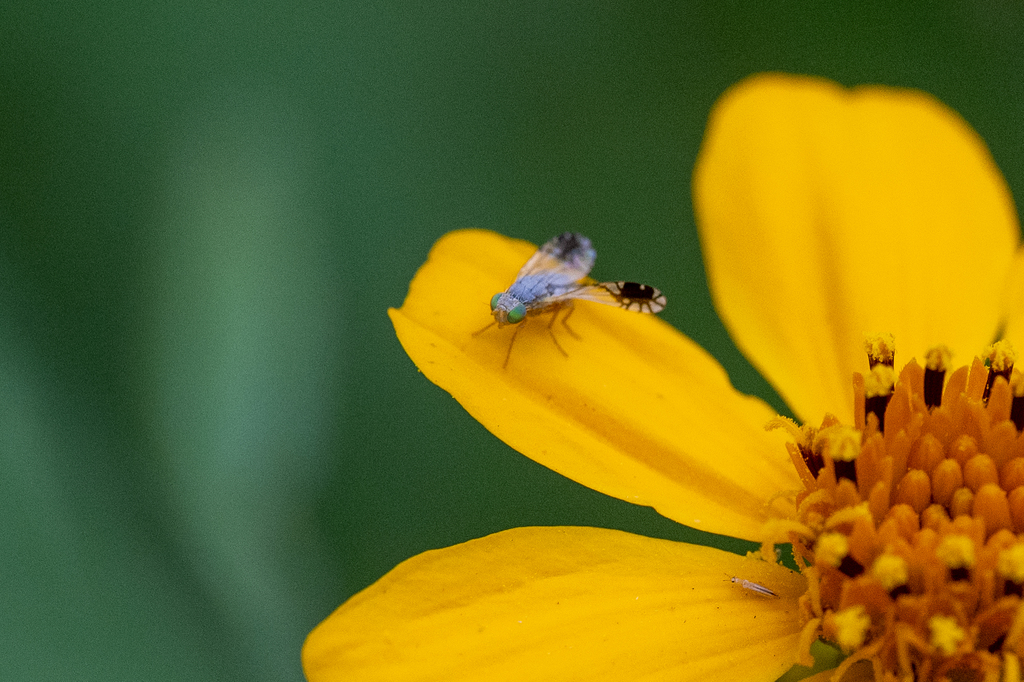
(c) Michael Eisen, some rights reserved (CC BY) · licence
Family: Tephritidae · Class: Insecta · Order: Diptera
Trupanea vicina (Marigold Fruit Fly) is a California animal in the Tephritidae family.
The Marigold Fruit Fly (Trupanea vicina) is a small dipteran insect in the family Tephritidae, measuring approximately 5 mm in length (BugGuide 2018). This species exhibits the typical tephritid characteristics of patterned wings with dark markings, though detailed morphological descriptions remain limited in the scientific literature. Females can be distinguished from males through wing venation patterns and other taxonomic features outlined in identification keys (Foote 1960). Trupanea vicina has a documented distribution across multiple U.S. states, with confirmed records from California, Arkansas, Louisiana, New York, and Oklahoma (BugGuide 2025). In California, the species has been observed in Sonoma County, specifically in Rohnert Park, where a female specimen was photographed on sweet alyssum flowers in April 2018 (BugGuide 2018). The species' range extends beyond California, indicating a broader North American distribution pattern typical of many tephritid species. Habitat requirements for this species appear to include areas with flowering plants that provide nectar sources for adults. The documented observation of T. vicina feeding on sweet alyssum (Lobularia maritima) suggests the species utilizes both native and non-native flowering plants (BugGuide 2018). Like other fruit flies in the genus Trupanea, this species likely requires specific host plants for larval development, though these associations have not been well documented in the literature. The ecology and behavior of T. vicina remain poorly understood due to limited scientific study. As a member of the Tephritidae, adults likely feed on nectar and other plant fluids, while larvae develop within plant tissues of their host species. The April observation date in California suggests spring activity, though the full seasonal activity pattern has not been documented. Reproductive behavior, mating systems, and larval biology require further investigation. Trupanea vicina appears on Species of Greatest Conservation Need (SGCN) lists for multiple states, including Arkansas (2006), Louisiana (2015), New York (2015), and Oklahoma (2005), indicating regional conservation concern (BugGuide 2025). NatureServe currently lists the global status as GNR (Global Not Ranked), reflecting the limited taxonomic and ecological data available for this species. The inclusion on multiple state SGCN lists suggests either population declines, habitat threats, or insufficient data to assess conservation status properly. The species was included in Foote's comprehensive 1960 revision of North American Trupanea species, and subsequent work by Foote and Blanc (1963) documented its presence in California's tephritid fauna. However, recent ecological studies and population assessments are lacking. The paucity of recent scientific literature on T. vicina highlights the need for additional research to understand its distribution, ecology, and conservation requirements. Current knowledge gaps include host plant relationships, population trends, habitat specificity, and responses to environmental changes affecting many specialized insects across North America.
Classification
Class: Insecta · Order: Diptera · Family: Tephritidae
Frequently asked questions
How is Trupanea vicina classified?
Trupanea vicina belongs to class Insecta, order Diptera, family Tephritidae.
What family does Trupanea vicina belong to?
Trupanea vicina is in the Tephritidae family.
What is Trupanea vicina?
The Marigold Fruit Fly (Trupanea vicina) is a small dipteran insect in the family Tephritidae, measuring approximately 5 mm in length (BugGuide 2018).
Is Trupanea vicina found in California?
Yes. Trupanea vicina is recorded in California in The California Species Project's catalogue.
Related species
Other California species in the same genus, family, or bioregion.
Data from The California Species Project — 14,000+ California species with verified data from CNPS, CDFW, USFWS, and more.