Tryonia imitator
Mimic Tryonia (=california Brackishwater Snail)
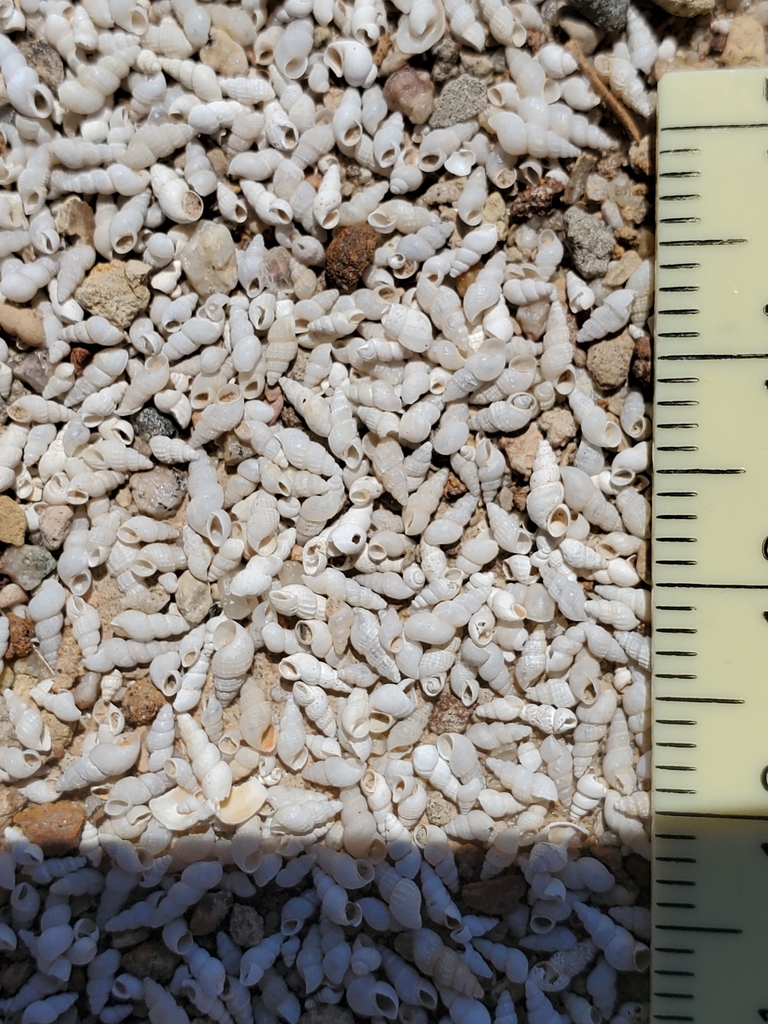
(c) Bob Miller, some rights reserved (CC BY) · licence
Family: Cochliopidae · Class: Gastropoda · Order: Littorinimorpha
Conservation status: G2 S2
Tryonia imitator (Mimic Tryonia (=california Brackishwater Snail)) is a California animal in the Cochliopidae family.
The mimic tryonia (Tryonia imitator), also known as the California brackishwater snail, is a small freshwater gastropod endemic to California's coastal wetland systems. This aquatic snail belongs to the family Cochliopidae and represents one of several imperiled springsnail species in the western United States. Adults typically measure 2-4 mm in shell height, with a conical, elongated shell displaying distinctive spiral ridges and a brown to amber coloration. Historically, T. imitator occurred in brackish water habitats throughout the San Francisco Bay area and southern California coastal regions. The species was documented from Ballona Creek in Los Angeles County as recently as 1974, according to California Department of Fish and Wildlife records (CDFW 2013). Current distribution appears severely restricted, with the species potentially eliminated from much of its former range due to habitat modification and urbanization of coastal wetlands. The mimic tryonia inhabits brackish water environments where freshwater and saltwater mix, typically in tidal marshes, coastal lagoons, and estuarine systems. These snails require specific salinity gradients and are associated with submerged aquatic vegetation and soft sediment substrates. The species appears adapted to fluctuating salinity conditions characteristic of tidal marsh ecosystems, distinguishing it from strictly freshwater or marine gastropods. Like other hydrobiid snails, T. imitator is believed to be a grazer, feeding on algae, diatoms, and organic detritus found on submerged surfaces and sediments. Reproduction likely involves internal fertilization with females depositing small, gelatinous egg masses on vegetation or hard substrates. The species may exhibit continuous reproduction in favorable conditions, though specific breeding patterns and life cycle duration remain poorly documented. These snails serve as prey for various wetland invertebrates, fish, and waterfowl. Tryonia imitator is ranked G2 S2, indicating it is imperiled both globally and within California, with populations facing high risk of extinction (NatureServe 2013). The species lacks federal listing status but is considered a species of special concern due to severe habitat loss and degradation. Primary threats include urban development, water diversion, pollution, and invasion by non-native species in coastal wetland systems. The channeled apple snail and other invasive mollusks may compete for resources and alter habitat conditions. Climate change poses additional risks through sea level rise and altered precipitation patterns affecting salinity regimes in remaining suitable habitats. Recovery efforts focus on wetland restoration and protection within the species' historical range. This species is included on the California Department of Fish and Wildlife's Special Animals List. The Ballona Wetlands Ecological Reserve represents one of the few remaining areas where habitat restoration might benefit this species (Chambers Group 1996, WRA Environmental Consultants 2013), though current population status remains uncertain. Conservation success will require comprehensive surveys to locate extant populations, followed by habitat protection and restoration of brackish water ecosystems throughout southern California's coastal zone.
Classification
Class: Gastropoda · Order: Littorinimorpha · Family: Cochliopidae
Conservation status
G2 S2
Frequently asked questions
How is Tryonia imitator classified?
Tryonia imitator belongs to class Gastropoda, order Littorinimorpha, family Cochliopidae.
What family does Tryonia imitator belong to?
Tryonia imitator is in the Cochliopidae family.
Is Tryonia imitator protected or of conservation concern?
Tryonia imitator carries the following status: G2 S2.
What is Tryonia imitator?
The mimic tryonia (Tryonia imitator), also known as the California brackishwater snail, is a small freshwater gastropod endemic to California's coastal wetland systems.
Is Tryonia imitator found in California?
Yes. Tryonia imitator is recorded in California in The California Species Project's catalogue.
Related species
Other California species in the same genus, family, or bioregion.
Data from The California Species Project — 14,000+ California species with verified data from CNPS, CDFW, USFWS, and more.