Tryonia margae
Grapevine Springs Elongate Tryonia
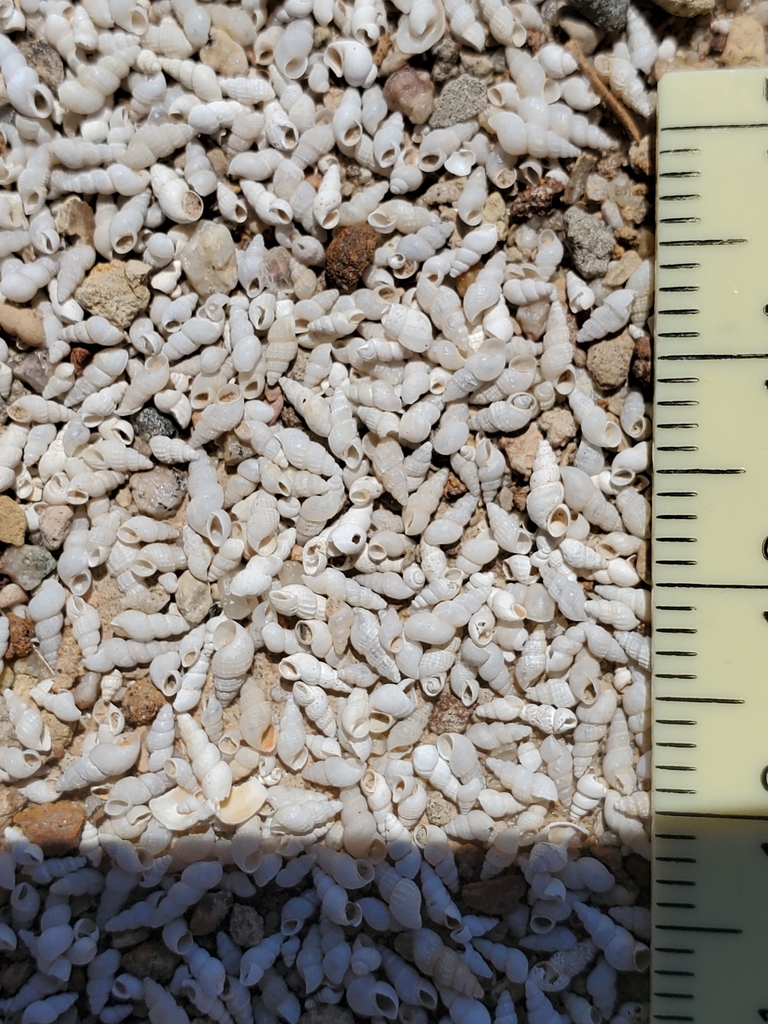
(c) Bob Miller, some rights reserved (CC BY) · licence
Family: Cochliopidae · Class: Gastropoda · Order: Littorinimorpha
Conservation status: G1 S1
Tryonia margae (Grapevine Springs Elongate Tryonia) is a California animal in the Cochliopidae family.
The Grapevine Springs Elongate Tryonia (Tryonia margae) is a small freshwater gastropod endemic to the Death Valley region of California. This aquatic snail is characterized by its elongated shell morphology, distinguishing it from the more compact Grapevine Springs Squat Tryonia that occurs in the same spring system. Like other members of the genus Tryonia, this species exhibits the typical conical to elongated shell structure common to desert springsnails, though specific morphometric data for T. margae remains limited in the scientific literature. The species is restricted to Grapevine Springs in the northern Death Valley region of Inyo County, California. This extremely limited distribution makes it one of the most geographically restricted mollusks in North America. Grapevine Springs is located in the transition zone between the Mojave Desert and Great Basin ecosystems, representing a critical refugial habitat that has supported endemic aquatic fauna since the Pleistocene. Tryonia margae inhabits the spring pools, outflow channels, and associated wetland areas of the Grapevine Springs complex. These thermal springs maintain relatively constant water temperatures year-round, creating stable aquatic conditions in an otherwise arid landscape. The species appears to require specific water chemistry and temperature parameters that characterize these geothermal spring systems. Substrate preferences and microhabitat requirements have not been thoroughly documented, though related springsnail species typically inhabit areas with fine sediments, aquatic vegetation, and stable water flow. Like other desert springsnails, T. margae likely feeds on algae, detritus, and bacterial biofilms that develop in spring environments. Reproductive biology and life cycle characteristics remain poorly studied, though most Tryonia species are thought to be dioecious with separate sexes. Population structure, seasonal activity patterns, and specific ecological interactions within the Grapevine Springs ecosystem require further investigation to inform conservation planning. The species receives a global conservation rank of G1, indicating it is critically imperiled with a very high risk of extinction. The extremely restricted range makes Tryonia margae particularly vulnerable to habitat modification or loss. Primary threats include groundwater development and extraction, which can reduce spring flow and alter water chemistry. According to the U.S. Fish and Wildlife Service, groundwater pumping that exceeds aquifer recharge may result in surface water level decline, spring drying, and degradation or loss of aquatic habitat. Climate change poses additional risks through potential alterations to regional precipitation patterns and groundwater recharge. The species' occurrence within Death Valley National Park provides some habitat protection, though broader watershed management and groundwater regulation remain critical for long-term conservation. As of December 2025, T. margae has not received federal protection under the Endangered Species Act despite its precarious conservation status. Detailed ecological studies and population monitoring are needed to better understand this species' biology and inform effective conservation strategies for preserving this unique element of California's desert spring fauna.
Classification
Class: Gastropoda · Order: Littorinimorpha · Family: Cochliopidae
Conservation status
G1 S1
Frequently asked questions
How is Tryonia margae classified?
Tryonia margae belongs to class Gastropoda, order Littorinimorpha, family Cochliopidae.
What family does Tryonia margae belong to?
Tryonia margae is in the Cochliopidae family.
Is Tryonia margae protected or of conservation concern?
Tryonia margae carries the following status: G1 S1.
What is Tryonia margae?
The Grapevine Springs Elongate Tryonia (Tryonia margae) is a small freshwater gastropod endemic to the Death Valley region of California.
Is Tryonia margae found in California?
Yes. Tryonia margae is recorded in California in The California Species Project's catalogue.
Related species
Other California species in the same genus, family, or bioregion.
Data from The California Species Project — 14,000+ California species with verified data from CNPS, CDFW, USFWS, and more.