Tryonia rowlandsi
Grapevine Springs Squat Tryonia
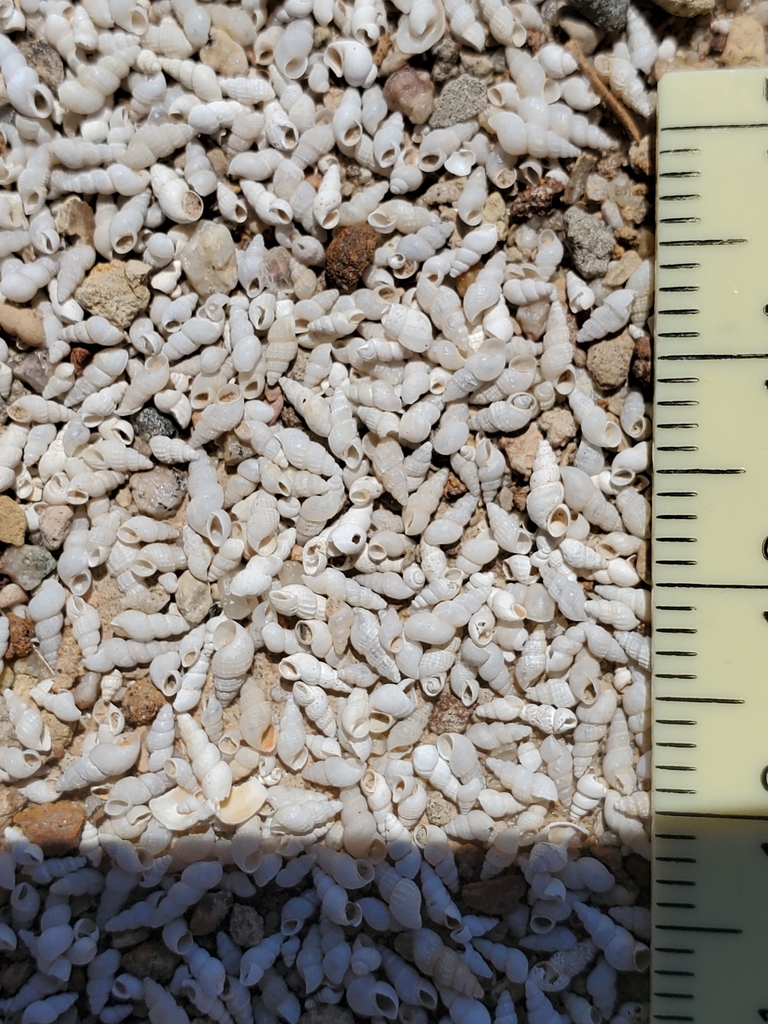
(c) Bob Miller, some rights reserved (CC BY) · licence
Family: Cochliopidae · Class: Gastropoda · Order: Littorinimorpha
Conservation status: G1 S1
Tryonia rowlandsi (Grapevine Springs Squat Tryonia) is a California animal in the Cochliopidae family.
Tryonia rowlandsi, known as the Grapevine Springs Squat Tryonia, is a critically imperiled freshwater gastropod endemic to a limited area in the Mojave Desert region. This minute aquatic snail has a shell diameter not exceeding 5 mm, consistent with other members of the genus Tryonia (USFWS Recovery Plan 1990). The species exhibits the characteristic squat, conical shell morphology typical of tryonid snails, adapted for life in spring environments. The species has an extremely restricted range, occurring in only a few spring systems in the Mojave Desert region of Nevada and California. Based on the limited distribution pattern of related Tryonia species, T. rowlandsi likely occupies specific spring pools and immediate outflows within its range, similar to other members of the genus that are found in springpools and seeps throughout Ash Meadows and surrounding areas (USFWS Recovery Plan 1990). Grapevine Springs Squat Tryonia inhabits spring-fed aquatic environments characterized by constant water temperatures and specific water chemistry conditions. These spring systems typically feature shallow pools and slow-flowing outflows with rocky or sandy substrates. The species requires the stable thermal and chemical conditions provided by geothermal spring environments, which maintain relatively constant temperatures year-round despite external desert conditions. Like other Tryonia species, T. rowlandsi likely functions as a grazer, feeding on algae, diatoms, and organic detritus found on submerged surfaces within spring environments (USFWS Recovery Plan 1990). The species presumably reproduces through direct development, with females depositing eggs on hard substrates within the spring environment. Reproductive timing and specific breeding behaviors have not been well documented for this species. Population dynamics and life history characteristics remain poorly understood due to the species' recent scientific recognition and extremely limited distribution. Tryonia rowlandsi holds a Global Heritage rank of G1 (critically imperiled) and State rank of S1 in both Nevada and California, indicating it faces an extremely high risk of extinction. The species faces significant threats common to spring-dependent fauna in the Mojave Desert region, including groundwater development and extraction that can reduce spring flow or cause complete spring drying (USFWS 2011). Water pollution, recreational activities, and habitat modification pose additional risks to the limited spring environments where the species occurs. Climate change may exacerbate these threats through altered precipitation patterns and increased temperatures that could affect spring hydrology. The species' extremely limited distribution makes it particularly vulnerable to habitat loss, as the destruction of even a single spring system could eliminate a significant portion of the total population. Conservation efforts for this species likely depend on protecting groundwater resources and maintaining the integrity of spring ecosystems within its range.
Classification
Class: Gastropoda · Order: Littorinimorpha · Family: Cochliopidae
Conservation status
G1 S1
Frequently asked questions
How is Tryonia rowlandsi classified?
Tryonia rowlandsi belongs to class Gastropoda, order Littorinimorpha, family Cochliopidae.
What family does Tryonia rowlandsi belong to?
Tryonia rowlandsi is in the Cochliopidae family.
Is Tryonia rowlandsi protected or of conservation concern?
Tryonia rowlandsi carries the following status: G1 S1.
What is Tryonia rowlandsi?
Tryonia rowlandsi, known as the Grapevine Springs Squat Tryonia, is a critically imperiled freshwater gastropod endemic to a limited area in the Mojave Desert region.
Is Tryonia rowlandsi found in California?
Yes. Tryonia rowlandsi is recorded in California in The California Species Project's catalogue.
Related species
Other California species in the same genus, family, or bioregion.
Data from The California Species Project — 14,000+ California species with verified data from CNPS, CDFW, USFWS, and more.