Tupiocoris californicus
Phacelia Plant Bug
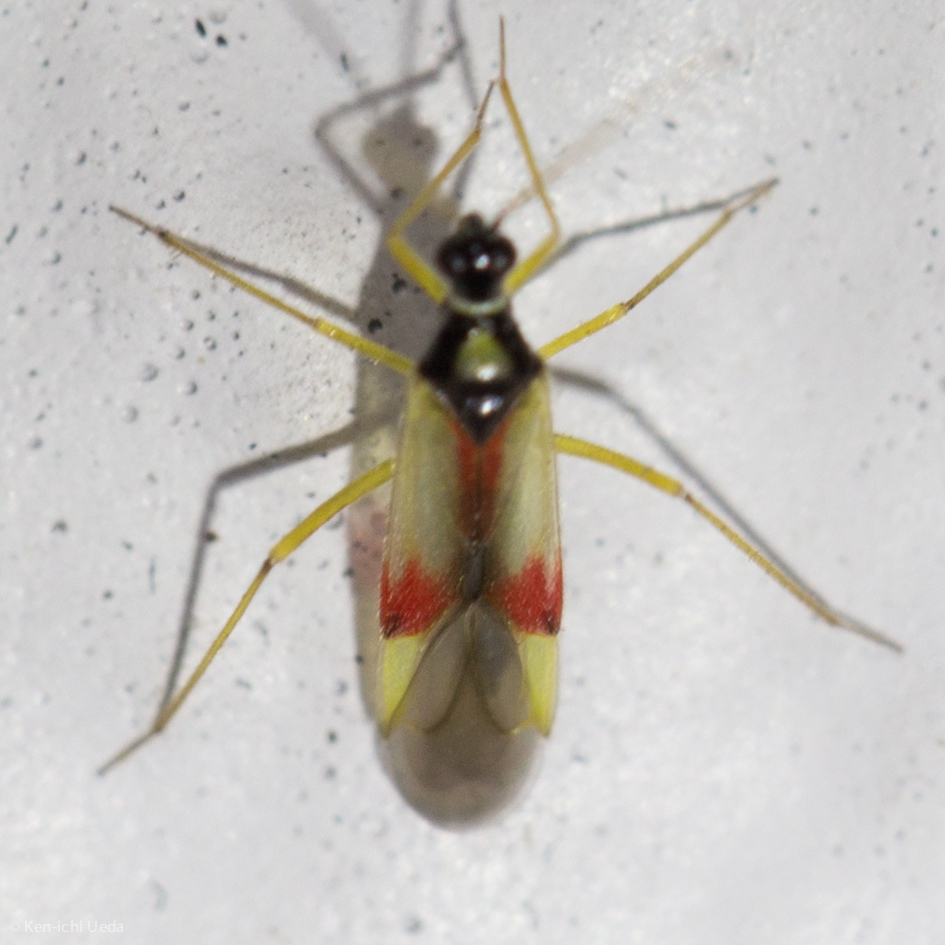
(c) Ken-ichi Ueda, some rights reserved (CC BY) · licence
Family: Miridae · Class: Insecta · Order: Hemiptera
Tupiocoris californicus (Phacelia Plant Bug) is a California animal in the Miridae family.
Tupiocoris californicus, commonly known as the Phacelia Plant Bug, is a small true bug in the family Miridae (plant bugs). This species belongs to the subfamily Bryocorinae and tribe Dicyphini, representing one of the many specialized plant-feeding hemipterans found in California's diverse ecosystems. The physical characteristics of T. californicus have not been extensively documented in scientific literature, reflecting the limited research attention given to many mirid species. Like other members of the Miridae family, this species likely measures between 3-8 millimeters in length with the typical elongated, soft-bodied form characteristic of plant bugs. The specific coloration and distinguishing morphological features of this species require further taxonomic investigation. Tupiocoris californicus occurs in California and extends southward into Baja California, Mexico (Plant Bug Planetary Biodiversity Inventory). The species' distribution within California has not been comprehensively mapped, and specific county records or elevational ranges remain undocumented. This distribution pattern suggests adaptation to the Mediterranean and semi-arid climates characteristic of the California Floristic Province and adjacent regions. The habitat requirements and ecological associations of T. californicus are poorly understood. The common name "Phacelia Plant Bug" suggests a potential association with plants in the genus Phacelia (family Boraginaceae), which are common throughout California's chaparral, coastal sage scrub, and desert communities. Phacelia species such as P. californica (California phacelia) and P. tanacetifolia (tansy phacelia) are widespread in the region and serve as important nectar sources for various pollinators. However, the specific host plant relationships and habitat preferences of this mirid species have not been scientifically verified. The feeding behavior, reproductive biology, and life cycle of T. californicus remain largely unknown. Most mirid bugs are phytophagous, feeding on plant tissues through piercing-sucking mouthparts. Some species are generalist feeders while others show high host specificity. The seasonal activity patterns, number of generations per year, and overwintering strategy of this species have not been documented. Understanding these ecological aspects would require focused field studies and taxonomic research. The conservation status of Tupiocoris californicus has not been formally assessed. The species lacks federal or state conservation designations, and population trends are unknown. Like many arthropod species, T. californicus may face threats from habitat loss due to urban development, agricultural conversion, and invasive plant species that could displace native host plants. Climate change may also affect the distribution and abundance of both this species and its potential Phacelia hosts. The taxonomic and ecological knowledge gaps surrounding T. californicus highlight the broader challenge of documenting California's arthropod diversity. Comprehensive surveys, taxonomic studies, and ecological research are needed to understand the distribution, habitat requirements, and conservation needs of this and many other poorly known insect species. Such information is essential for effective biodiversity conservation planning in California's rapidly changing landscapes.
Classification
Class: Insecta · Order: Hemiptera · Family: Miridae
Frequently asked questions
How is Tupiocoris californicus classified?
Tupiocoris californicus belongs to class Insecta, order Hemiptera, family Miridae.
What family does Tupiocoris californicus belong to?
Tupiocoris californicus is in the Miridae family.
What is Tupiocoris californicus?
Tupiocoris californicus, commonly known as the Phacelia Plant Bug, is a small true bug in the family Miridae (plant bugs).
Is Tupiocoris californicus found in California?
Yes. Tupiocoris californicus is recorded in California in The California Species Project's catalogue.
Related species
Other California species in the same genus, family, or bioregion.
Data from The California Species Project — 14,000+ California species with verified data from CNPS, CDFW, USFWS, and more.