Tympanuchus phasianellus
Sharp-tailed Grouse
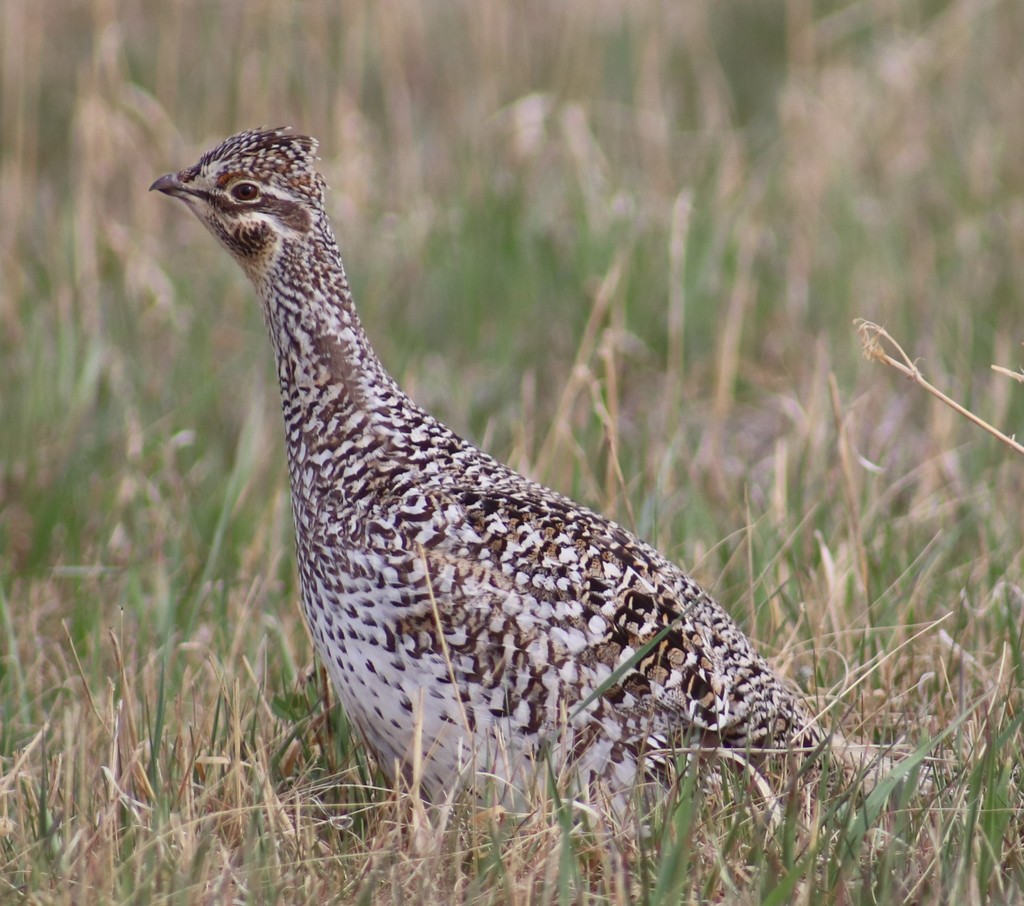
(c) Sean Frey, some rights reserved (CC BY) · licence
Family: Phasianidae · Class: Aves · Order: Galliformes
Tympanuchus phasianellus (Sharp-tailed Grouse) is a California animal in the Phasianidae family.
The Sharp-tailed Grouse is a medium-sized prairie grouse measuring 38-48 cm (15-19 inches) in length with a wingspan of 61-71 cm (24-28 inches). Adults weigh 680-1200 grams (1.5-2.6 pounds). The species exhibits sexual dimorphism, with males displaying more pronounced plumage features. Both sexes have mottled brown and white upperparts with dark V-shaped markings throughout. The underparts are lighter with brown barring. The distinctive pointed tail feathers, from which the species derives its name, are white-edged and shorter than those of other prairie grouse. Males possess yellow-orange air sacs (pinnae) above the eyes and inflatable purple neck sacs used during courtship displays. Historically, Sharp-tailed Grouse ranged across the northern Great Plains and into the northern Rocky Mountain region. In California, the species was documented in the far northeastern counties, including portions of Modoc and likely Lassen counties. However, Sharp-tailed Grouse are considered extirpated from California, with the last confirmed breeding populations disappearing in the early-to-mid 20th century. Current populations persist across much of their historical range in Alaska, Canada, and northern U.S. states including Montana, North Dakota, and Minnesota. Sharp-tailed Grouse inhabit mixed grassland and shrubland ecosystems, particularly areas where prairie meets woodland edges. They require a mosaic of habitats including native grasslands for nesting, shrublands for winter cover, and open areas for courtship displays (leks). Preferred nesting sites are in grasslands with 25-60% grass cover and scattered shrubs. The species typically occurs at elevations from sea level to 2,400 meters (7,875 feet), though California populations historically occupied montane and high desert habitats. During breeding season, males gather at traditional display grounds called leks where they perform elaborate courtship rituals including foot-stamping dances, tail-fanning, and vocalizations. Breeding occurs from April through June, with females nesting in shallow ground scrapes lined with grass and feathers. Clutch size averages 10-14 eggs, which are incubated for 21-24 days. Sharp-tailed Grouse are omnivorous, with diet varying seasonally. Summer foods include insects, leaves, flowers, and berries. Winter diet consists primarily of buds, catkins, and twigs from aspen, birch, and willow. Young birds consume high-protein insects during their first few weeks. Sharp-tailed Grouse are not federally listed but face population declines across much of their range due to habitat loss and fragmentation. Conversion of native grasslands to agriculture, energy development, and altered fire regimes represent primary threats. In California, habitat alteration and possibly overhunting contributed to the species' extirpation. According to the North American Bird Conservation Initiative, continental populations have declined approximately 32% since 1970. Several states maintain Sharp-tailed Grouse as species of conservation concern, implementing habitat management programs and hunting regulations to support population stability.
Classification
Class: Aves · Order: Galliformes · Family: Phasianidae
Frequently asked questions
How is Tympanuchus phasianellus classified?
Tympanuchus phasianellus belongs to class Aves, order Galliformes, family Phasianidae.
What family does Tympanuchus phasianellus belong to?
Tympanuchus phasianellus is in the Phasianidae family.
What is Tympanuchus phasianellus?
The Sharp-tailed Grouse is a medium-sized prairie grouse measuring 38-48 cm (15-19 inches) in length with a wingspan of 61-71 cm (24-28 inches).
Is Tympanuchus phasianellus found in California?
Yes. Tympanuchus phasianellus is recorded in California in The California Species Project's catalogue.
Related species
Other California species in the same genus, family, or bioregion.
Data from The California Species Project — 14,000+ California species with verified data from CNPS, CDFW, USFWS, and more.