Tyrannus melancholicus
Tropical Kingbird
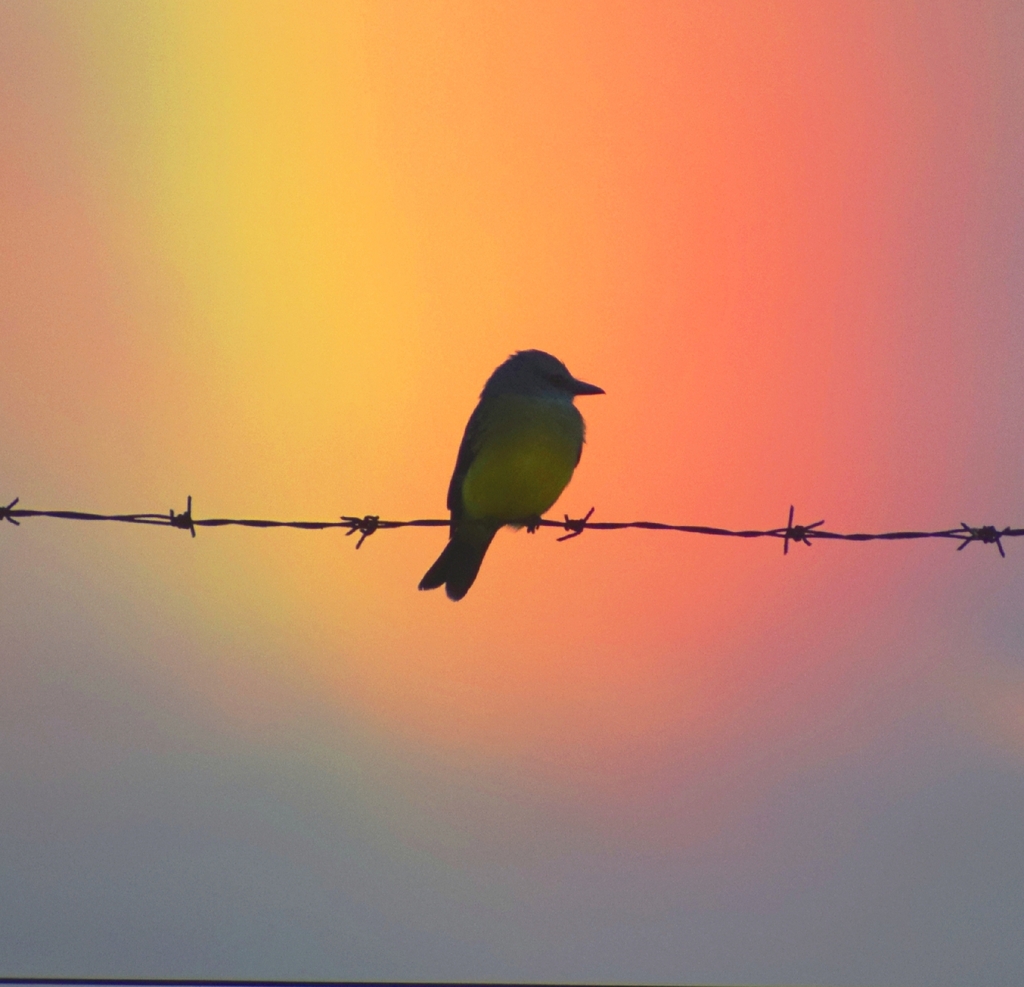
(c) Gonzalo Romero, some rights reserved (CC BY) · licence
Family: Tyrannidae · Class: Aves · Order: Passeriformes
Tyrannus melancholicus (Tropical Kingbird) is a California animal in the Tyrannidae family.
The Tropical Kingbird is a large flycatcher measuring 20 to 24 centimeters (7.9 to 9.4 inches) in length with a wingspan of 38 to 41 centimeters (15 to 16 inches). Adults weigh 37 to 52 grams (1.3 to 1.8 ounces). The species exhibits relatively uniform plumage with olive-brown to grayish-brown upperparts and pale yellow underparts. The head is gray with a slightly darker crown that may show a concealed orange-red crown patch when excited. The bill is long, straight, and black with a pale base on the lower mandible. The tail is dark brown with pale edges and shows a slight fork when spread. The Tropical Kingbird has the most extensive range of any tyrant flycatcher, occurring from southern Arizona and extreme southern Texas through Central America to central Argentina. In California, the species is considered a vagrant or very rare visitor, with scattered records primarily from fall and winter months along the coast and in desert regions. Most California observations occur in southern counties, particularly San Diego, Imperial, and Riverside counties. The species has been documented at locations including Point Reyes, the Salton Sea, and various coastal parks. Tropical Kingbirds inhabit open and semi-open areas including agricultural lands, pastures, parks, gardens, and forest edges. They prefer areas with scattered trees or tall shrubs that provide perching sites for hunting. In their core range, they occur from sea level to elevations of 2,500 meters (8,200 feet). The species adapts well to human-modified environments and is commonly found in suburban areas with adequate tree cover. This species employs sit-and-wait hunting tactics, perching conspicuously on exposed branches, wires, or posts before sallying out to capture flying insects. Their diet consists primarily of flying insects including beetles, flies, bees, wasps, termites, and flying ants. They occasionally supplement their diet with small fruits and berries. Tropical Kingbirds are highly territorial during breeding season, with males defending territories through aggressive displays and vocalizations. The species produces a distinctive twittering call described as a rapid series of "kip-kip-kip" notes. Breeding occurs from March through August, varying by latitude. Nests are constructed in horizontal forks of trees or shrubs, typically 3 to 15 meters (10 to 49 feet) above ground. The female builds a cup-shaped nest using twigs, rootlets, and plant fibers, often incorporating human-made materials. Clutch size ranges from 2 to 4 eggs, which are cream-colored with brown and purple markings. Incubation lasts 16 to 18 days, and nestlings fledge after 18 to 23 days. The Tropical Kingbird is not federally or state listed and maintains stable populations throughout most of its range. The International Union for Conservation of Nature lists the species as Least Concern due to its large range, stable population trend, and adaptability to human-modified habitats. In California, the species remains an uncommon visitor with no established breeding populations, though climate change may influence future occurrence patterns along the state's southern border.
Classification
Class: Aves · Order: Passeriformes · Family: Tyrannidae
Frequently asked questions
How is Tyrannus melancholicus classified?
Tyrannus melancholicus belongs to class Aves, order Passeriformes, family Tyrannidae.
What family does Tyrannus melancholicus belong to?
Tyrannus melancholicus is in the Tyrannidae family.
What is Tyrannus melancholicus?
The Tropical Kingbird is a large flycatcher measuring 20 to 24 centimeters (7.9 to 9.4 inches) in length with a wingspan of 38 to 41 centimeters (15 to 16 inches).
Is Tyrannus melancholicus found in California?
Yes. Tyrannus melancholicus is recorded in California in The California Species Project's catalogue.
Related species
Other California species in the same genus, family, or bioregion.
Data from The California Species Project — 14,000+ California species with verified data from CNPS, CDFW, USFWS, and more.