Tyrannus tyrannus
Eastern Kingbird
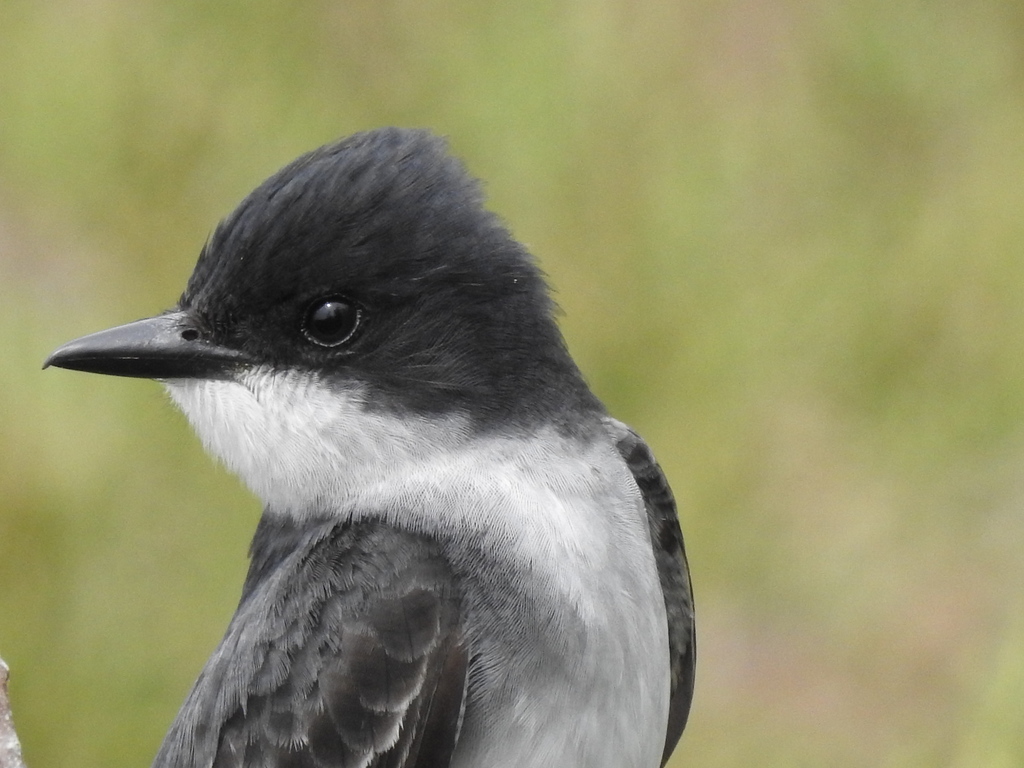
(c) Laura Mae, some rights reserved (CC BY) · licence
Family: Tyrannidae · Class: Aves · Order: Passeriformes
Tyrannus tyrannus (Eastern Kingbird) is a California animal in the Tyrannidae family.
The Eastern Kingbird is a medium-sized flycatcher measuring 19 to 23 cm (7.5 to 9.1 inches) in length with a wingspan of 33 to 38 cm (13 to 15 inches). Adults weigh 33 to 55 grams. The species exhibits striking black and white plumage, with a dark blackish-gray head, back, wings, and tail contrasting sharply with bright white underparts. The tail displays a distinctive white terminal band that is clearly visible in flight. Males possess a concealed orange-red crown patch that is typically visible only during aggressive displays or courtship. The bill is relatively broad and flat, adapted for aerial insect capture. Historically, Eastern Kingbirds bred across much of temperate North America from southern Canada to the Gulf Coast. In California, the species occurs primarily as a migrant and occasional breeder in the northeastern counties, including Modoc, Lassen, and Siskiyou counties. The species is most commonly observed during spring and fall migration periods from April through May and August through September. Small breeding populations have been documented in the Modoc Plateau region. Eastern Kingbirds inhabit open and semi-open habitats including agricultural areas, pastures, grasslands with scattered trees, riparian corridors, and forest edges. The species shows a strong preference for areas with prominent perches such as fence posts, telephone wires, and isolated trees from which to hunt for insects. During migration, birds utilize similar habitats as well as parks and suburban areas with adequate foraging opportunities. This species is an aggressive aerial insectivore, capturing prey through hawking flights from exposed perches. The diet consists primarily of flying insects including beetles, flies, bees, wasps, moths, and grasshoppers. Eastern Kingbirds are highly territorial during the breeding season, with males defending territories of 0.5 to 2.5 hectares through aggressive displays and physical confrontations with intruders. Breeding occurs from May through July, with females constructing cup-shaped nests in horizontal tree forks typically 3 to 7 meters above ground. Clutch size ranges from 2 to 5 eggs, with an average of 3 to 4. Incubation lasts 14 to 17 days, performed solely by females. Both parents feed nestlings for 16 to 18 days until fledging. The species undergoes one of the longest migrations of any North American flycatcher, traveling to South America for winter. According to recent tracking studies, Eastern Kingbirds winter primarily in the Amazon Basin, traveling up to 9,000 kilometers from breeding grounds. The Eastern Kingbird is not federally or state listed and maintains stable populations continent-wide. In California, the species remains uncommon and localized, with populations likely limited by available habitat in the northeastern regions. Climate change may affect migration timing and breeding success, though current population trends show stability across the species' range.
Classification
Class: Aves · Order: Passeriformes · Family: Tyrannidae
Frequently asked questions
How is Tyrannus tyrannus classified?
Tyrannus tyrannus belongs to class Aves, order Passeriformes, family Tyrannidae.
What family does Tyrannus tyrannus belong to?
Tyrannus tyrannus is in the Tyrannidae family.
What is Tyrannus tyrannus?
The Eastern Kingbird is a medium-sized flycatcher measuring 19 to 23 cm (7.5 to 9.1 inches) in length with a wingspan of 33 to 38 cm (13 to 15 inches).
Is Tyrannus tyrannus found in California?
Yes. Tyrannus tyrannus is recorded in California in The California Species Project's catalogue.
Related species
Other California species in the same genus, family, or bioregion.
Data from The California Species Project — 14,000+ California species with verified data from CNPS, CDFW, USFWS, and more.