Uloborus diversus
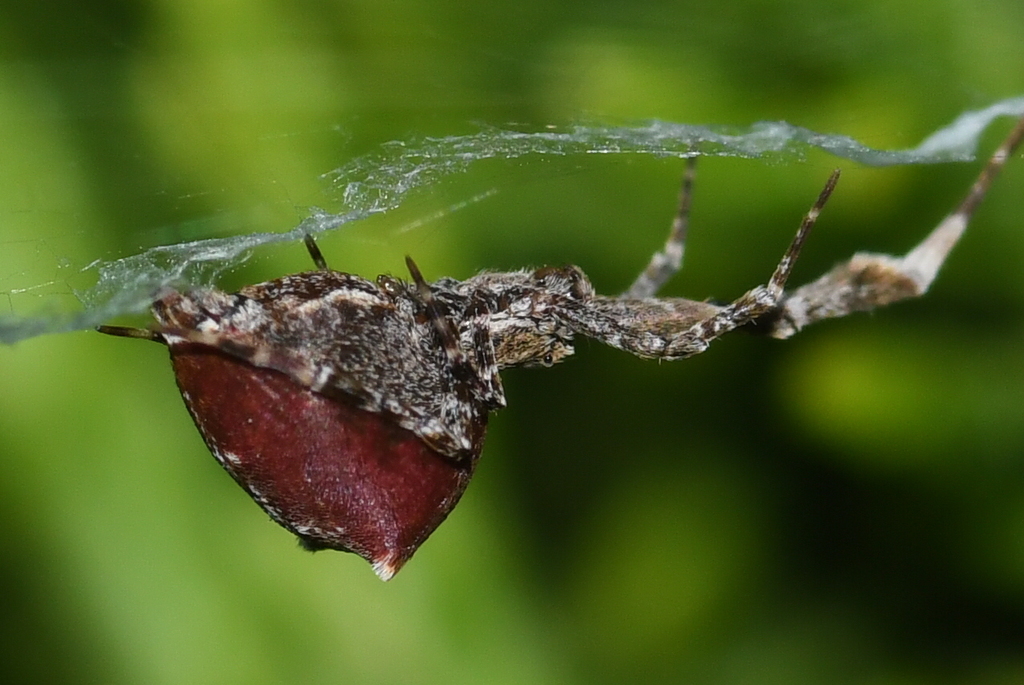
(c) Hawk T., some rights reserved (CC BY) · licence
Family: Uloboridae · Class: Arachnida · Order: Araneae
Uloborus diversus is a California animal in the Uloboridae family.
Uloborus diversus is a spider species in the family Uloboridae, commonly known as hackled orb weavers or cribellate orb weavers. This family is distinguished from other orb weavers by their unique web construction method, which involves the use of cribellate silk that creates a fuzzy, hackled appearance rather than the sticky capture spirals used by other orb weaver families. The physical characteristics of U. diversus have not been extensively documented in the scientific literature. Like other members of the genus Uloborus, this species likely constructs horizontal or semi-horizontal orb webs with distinctive hackled bands of cribellate silk. Members of this family are notable for being among the few spider groups that lack venom glands, instead relying on their specialized webs and wrapping techniques to subdue prey. The distribution and range of Uloborus diversus remain poorly documented. According to NatureServe Explorer, the species has a global conservation rank of GNR (Global Not Ranked), indicating insufficient data to assess its conservation status. The species does not appear to have any formal state or federal conservation listings, and specific locality records within California have not been well documented in available databases. Habitat requirements for U. diversus have not been specifically studied or published. Other Uloborus species typically inhabit areas where they can construct their horizontal webs, often in vegetation near the ground or in low shrubs. These spiders generally prefer locations that provide adequate anchor points for their webs while offering protection from wind and weather disturbance. The ecological behavior of U. diversus follows the general patterns observed in the family Uloboridae. These spiders are predators that capture flying insects in their orb webs, using the cribellate silk's unique properties to entangle prey without relying on adhesive droplets. The hackled silk bands are combed from the cribellum using specialized setae on the fourth legs, creating an effective capture mechanism. Reproduction likely follows the typical pattern for the genus, with males being considerably smaller than females and potentially facing the risk of sexual cannibalism during mating. The conservation status of Uloborus diversus reflects the broader challenge of documenting and understanding California's arachnid diversity. Many spider species, particularly those that are small, cryptic, or have limited distributions, remain understudied. The lack of comprehensive surveys and taxonomic work on California spiders means that the true conservation needs of species like U. diversus are unknown. No specific threats have been identified for this species, though habitat loss and fragmentation pose general risks to specialized arthropod species throughout California. Detailed ecological studies of this species are lacking. The above information synthesizes available data from NatureServe and general knowledge of Uloboridae biology. We welcome contributions of verified scientific data, photographs, or field observations to enhance this species account. Please contact Species List Pro to share additional information about Uloborus diversus distribution, habitat preferences, or ecological requirements.
Classification
Class: Arachnida · Order: Araneae · Family: Uloboridae
Frequently asked questions
How is Uloborus diversus classified?
Uloborus diversus belongs to class Arachnida, order Araneae, family Uloboridae.
What family does Uloborus diversus belong to?
Uloborus diversus is in the Uloboridae family.
What is Uloborus diversus?
Uloborus diversus is a spider species in the family Uloboridae, commonly known as hackled orb weavers or cribellate orb weavers.
Is Uloborus diversus found in California?
Yes. Uloborus diversus is recorded in California in The California Species Project's catalogue.
More California species
This species has no close relatives in our California data — here are other species to explore.
Data from The California Species Project — 14,000+ California species with verified data from CNPS, CDFW, USFWS, and more.