Ulolonche disticha
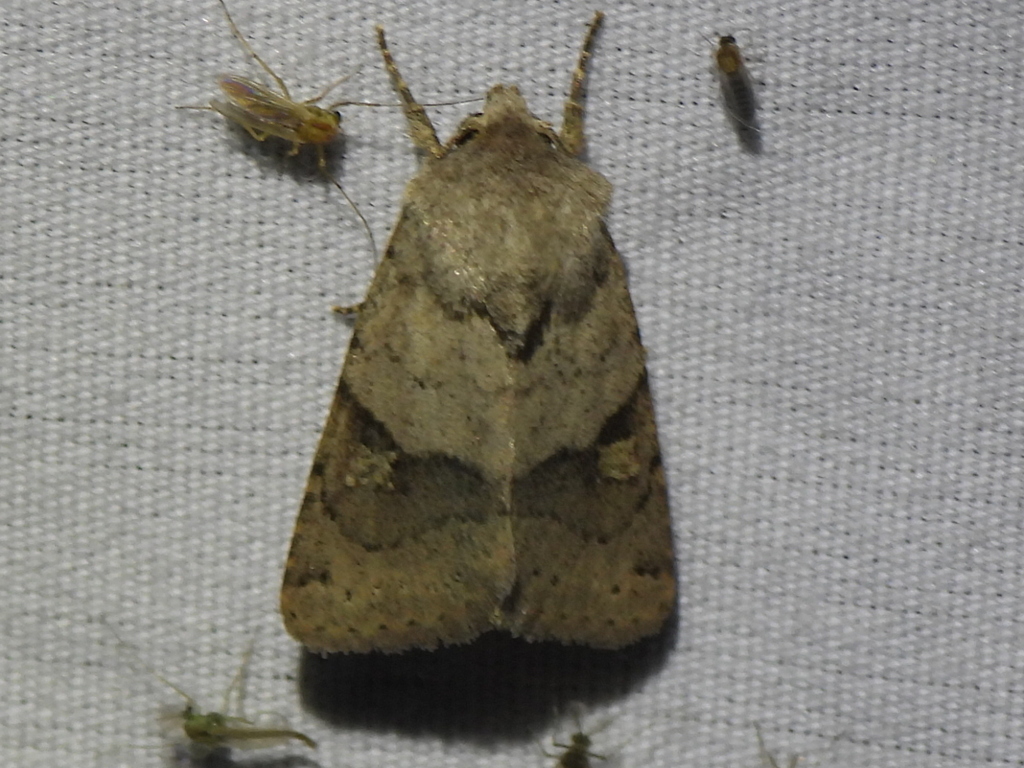
(c) Sam Kieschnick, some rights reserved (CC BY) · licence
Family: Noctuidae · Class: Insecta · Order: Lepidoptera
Ulolonche disticha is a California animal in the Noctuidae family.
Ulolonche disticha is a moth species belonging to the family Noctuidae, commonly known as owlet moths or cutworm moths. This species represents one of the lesser-documented members of the genus Ulolonche, with limited published information available regarding its morphological characteristics and life history. The physical description of Ulolonche disticha remains poorly documented in the scientific literature. Like other members of the Noctuidae family, this species likely exhibits the typical moth body plan with forewings that are generally longer and narrower than the hindwings. Adult noctuids typically display cryptic coloration patterns that provide camouflage during daytime resting periods, though specific details regarding wing patterns, coloration, and body size for U. disticha are not well-established in available references. The geographic distribution of Ulolonche disticha appears to be restricted, though precise range boundaries have not been thoroughly documented. Based on available taxonomic records, this species occurs in western North America, potentially including portions of California, though specific locality records and distributional limits require further field survey work to establish definitively. Habitat preferences for Ulolonche disticha have not been extensively studied or documented in the literature. Most noctuids occupy diverse terrestrial environments, from grasslands and shrublands to forest ecosystems. Many species in this family are associated with specific host plants during their larval stage, though the larval host plants for U. disticha have not been conclusively identified. The adults likely follow typical noctuid behavior patterns, being primarily nocturnal and attracted to artificial light sources. Ecological information regarding Ulolonche disticha remains largely unknown. The species presumably follows the standard lepidopteran life cycle, progressing through egg, larval, pupal, and adult stages. Flight periods, mating behaviors, and reproductive ecology have not been documented in accessible scientific literature. Like other noctuids, the larvae likely feed on vegetation, potentially specializing on particular plant families or species, while adults may feed on nectar sources or other liquid nutrients. The conservation status of Ulolonche disticha has not been formally assessed by state or federal agencies. The species does not appear on current endangered species lists or state species of special concern inventories. This lack of conservation attention likely reflects the limited knowledge base regarding the species' distribution, population trends, and ecological requirements rather than indicating stable population status. The paucity of recent collection records or ecological studies suggests that U. disticha may be either genuinely rare, highly localized in distribution, or simply understudied due to its cryptic nature and potential restricted habitat requirements. Further taxonomic and ecological research is needed to establish basic biological parameters for this species, including accurate identification keys, distributional mapping, host plant relationships, and population monitoring protocols that would inform future conservation assessments.
Classification
Class: Insecta · Order: Lepidoptera · Family: Noctuidae
Frequently asked questions
How is Ulolonche disticha classified?
Ulolonche disticha belongs to class Insecta, order Lepidoptera, family Noctuidae.
What family does Ulolonche disticha belong to?
Ulolonche disticha is in the Noctuidae family.
What is Ulolonche disticha?
Ulolonche disticha is a moth species belonging to the family Noctuidae, commonly known as owlet moths or cutworm moths.
Is Ulolonche disticha found in California?
Yes. Ulolonche disticha is recorded in California in The California Species Project's catalogue.
Related species
Other California species in the same genus, family, or bioregion.
Data from The California Species Project — 14,000+ California species with verified data from CNPS, CDFW, USFWS, and more.