Uresiphita reversalis
Genista Broom Moth
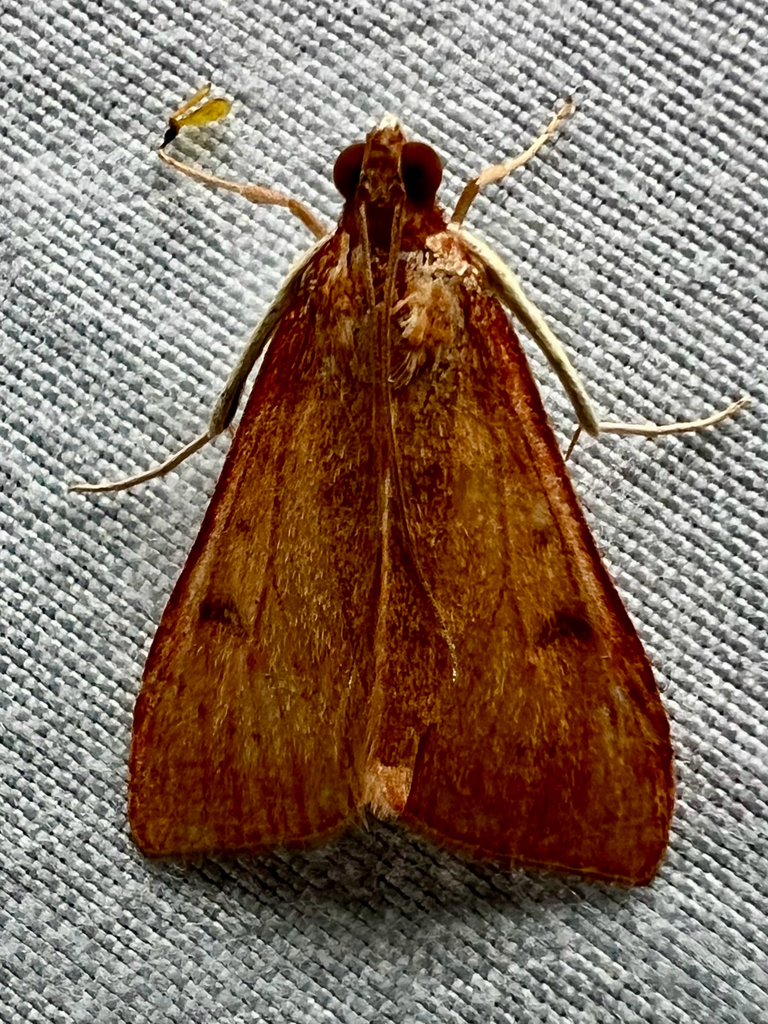
no rights reserved · CC0
Family: Crambidae · Class: Insecta · Order: Lepidoptera
Uresiphita reversalis (Genista Broom Moth) is a California animal in the Crambidae family.
The Genista broom moth (Uresiphita reversalis) is a small pyralid moth in the family Crambidae. Adults have a wingspan of approximately 20-25 mm (0.8-1.0 inches). The forewings are pale brown to grayish-brown with distinctive white and dark markings forming irregular bands across the wing surface. The hindwings are lighter, typically pale cream to white with a subtle brownish border. When at rest, the moth holds its wings in a triangular position close to the body, creating a tent-like appearance. The antennae are thread-like in both sexes, though males may have slightly more prominent antennae. Uresiphita reversalis is native to Europe but has become established in various regions worldwide. In North America, the species has been documented in several states, including California, where it has been recorded in coastal and inland areas. The moth's distribution appears to be closely tied to the presence of its host plants, primarily members of the legume family Fabaceae. In California, populations have been observed in both urban and natural environments where suitable host plants occur. The species inhabits areas where broom species and related leguminous shrubs are present. This includes disturbed sites, roadsides, chaparral margins, and urban landscapes where ornamental or naturalized broom plants grow. The moth can be found from sea level to moderate elevations, typically below 1,500 meters (4,900 feet). Adults are most commonly encountered in areas with abundant flowering legumes, which provide both larval food sources and adult nectar resources. Genista broom moths are multivoltine, producing multiple generations per year in favorable climates. Adults are primarily active during evening and nighttime hours and are attracted to artificial lights. Mating occurs shortly after adult emergence, and females deposit eggs directly on host plant foliage. Larvae feed on various leguminous plants, with a particular preference for broom species (Genista, Cytisus, and Spartium). The caterpillars are leaf feeders that can sometimes cause noticeable defoliation on heavily infested plants. Pupation occurs in a silken cocoon, often hidden among plant debris or in soil crevices near the host plant. The Genista broom moth is not currently listed under federal or state endangered species legislation. As an introduced species that feeds on both native and non-native legumes, its conservation status is not a primary concern. In some regions, the species may actually provide biological control services by feeding on invasive broom species. However, it can also impact native legumes and ornamental plantings. Population trends are not systematically monitored, but the species appears stable where suitable habitat and host plants are available. The moth's ability to utilize multiple host plant species and adapt to various habitats suggests it is likely to persist in areas where leguminous vegetation is present.
Classification
Class: Insecta · Order: Lepidoptera · Family: Crambidae
Frequently asked questions
How is Uresiphita reversalis classified?
Uresiphita reversalis belongs to class Insecta, order Lepidoptera, family Crambidae.
What family does Uresiphita reversalis belong to?
Uresiphita reversalis is in the Crambidae family.
What is Uresiphita reversalis?
The Genista broom moth (Uresiphita reversalis) is a small pyralid moth in the family Crambidae.
Is Uresiphita reversalis found in California?
Yes. Uresiphita reversalis is recorded in California in The California Species Project's catalogue.
Related species
Other California species in the same genus, family, or bioregion.
Data from The California Species Project — 14,000+ California species with verified data from CNPS, CDFW, USFWS, and more.