Urile pelagicus
Pelagic Cormorant
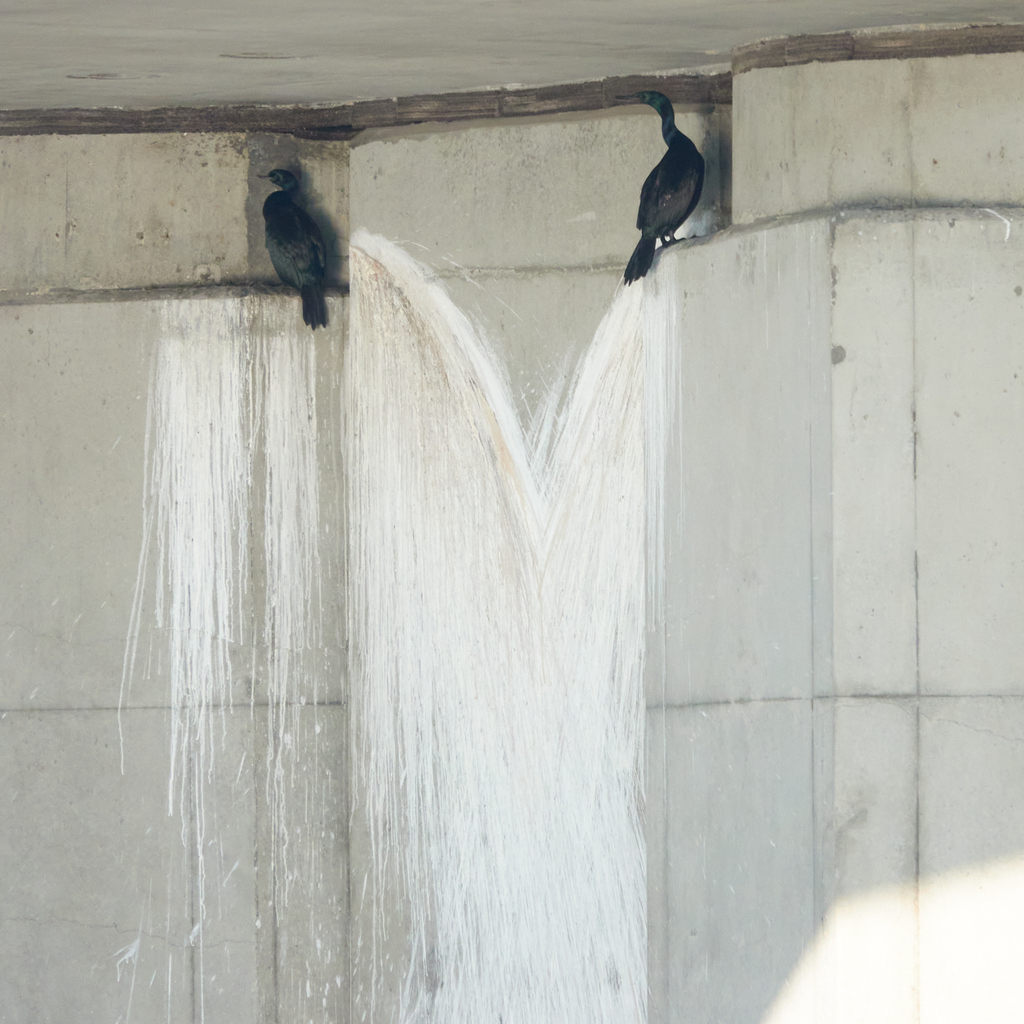
(c) Ken-ichi Ueda, some rights reserved (CC BY) · licence
Family: Phalacrocoracidae · Class: Aves · Order: Pelecaniformes
Urile pelagicus (Pelagic Cormorant) is a California animal in the Phalacrocoracidae family.
The Pelagic Cormorant is a medium-sized seabird measuring 63 to 89 cm (25 to 35 inches) in length with a wingspan of 100 to 123 cm (39 to 48 inches). Adults weigh between 1.5 to 2.5 kg (3.3 to 5.5 pounds). Breeding adults display glossy black plumage with a distinctive greenish iridescence on the head and neck. Two prominent white flank patches appear during breeding season, along with white filamentous plumes on the head and neck. The bill is thin, dark, and hooked at the tip, adapted for grasping fish. Non-breeding adults lack the white patches and plumes, appearing uniformly dark. The throat pouch is small and dark, distinguishing it from other cormorant species. Pelagic Cormorants range along the Pacific Coast from Alaska to Baja California, Mexico. In California, they nest on offshore islands and rocky coastal headlands from the Oregon border south to the Channel Islands. Major breeding colonies occur on the Farallon Islands, Point Reyes, Big Sur coastline, and Channel Islands. The species is present year-round in California waters, though northern populations may move south during winter months. This species inhabits rocky coastlines, sea cliffs, offshore islands, and adjacent marine waters. Nesting sites are typically located on narrow cliff ledges, rocky outcrops, and steep coastal bluffs, often 15 to 60 meters above sea level. Pelagic Cormorants prefer areas with minimal human disturbance and strong updrafts that facilitate takeoff from clifftop colonies. They forage in nearshore waters, typically within 10 km of the coast, diving in depths ranging from 5 to 40 meters. Pelagic Cormorants are pursuit divers, using their feet for underwater propulsion while hunting fish, squid, and crustaceans. Primary prey includes sculpins, rockfish, herring, and anchovies. Breeding season extends from April through August, with peak egg-laying occurring in May and June. Pairs construct nests from seaweed, grass, and feathers on cliff ledges, with females laying 3 to 5 pale blue eggs. Incubation lasts 31 to 37 days, with both parents sharing duties. Chicks fledge after 7 to 8 weeks but may return to the colony for several additional weeks. The Pelagic Cormorant is not currently listed under federal or state endangered species legislation. According to the North American Bird Conservation Initiative, populations appear stable along most of the Pacific Coast, though long-term monitoring data suggest regional declines in some areas. Primary threats include oil spills, marine pollution, disturbance at nesting colonies, and climate change impacts on prey availability. El Niño events can significantly reduce reproductive success by altering ocean conditions and fish distribution patterns. Nest site disturbance from recreational activities and coastal development poses localized threats to breeding colonies.
Classification
Class: Aves · Order: Pelecaniformes · Family: Phalacrocoracidae
Frequently asked questions
How is Urile pelagicus classified?
Urile pelagicus belongs to class Aves, order Pelecaniformes, family Phalacrocoracidae.
What family does Urile pelagicus belong to?
Urile pelagicus is in the Phalacrocoracidae family.
What is Urile pelagicus?
The Pelagic Cormorant is a medium-sized seabird measuring 63 to 89 cm (25 to 35 inches) in length with a wingspan of 100 to 123 cm (39 to 48 inches).
Is Urile pelagicus found in California?
Yes. Urile pelagicus is recorded in California in The California Species Project's catalogue.
Related species
Other California species in the same genus, family, or bioregion.
Data from The California Species Project — 14,000+ California species with verified data from CNPS, CDFW, USFWS, and more.