Urocitellus beldingi
Belding's Ground Squirrel
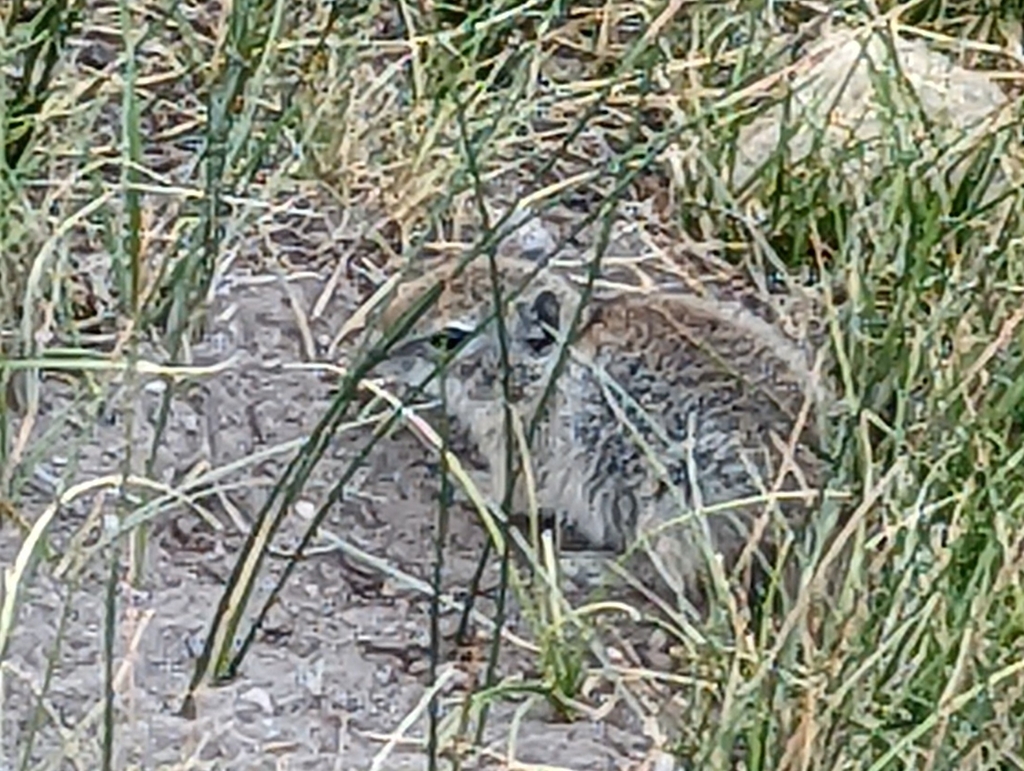
(c) Justin, some rights reserved (CC BY) · licence
Family: Sciuridae · Class: Mammalia · Order: Rodentia
Urocitellus beldingi (Belding's Ground Squirrel) is a California animal in the Sciuridae family.
Belding's ground squirrel is a medium-sized rodent measuring 200 to 290 mm (7.9 to 11.4 inches) in total length, with adults weighing 200 to 400 grams (7.1 to 14.1 ounces). The species displays sexual dimorphism, with males typically 10-15% larger than females. The dorsal pelage is grayish-brown with a distinctive reddish-brown band extending from the head to mid-back. The underside is buff to pale gray, and the tail is relatively short, measuring 60 to 110 mm (2.4 to 4.3 inches), with a black tip and white fringe. The species can be distinguished from other ground squirrels by its relatively long ears and the characteristic reddish dorsal stripe. Belding's ground squirrel occurs in the mountainous regions of the western United States, with populations in California found primarily in the Sierra Nevada range and the Cascade Mountains. In California, the species is documented in Alpine, El Dorado, Fresno, Inyo, Madera, Mono, Nevada, Placer, and Tuolumne counties. The California populations represent the southernmost extent of the species' range, which extends northward through Nevada, Oregon, Idaho, and into southern British Columbia. This species inhabits mountain meadows, grasslands, and sagebrush steppe at elevations ranging from 1,200 to 3,500 meters (3,937 to 11,483 feet). Belding's ground squirrels require areas with deep, well-drained soils suitable for burrow construction and open terrain that provides visibility for predator detection. They are typically found in wet meadows during the active season but may utilize drier adjacent areas for hibernation sites. The species shows strong site fidelity, often returning to the same burrow systems year after year. Belding's ground squirrels are highly social, living in colonies with complex burrow systems. They are active during daylight hours from late spring through early fall, with peak activity occurring in morning and evening hours. The species hibernates for approximately seven to eight months annually, typically from September through April, depending on elevation and local climate conditions. Mating occurs immediately after emergence from hibernation, with females producing a single litter of 4 to 8 young after a gestation period of 23 to 24 days. Young emerge from burrows at approximately 4 weeks of age and reach sexual maturity the following year. Their diet consists primarily of grasses, forbs, seeds, and occasionally insects, with individuals accumulating substantial fat reserves before hibernation. Belding's ground squirrel is not federally or state listed as threatened or endangered. However, some populations face localized pressures from habitat modification, livestock grazing, and recreational activities in high-elevation meadows. Climate change poses a potential long-term threat through alterations to montane precipitation patterns and growing season length, which could affect the timing of hibernation cycles and food availability. The species serves as an important prey item for various predators including raptors, weasels, and snakes, making it a significant component of mountain ecosystem food webs.
Classification
Class: Mammalia · Order: Rodentia · Family: Sciuridae
Frequently asked questions
How is Urocitellus beldingi classified?
Urocitellus beldingi belongs to class Mammalia, order Rodentia, family Sciuridae.
What family does Urocitellus beldingi belong to?
Urocitellus beldingi is in the Sciuridae family.
What is Urocitellus beldingi?
Belding's ground squirrel is a medium-sized rodent measuring 200 to 290 mm (7.9 to 11.4 inches) in total length, with adults weighing 200 to 400 grams (7.1 to 14.1 ounces).
Is Urocitellus beldingi found in California?
Yes. Urocitellus beldingi is recorded in California in The California Species Project's catalogue.
Related species
Other California species in the same genus, family, or bioregion.
Data from The California Species Project — 14,000+ California species with verified data from CNPS, CDFW, USFWS, and more.