Uroctonites montereus
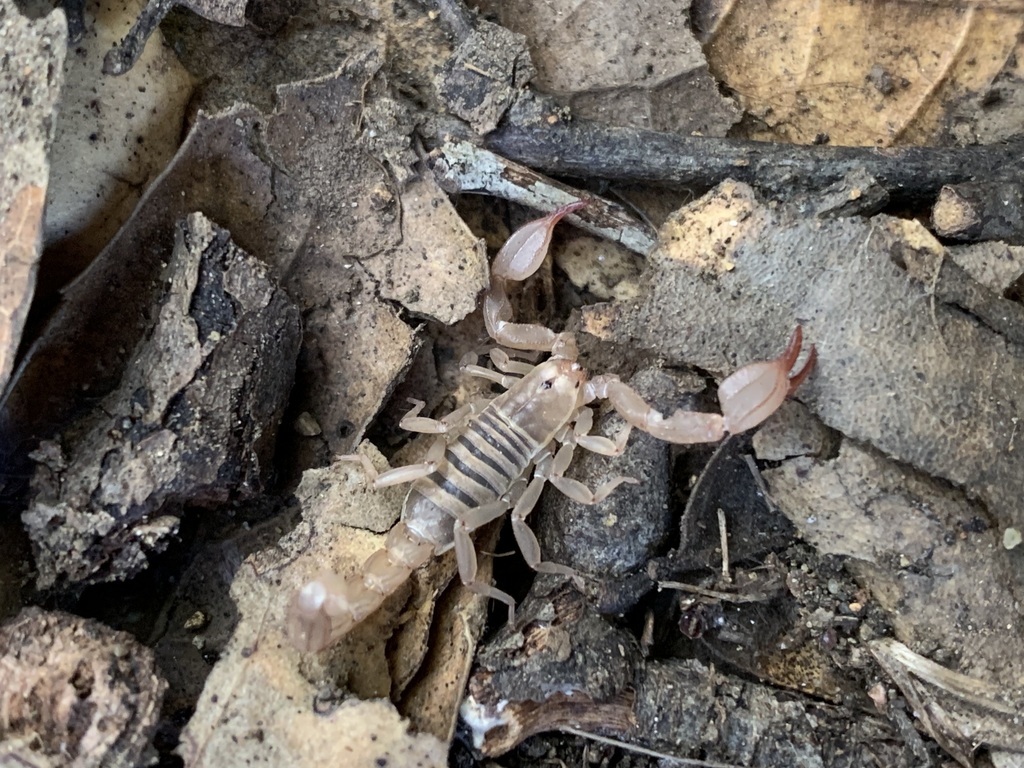
(c) Darin J McGuire, some rights reserved (CC BY) · licence
Family: Vaejovidae · Class: Arachnida · Order: Scorpiones
Uroctonites montereus is a California animal in the Vaejovidae family.
Uroctonites montereus is a small scorpion species endemic to California, belonging to the family Vaejovidae. This species represents one of the rarer scorpions found within the state, with limited scientific documentation and few confirmed observations. The species lacks a widely recognized common name, reflecting its obscure status among California's arachnid fauna. Physical characteristics of U. montereus have not been extensively documented in the scientific literature. Like other members of the Vaejovidae family, this species likely exhibits the typical scorpion body plan with segmented pedipalps bearing chelae (pincers), four pairs of walking legs, and a segmented metasoma (tail) terminating in a venomous aculeus (stinger). Vaejovid scorpions are generally small to medium-sized, though specific measurements for U. montereus are not readily available in published sources. The geographic distribution of U. montereus appears to be restricted to California, though precise locality data remains limited. According to discussions on BugGuide, the species is considered quite rare with scarce photographic documentation, contributing to the lack of detailed distribution records. The specific epithet "montereus" suggests a potential association with the Monterey region, though this connection requires verification through formal taxonomic literature. Habitat requirements for this species have not been well documented in available scientific literature. Scorpions in the family Vaejovidae typically inhabit diverse terrestrial environments including rocky areas, desert margins, chaparral, and oak woodlands. Many California scorpions are found under rocks, logs, or other surface debris where they can maintain appropriate moisture levels and find shelter during daylight hours. Ecological information regarding U. montereus remains largely undocumented. Vaejovid scorpions are generally nocturnal predators that feed on small arthropods including insects, spiders, and other arachnids. They capture prey using their pedipalps and may use their sting to subdue larger or more active prey items. Reproductive behavior likely follows typical scorpion patterns, with complex courtship rituals and females carrying young on their backs after birth, though specific details for this species are not available. The conservation status of U. montereus has not been formally assessed by state or federal agencies. The species does not appear on current endangered species lists, though its apparent rarity suggests it may warrant further investigation. Limited scientific study and scarce observational records make it difficult to assess population trends or identify specific conservation threats. Habitat loss and fragmentation associated with California's ongoing development could potentially impact this and other endemic arachnid species. Scientific documentation for this species remains extremely limited. The information presented here synthesizes available references from taxonomic databases and online discussion forums. Additional field research and taxonomic study would be valuable to better understand this species' biology, distribution, and conservation needs. If you have verified information about this species' ecology, distribution, or photographs documenting its occurrence, please contact Species List Pro to help enhance this species account.
Classification
Class: Arachnida · Order: Scorpiones · Family: Vaejovidae
Frequently asked questions
How is Uroctonites montereus classified?
Uroctonites montereus belongs to class Arachnida, order Scorpiones, family Vaejovidae.
What family does Uroctonites montereus belong to?
Uroctonites montereus is in the Vaejovidae family.
What is Uroctonites montereus?
Uroctonites montereus is a small scorpion species endemic to California, belonging to the family Vaejovidae.
Is Uroctonites montereus found in California?
Yes. Uroctonites montereus is recorded in California in The California Species Project's catalogue.
Related species
Other California species in the same genus, family, or bioregion.
Data from The California Species Project — 14,000+ California species with verified data from CNPS, CDFW, USFWS, and more.