Urocyon cinereoargenteus
Gray Fox
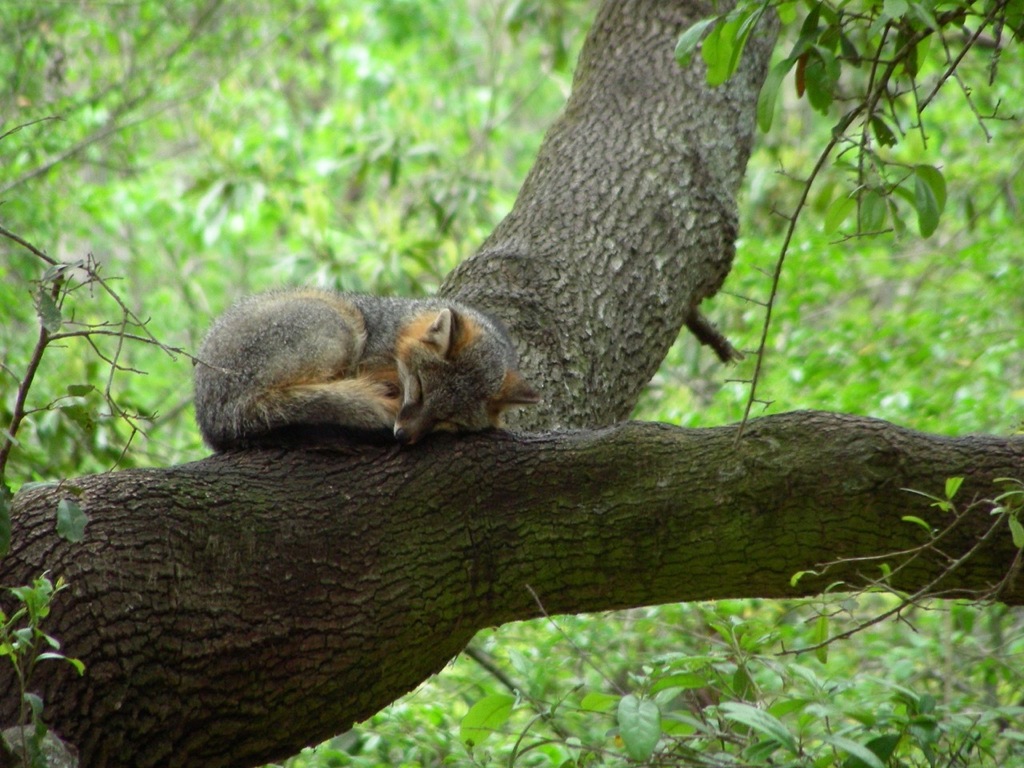
(c) Michael J. Papay, some rights reserved (CC BY) · licence
Family: Canidae · Class: Mammalia · Order: Carnivora
Urocyon cinereoargenteus (Gray Fox) is a California animal in the Canidae family.
The gray fox is a medium-sized canid native to North America, distinguished by its distinctive grizzled gray coat and unique climbing abilities. Adults measure 76 to 112 centimeters (30 to 44 inches) in total length, including a 28 to 44 centimeter (11 to 17 inch) tail, and weigh 3.6 to 6.8 kilograms (8 to 15 pounds). The dorsal pelage is grizzled gray with black guard hairs, while the sides and neck display rusty red coloration. A distinctive black stripe runs along the dorsal surface of the tail, which terminates in a black tip. The undersides are white to pale gray, and the face features black markings around the eyes and muzzle. In California, gray foxes occur throughout most of the state except for the Central Valley floor and high-elevation Sierra Nevada areas above 3,000 meters. Their range extends from sea level to approximately 3,500 meters elevation in mountainous regions. The species is present in all California bioregions except the Great Basin desert areas of the far northeast. Populations are continuous with those in adjacent states and extend south through Baja California. Gray foxes inhabit diverse vegetation communities including chaparral, oak woodlands, mixed conifer forests, riparian corridors, and coastal scrub habitats. They prefer areas with dense cover and avoid open grasslands and agricultural areas. The species requires woodland or brushland habitats that provide adequate den sites in hollow trees, rock crevices, or dense vegetation thickets. Unlike other North American canids, gray foxes are semi-arboreal and regularly climb trees to escape predators, access food sources, or establish den sites in tree hollows. Gray foxes are omnivorous, with diet varying seasonally and geographically. Primary food items include small mammals such as rodents and rabbits, birds, insects, fruits, and vegetation. Breeding occurs from January through March, with a gestation period of 53 days. Females produce one litter annually of two to five kits, which remain with parents until autumn dispersal. Adults are primarily nocturnal and crepuscular, though some diurnal activity occurs during winter months. Home ranges vary from 0.5 to 5.0 square kilometers depending on habitat quality and prey density. The gray fox is not federally or state-listed and maintains stable populations throughout most of its California range as of December 2025. However, some regional population declines have been documented in urbanized areas due to habitat fragmentation and vehicle mortality. The species faces ongoing threats from residential development, particularly in foothill and coastal regions where preferred habitats overlap with human expansion. Fire suppression practices that reduce understory vegetation may negatively impact habitat quality in some areas. Climate change could potentially alter vegetation communities and prey availability, though the species' dietary flexibility and habitat adaptability suggest resilience to moderate environmental changes.
Classification
Class: Mammalia · Order: Carnivora · Family: Canidae
Frequently asked questions
How is Urocyon cinereoargenteus classified?
Urocyon cinereoargenteus belongs to class Mammalia, order Carnivora, family Canidae.
What family does Urocyon cinereoargenteus belong to?
Urocyon cinereoargenteus is in the Canidae family.
What is Urocyon cinereoargenteus?
The gray fox is a medium-sized canid native to North America, distinguished by its distinctive grizzled gray coat and unique climbing abilities.
Is Urocyon cinereoargenteus found in California?
Yes. Urocyon cinereoargenteus is recorded in California in The California Species Project's catalogue.
Related species
Other California species in the same genus, family, or bioregion.
Data from The California Species Project — 14,000+ California species with verified data from CNPS, CDFW, USFWS, and more.