Urocyon littoralis catalinae
Santa Catalina Island Fox
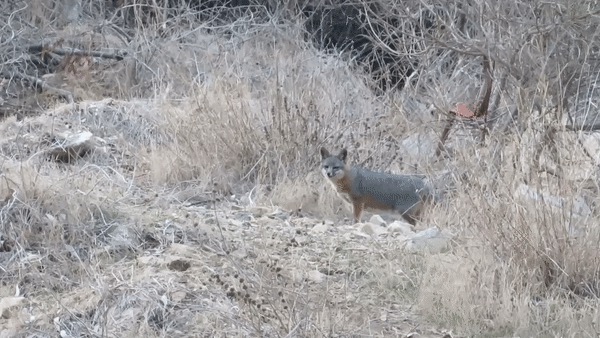
(c) Linzy L., some rights reserved (CC BY-SA) · licence
Family: Canidae · Class: Mammalia · Order: Carnivora
Conservation status: (ST) · Threatened · G3T1 S2
Urocyon littoralis catalinae (Santa Catalina Island Fox) is a California animal in the Canidae family.
The Santa Catalina Island fox is a diminutive subspecies of the island fox endemic to Santa Catalina Island, California. This is the smallest fox species known from the United States, with adult males averaging 2.0 kilograms (4.4 pounds) and adult females weighing 1.88 kilograms (4.1 pounds) (USFWS 2025). The subspecies exhibits the characteristic features of island foxes, including a compact build, short legs, and a bushy tail. Their coat is typically gray with russet coloration on the sides, legs, and ears, with white markings on the chest and belly. The Santa Catalina Island fox occurs exclusively on Santa Catalina Island, located approximately 22 miles southwest of the California mainland. This subspecies is one of six island fox subspecies found across the California Channel Islands, each having evolved in isolation on their respective islands. The subspecies' range is entirely contained within the 75-square-mile island, making it one of the most geographically restricted carnivores in North America. The foxes inhabit diverse habitats across Santa Catalina Island, including coastal sage scrub, chaparral, grasslands, and oak woodlands. They utilize the island's varied topography from sea level to the island's highest elevations, adapting to both xeric and mesic environments. The species demonstrates flexibility in habitat use, occupying areas from coastal bluffs to interior valleys and ridgelines. Santa Catalina Island foxes are omnivorous, feeding on insects, fruits, small mammals, birds, and reptiles. They are primarily nocturnal but may be active during daylight hours. Breeding occurs from February through May, with females producing litters of one to five kits after a gestation period of approximately 50 days. Kits remain with their parents through their first year. The species exhibits low population density typical of island carnivores, with territories ranging from 0.5 to 2.0 square kilometers. The Santa Catalina Island fox was listed as endangered in 2004 following a severe population decline attributed primarily to a canine distemper outbreak and predation pressure. At the population's lowest point, fewer than 100 individuals remained on the island. Intensive conservation efforts led by the Santa Catalina Island Conservancy, in partnership with federal and state agencies, included captive breeding programs, vaccination protocols, and habitat management. These efforts proved successful, and the subspecies was downgraded from endangered to threatened status in 2016 (USFWS 2016). Current population estimates indicate the subspecies has recovered to sustainable levels, though it remains vulnerable due to its restricted range and small population size. Ongoing threats include disease outbreaks, vehicle strikes, and potential impacts from climate change and invasive species. The subspecies' recovery represents one of the most successful endangered species conservation efforts in California.
Classification
Class: Mammalia · Order: Carnivora · Family: Canidae
Conservation status
(ST) · Threatened · G3T1 S2
Frequently asked questions
How is Urocyon littoralis catalinae classified?
Urocyon littoralis catalinae belongs to class Mammalia, order Carnivora, family Canidae.
What family does Urocyon littoralis catalinae belong to?
Urocyon littoralis catalinae is in the Canidae family.
Is Urocyon littoralis catalinae protected or of conservation concern?
Urocyon littoralis catalinae carries the following status: (ST) · Threatened · G3T1 S2.
What is Urocyon littoralis catalinae?
The Santa Catalina Island fox is a diminutive subspecies of the island fox endemic to Santa Catalina Island, California.
Is Urocyon littoralis catalinae found in California?
Yes. Urocyon littoralis catalinae is recorded in California in The California Species Project's catalogue.
Related species
Other California species in the same genus, family, or bioregion.
Data from The California Species Project — 14,000+ California species with verified data from CNPS, CDFW, USFWS, and more.