Ursus arctos pruinosus
Brown bear
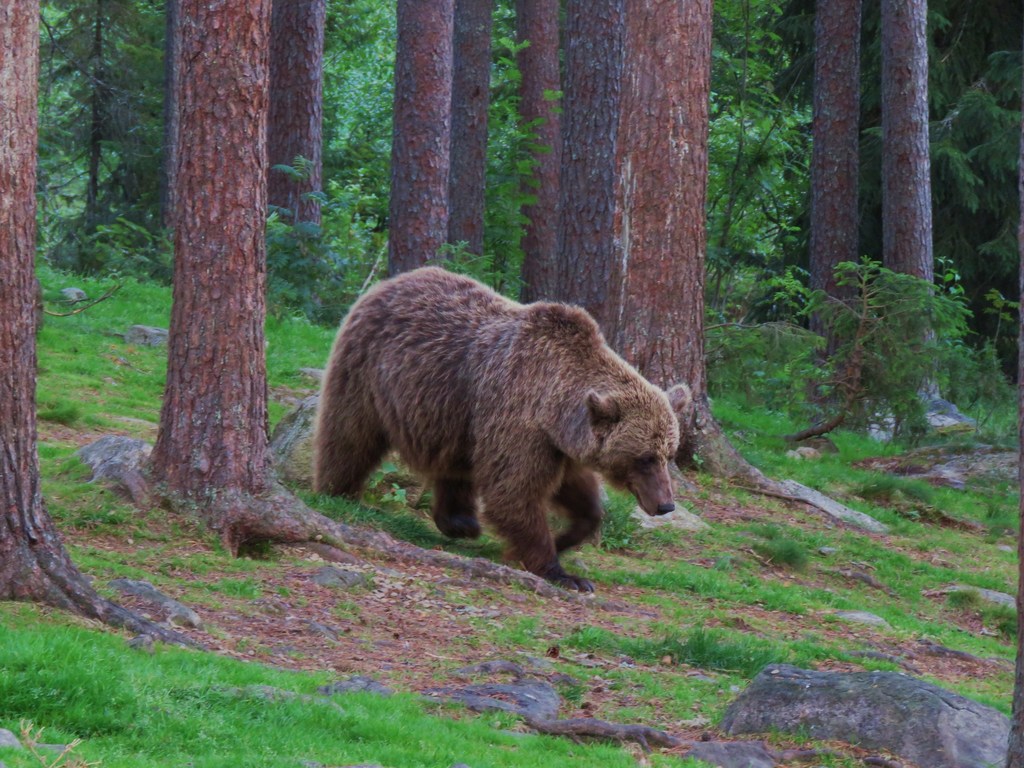
(c) Annika Lindqvist, some rights reserved (CC BY) · licence
Family: Ursidae · Class: Mammalia · Order: Carnivora
Conservation status: Endangered
Ursus arctos pruinosus (Brown bear) is a California animal in the Ursidae family.
The California grizzly bear (Ursus arctos pruinosus) was a subspecies of brown bear that historically inhabited California but is now extinct. Adult males typically measured 1.8 to 2.1 meters (6 to 7 feet) in length and weighed 250 to 320 kilograms (550 to 700 pounds), while females were considerably smaller at 130 to 180 kilograms (290 to 400 pounds). The subspecies was characterized by its distinctive grizzled brown coat with lighter-tipped guard hairs that gave it a frosted appearance, reflected in its subspecific name "pruinosus" meaning hoary or frosted. The fur ranged from light brown to nearly black, with many individuals displaying a darker dorsal stripe and lighter-colored shoulders and flanks. Historically, the California grizzly bear ranged throughout most of California, from the coastal ranges to the Sierra Nevada and from the Oregon border south to Baja California, Mexico. The species inhabited diverse elevations from sea level to approximately 2,400 meters (8,000 feet) in mountainous terrain. Archaeological evidence suggests populations were densest in the Central Valley and coastal regions where food sources were abundant. California grizzly bears occupied a wide variety of habitats including coastal scrub, oak woodlands, chaparral, grasslands, and montane forests. They showed particular preference for riparian areas rich in salmon runs, oak groves during acorn season, and meadows with abundant herbaceous vegetation. The bears utilized seasonal food sources across elevation gradients, moving to higher elevations during summer months to access berry patches and alpine vegetation. As omnivores, California grizzly bears consumed a diverse diet including salmon during spawning runs, acorns, roots, grasses, berries, and ungulates such as elk and deer. They were known to prey on cattle as European settlement expanded, leading to increased human-bear conflicts. Breeding occurred from May through July, with females typically producing 1 to 3 cubs following a gestation period of approximately 7 months including delayed implantation. Cubs remained with mothers for 2 to 3 years, learning essential foraging and survival skills. The California grizzly bear is federally listed as endangered wherever found, though the designation is largely symbolic given the subspecies' extinction (USFWS ECOS). The last confirmed wild California grizzly bear was killed in the 1920s, with the subspecies declared extinct by 1924. Primary factors leading to extinction included intensive hunting, habitat loss due to agricultural conversion, and systematic extermination campaigns by settlers and government bounty programs. The species faced rapid population decline following the California Gold Rush of 1849, which brought increased human settlement and direct persecution. Today, the California grizzly bear lives on only as the official state animal, featured prominently on the California state flag, serving as a reminder of the state's lost megafauna.
Classification
Class: Mammalia · Order: Carnivora · Family: Ursidae
Conservation status
Endangered
Frequently asked questions
How is Ursus arctos pruinosus classified?
Ursus arctos pruinosus belongs to class Mammalia, order Carnivora, family Ursidae.
What family does Ursus arctos pruinosus belong to?
Ursus arctos pruinosus is in the Ursidae family.
Is Ursus arctos pruinosus protected or of conservation concern?
Ursus arctos pruinosus carries the following status: Endangered.
What is Ursus arctos pruinosus?
The California grizzly bear (Ursus arctos pruinosus) was a subspecies of brown bear that historically inhabited California but is now extinct.
Is Ursus arctos pruinosus found in California?
Yes. Ursus arctos pruinosus is recorded in California in The California Species Project's catalogue.
Related species
Other California species in the same genus, family, or bioregion.
Data from The California Species Project — 14,000+ California species with verified data from CNPS, CDFW, USFWS, and more.