Urticina clandestina
Pacific Stubby Rose Anemone
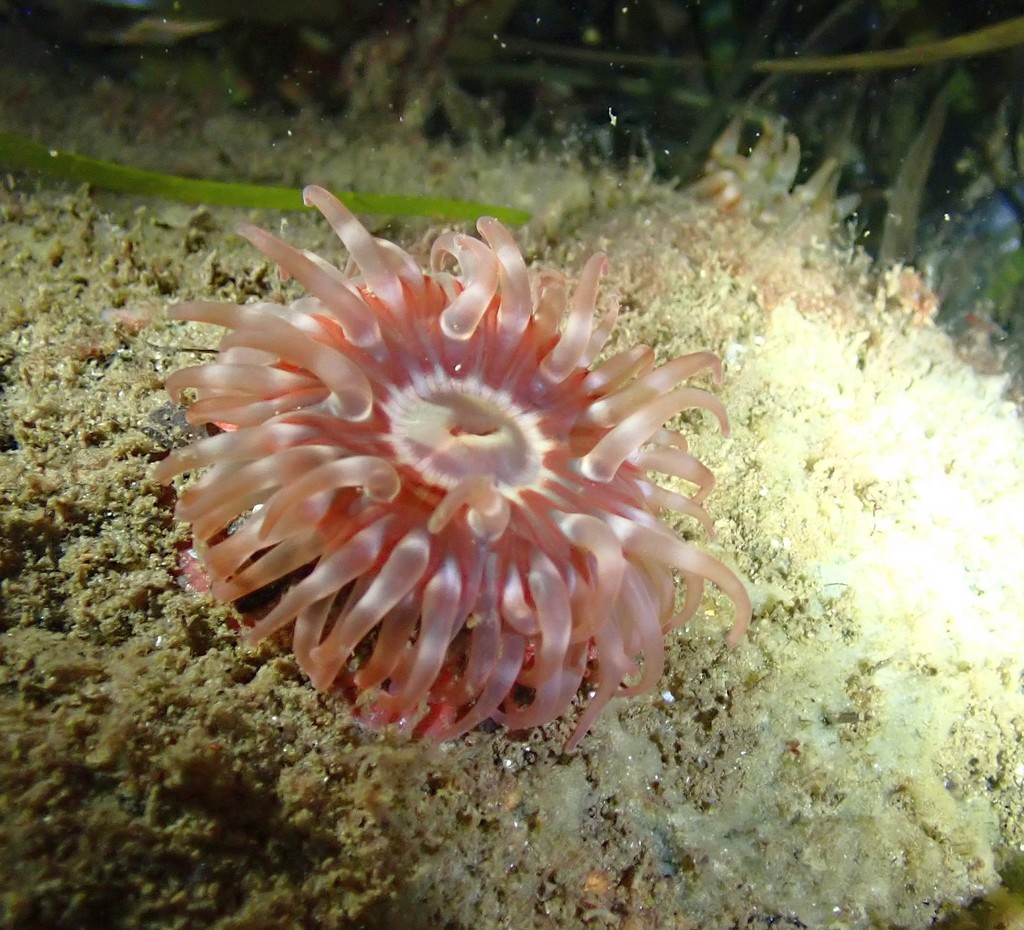
(c) Micha Baum, some rights reserved (CC BY-SA) · licence
Family: Actiniidae · Class: Anthozoa · Order: Actiniaria
Urticina clandestina (Pacific Stubby Rose Anemone) is a California animal in the Actiniidae family.
Urticina clandestina, commonly known as the Pacific Stubby Rose Anemone, is a marine cnidarian belonging to the family Actiniidae within the order Actiniaria. This sea anemone species occurs along the Pacific Coast, though detailed documentation of its biology and ecology remains limited in the scientific literature. As a member of the genus Urticina, this species likely shares general morphological characteristics with other Pacific anemones, including a cylindrical column topped by a crown of tentacles surrounding a central mouth. However, specific morphological details distinguishing U. clandestina from closely related species have not been well documented in readily accessible sources. The species' common name suggests it occurs in Pacific marine waters, though precise distributional data and habitat requirements are not comprehensively documented. Like other sea anemones in the family Actiniidae, U. clandestina likely inhabits intertidal or subtidal rocky substrates where it can attach its basal disc to hard surfaces. Sea anemones in this family are typically carnivorous, capturing prey using specialized stinging cells called nematocysts located in their tentacles. They generally feed on small fish, crustaceans, and other marine invertebrates that come within reach of their tentacles. Reproduction in actiniarian anemones commonly involves both sexual reproduction through the release of gametes and asexual reproduction through various forms of cloning or budding. The conservation status of Urticina clandestina is not established under federal or state endangered species frameworks as of December 2025. The species does not appear in current U.S. Fish and Wildlife Service listings or California Department of Fish and Wildlife species of special concern designations. This absence from conservation listings may reflect either stable population status or, more likely, insufficient scientific study and monitoring to assess population trends and conservation needs. Limited scientific documentation hampers comprehensive understanding of this species' ecological role, population status, and potential conservation concerns. Marine invertebrates, particularly smaller or less conspicuous species like many sea anemones, often receive less research attention than larger, more economically significant marine species. This knowledge gap extends to many aspects of U. clandestina's biology, including detailed habitat preferences, reproductive cycles, population dynamics, and responses to environmental changes. Further taxonomic and ecological research would be valuable to clarify the species' distribution, habitat requirements, and conservation status. Such studies would contribute to broader understanding of Pacific Coast marine biodiversity and inform potential conservation planning for intertidal and nearshore marine ecosystems where this species occurs.
Classification
Class: Anthozoa · Order: Actiniaria · Family: Actiniidae
Frequently asked questions
How is Urticina clandestina classified?
Urticina clandestina belongs to class Anthozoa, order Actiniaria, family Actiniidae.
What family does Urticina clandestina belong to?
Urticina clandestina is in the Actiniidae family.
What is Urticina clandestina?
Urticina clandestina, commonly known as the Pacific Stubby Rose Anemone, is a marine cnidarian belonging to the family Actiniidae within the order Actiniaria.
Is Urticina clandestina found in California?
Yes. Urticina clandestina is recorded in California in The California Species Project's catalogue.
Related species
Other California species in the same genus, family, or bioregion.
Data from The California Species Project — 14,000+ California species with verified data from CNPS, CDFW, USFWS, and more.