Urticina mcpeaki
McPeak's Anemone
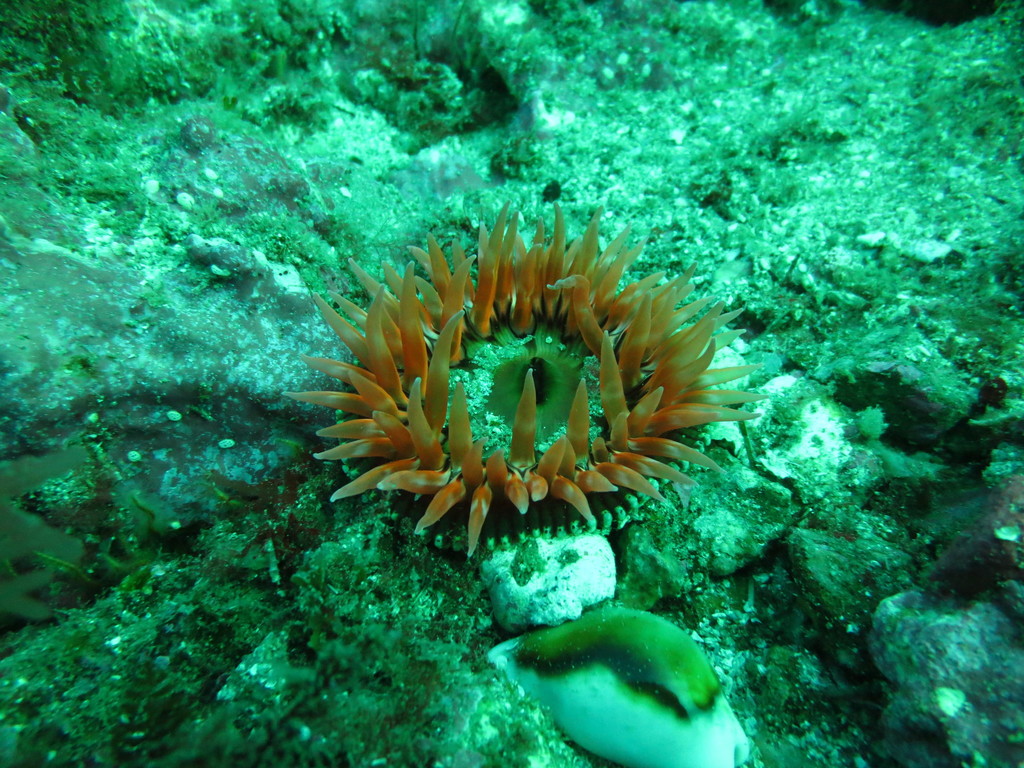
(c) Chris Teague, some rights reserved (CC BY) · licence
Family: Actiniidae · Class: Anthozoa · Order: Actiniaria
Urticina mcpeaki (McPeak's Anemone) is a California animal in the Actiniidae family.
McPeak's Anemone (Urticina mcpeaki) is a marine sea anemone belonging to the family Actiniidae within the order Actiniaria. This cnidarian species represents one of the lesser-documented members of the genus Urticina found in Pacific coastal waters. Physical characteristics of U. mcpeaki have not been extensively documented in the scientific literature. Like other members of the genus Urticina, this species likely exhibits a cylindrical column topped with a ring of tentacles surrounding a central oral disc. The genus Urticina is characterized by having adhesive tubercles on the column surface and typically displays muted coloration patterns, though specific morphological details for McPeak's Anemone remain undescribed in available sources. The precise geographic range and distribution of McPeak's Anemone have not been well established in current taxonomic databases. The species appears to be associated with Pacific coastal waters, though specific locality records and distributional boundaries require further documentation. Without verified occurrence data, the extent of this species' California range remains uncertain. Habitat requirements for U. mcpeaki have not been characterized in detail. Members of the genus Urticina typically inhabit rocky intertidal and subtidal zones, attaching to hard substrates including rock surfaces, pier pilings, and other stable structures. These anemones generally occur in areas with moderate to strong water circulation and may be found at various depths within their range, though specific depth preferences and microhabitat requirements for McPeak's Anemone have not been documented. Ecological information regarding feeding behavior, reproduction, and life cycle characteristics of this species is currently lacking. Sea anemones in the family Actiniidae are typically carnivorous, capturing prey items such as small fish, crustaceans, and other invertebrates using their stinging tentacles. Reproduction in actiniarians can occur through both sexual means, involving the release of gametes into the water column, and asexual reproduction through pedal laceration or longitudinal fission. The specific reproductive strategies and timing for U. mcpeaki have not been studied. The conservation status of McPeak's Anemone has not been formally evaluated by state or federal agencies. No listing status appears in the U.S. Fish and Wildlife Service databases or California Department of Fish and Wildlife records as of December 2025. The lack of comprehensive distributional data and ecological information makes it difficult to assess potential threats or population trends for this species. Scientific documentation for McPeak's Anemone remains extremely limited. The taxonomic validity and detailed biological characteristics of U. mcpeaki require further research and verification. Marine invertebrate surveys and taxonomic studies focusing on Pacific coast actiniarians would help establish the status and ecological requirements of this species. Additional field observations and specimen collections are needed to better understand the distribution, habitat preferences, and conservation needs of this anemone.
Classification
Class: Anthozoa · Order: Actiniaria · Family: Actiniidae
Frequently asked questions
How is Urticina mcpeaki classified?
Urticina mcpeaki belongs to class Anthozoa, order Actiniaria, family Actiniidae.
What family does Urticina mcpeaki belong to?
Urticina mcpeaki is in the Actiniidae family.
What is Urticina mcpeaki?
McPeak's Anemone (Urticina mcpeaki) is a marine sea anemone belonging to the family Actiniidae within the order Actiniaria.
Is Urticina mcpeaki found in California?
Yes. Urticina mcpeaki is recorded in California in The California Species Project's catalogue.
Related species
Other California species in the same genus, family, or bioregion.
Data from The California Species Project — 14,000+ California species with verified data from CNPS, CDFW, USFWS, and more.