Vanessa annabella
West Coast Lady
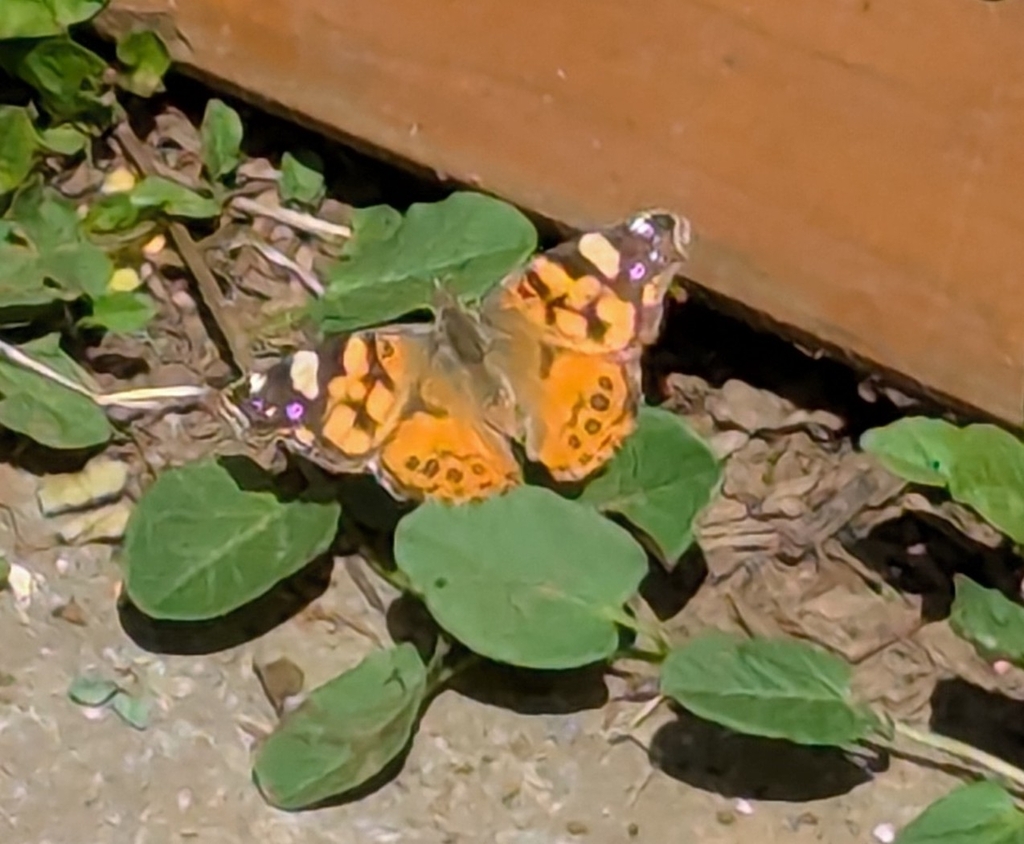
(c) David Anderson, some rights reserved (CC BY) · licence
Family: Nymphalidae · Class: Insecta · Order: Lepidoptera
Vanessa annabella (West Coast Lady) is a California animal in the Nymphalidae family.
The West Coast Lady (Vanessa annabella) is a medium-sized butterfly in the brush-footed butterfly family Nymphalidae. Adults have a wingspan of 45 to 65 mm (1.8 to 2.6 inches). The dorsal wing surfaces are orange-brown with black markings and white spots. The forewings display prominent black patches and white spots near the tips, while the hindwings feature a series of small eyespots along the outer margins. The ventral surfaces are lighter with intricate patterns of brown, gray, and white that provide camouflage when the butterfly rests with wings closed. Males and females are similar in appearance, though females are typically slightly larger. The West Coast Lady ranges throughout western North America from southern British Columbia south to Baja California Norte, extending eastward to Montana, Colorado, New Mexico, and Mexico. The species occasionally strays beyond its typical range to central Kansas, eastern North Dakota, and southern Ontario. In California, it occurs from sea level to elevations of approximately 2,400 meters (8,000 feet), inhabiting diverse environments from coastal areas to mountain foothills and desert regions. This butterfly occupies a variety of open habitats including gardens, parks, vacant lots, roadsides, washes, chaparral, oak woodlands, and desert areas. Adults are frequently observed in disturbed areas where their host plants thrive. The species shows particular association with areas containing native and non-native mallows, often concentrating where these plants grow abundantly. West Coast Ladies are multivoltine, producing multiple generations per year in favorable climates. In California, breeding can occur year-round in mild coastal and southern regions, while northern and montane populations may have two to three generations annually. Females deposit pale green eggs singly on host plant leaves. Larvae construct silk shelters by folding or tying leaves together, feeding within these protective structures. The caterpillars are black with white spots and branched spines. Host plants include numerous species in the mallow family (Malvaceae), including tree mallow (Lavatera), globe mallow (Sphaeralcea), bush mallow (Malvastrum), common mallow (Malva), alkali mallow (Sida), checkerbloom (Sidalcea), and cultivated hollyhock (Althea). Adults feed on nectar from various flowers including lantana, buddleia, ceanothus, and composites. The West Coast Lady exhibits migratory behavior, with populations moving seasonally in response to temperature and resource availability. Northern populations may migrate southward in fall, while spring movements can carry individuals northward and to higher elevations. Males establish territories and engage in patrolling behavior to locate females. This species is not federally or state listed and appears to maintain stable populations across its range. The butterfly's adaptability to disturbed habitats and use of both native and introduced host plants has likely contributed to its persistence in developed areas. Urban gardening with mallow species can support local populations, though the species does not require specific conservation measures at this time.
Classification
Class: Insecta · Order: Lepidoptera · Family: Nymphalidae
Frequently asked questions
How is Vanessa annabella classified?
Vanessa annabella belongs to class Insecta, order Lepidoptera, family Nymphalidae.
What family does Vanessa annabella belong to?
Vanessa annabella is in the Nymphalidae family.
What is Vanessa annabella?
The West Coast Lady (Vanessa annabella) is a medium-sized butterfly in the brush-footed butterfly family Nymphalidae.
Is Vanessa annabella found in California?
Yes. Vanessa annabella is recorded in California in The California Species Project's catalogue.
Related species
Other California species in the same genus, family, or bioregion.
Data from The California Species Project — 14,000+ California species with verified data from CNPS, CDFW, USFWS, and more.