Vespericola marinensis
Marin Hesperian
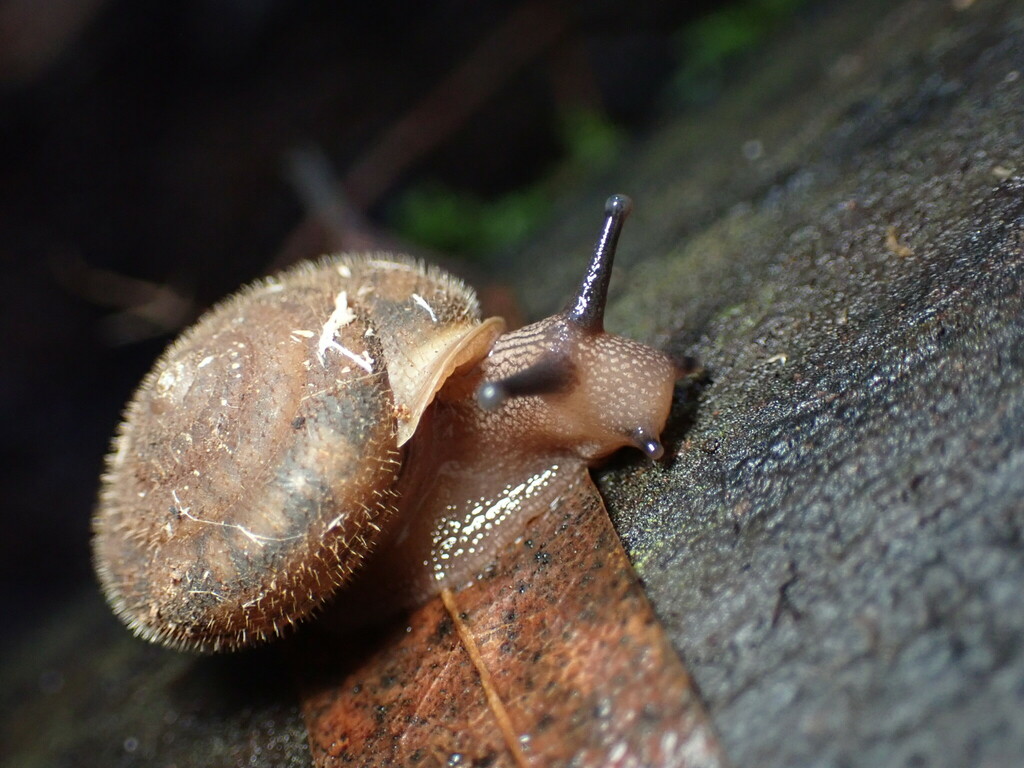
(c) Cricket Raspet, some rights reserved (CC BY) · licence
Family: Polygyridae · Class: Gastropoda · Order: Stylommatophora
Conservation status: G2 S2
Vespericola marinensis (Marin Hesperian) is a California animal in the Polygyridae family.
The Marin Hesperian is a terrestrial gastropod mollusk in the family Polygyridae, endemic to California. This land snail represents one of several Vespericola species found in western North America, distinguished by morphological characteristics typical of the genus. Physical descriptions of this species remain limited in published literature, though like other members of Vespericola, it likely possesses a helical shell structure characteristic of terrestrial gastropods. Vespericola marinensis is endemic to California, with its distribution apparently restricted to Marin County based on the species epithet. According to NatureServe, the species has a global rank of G2, indicating it is imperiled with a high risk of extinction due to restricted range, few populations, steep declines, or other factors. The species is endemic to a single state, highlighting its extremely limited geographic distribution within California. Specific habitat requirements for the Marin Hesperian have not been well documented in available literature. Like other terrestrial gastropods in the region, it likely inhabits areas with adequate moisture retention, organic matter, and appropriate microhabitat conditions. Many Vespericola species are associated with forest floor environments, leaf litter, and areas with moderate to high humidity levels that support mollusk survival and reproduction. Detailed ecological information about Vespericola marinensis remains largely undocumented. Terrestrial gastropods in this family typically feed on decomposing organic matter, fungi, and plant material found in soil and leaf litter. Reproduction in land snails generally involves hermaphroditic individuals that can both produce and fertilize eggs, though specific breeding behaviors and seasonal patterns for this species have not been recorded in available scientific literature. The conservation status of the Marin Hesperian reflects significant concern for the species' persistence. With a NatureServe global rank of G2, the species is classified as imperiled, indicating substantial risk of extinction. The extremely restricted distribution within California, combined with the species' apparent endemism to Marin County, makes it particularly vulnerable to habitat loss, environmental changes, and other anthropogenic impacts. Urban development, habitat fragmentation, and climate change pose potential threats to remaining populations, though specific population data and trend information are not readily available. The species does not appear to have federal protection status under the Endangered Species Act as of December 2025. Detailed studies of this species' biology, population status, and specific habitat requirements are needed to develop appropriate conservation strategies. The limited available information underscores the need for targeted surveys and research to better understand the current status and ecological needs of this endemic California gastropod.
Classification
Class: Gastropoda · Order: Stylommatophora · Family: Polygyridae
Conservation status
G2 S2
Frequently asked questions
How is Vespericola marinensis classified?
Vespericola marinensis belongs to class Gastropoda, order Stylommatophora, family Polygyridae.
What family does Vespericola marinensis belong to?
Vespericola marinensis is in the Polygyridae family.
Is Vespericola marinensis protected or of conservation concern?
Vespericola marinensis carries the following status: G2 S2.
What is Vespericola marinensis?
The Marin Hesperian is a terrestrial gastropod mollusk in the family Polygyridae, endemic to California.
Is Vespericola marinensis found in California?
Yes. Vespericola marinensis is recorded in California in The California Species Project's catalogue.
Related species
Other California species in the same genus, family, or bioregion.
Data from The California Species Project — 14,000+ California species with verified data from CNPS, CDFW, USFWS, and more.