Vespericola scotti
Benson Gulch Hesperian
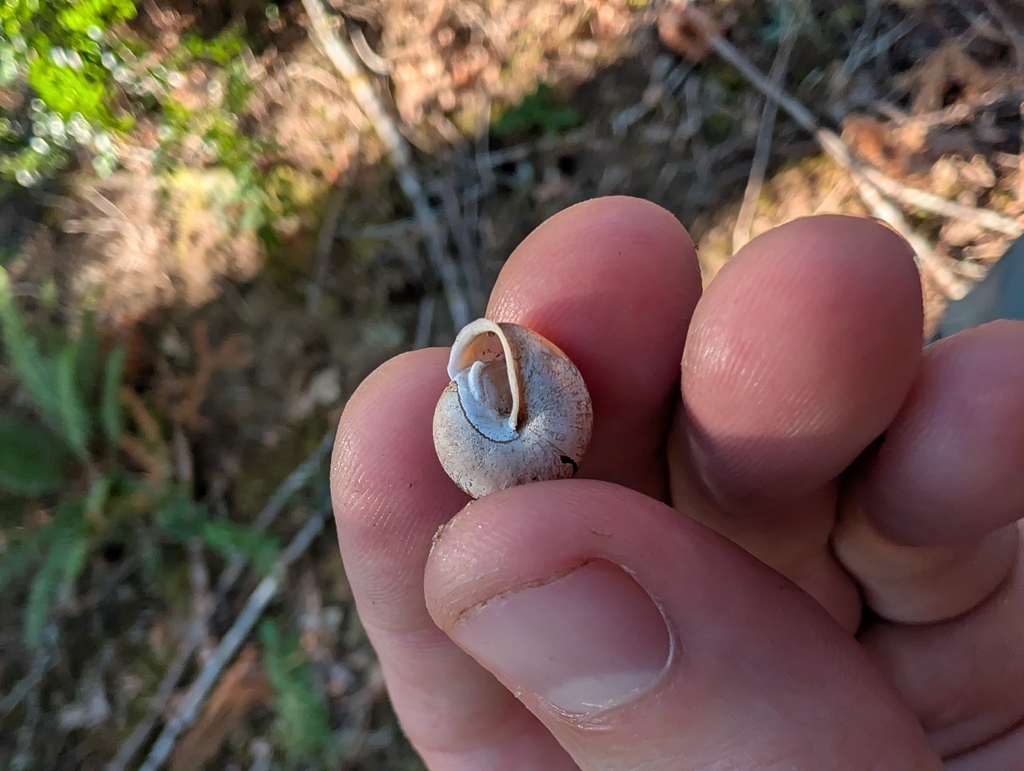
no rights reserved · CC0
Family: Polygyridae · Class: Gastropoda · Order: Stylommatophora
Conservation status: G1 S1
Vespericola scotti (Benson Gulch Hesperian) is a California animal in the Polygyridae family.
The Benson Gulch Hesperian (Vespericola scotti) is a terrestrial gastropod mollusk endemic to California. This land snail species belongs to the family Polygyridae, a group of air-breathing snails characterized by their spiral shells and terrestrial lifestyle. Physical characteristics of V. scotti have not been extensively documented in scientific literature, reflecting the limited research on this rare species. The species' range appears to be extremely restricted, contributing to its G1 S1 conservation ranking, which indicates it is critically imperiled both globally and within California. Based on USFWS records, the Benson Gulch Hesperian may occur in multiple southern California counties including Imperial, Los Angeles, Orange, Riverside, San Bernardino, San Diego, and Ventura counties, though the exact distribution and whether these represent confirmed populations or potential habitat requires verification. Habitat requirements for V. scotti remain poorly documented in available scientific literature. Like other members of the genus Vespericola, this species likely inhabits terrestrial environments with appropriate moisture levels and substrate conditions necessary for gastropod survival. Many California terrestrial mollusks are associated with specific microhabitat conditions including particular soil types, vegetation communities, or moisture regimes, but specific habitat preferences for the Benson Gulch Hesperian have not been well characterized. Ecological information about this species is extremely limited. Terrestrial gastropods generally function as detritivores, feeding on decomposing plant matter, fungi, and organic debris. They play important ecological roles as nutrient recyclers and serve as prey for various predators including birds, reptiles, amphibians, and arthropods. Reproductive biology, seasonal activity patterns, and specific dietary preferences of V. scotti have not been documented in available sources. The conservation status of the Benson Gulch Hesperian reflects the precarious situation facing many California terrestrial mollusks. The species' G1 S1 ranking indicates it faces an extremely high risk of extinction, with fewer than five occurrences or very few remaining individuals. According to the USFWS National Listing Workplan, several California terrestrial mollusks including other Vespericola species are being evaluated for potential federal listing under the Endangered Species Act. The Benson Gulch Hesperian faces threats typical of rare gastropods, including habitat loss, degradation from human activities, climate change effects on moisture regimes, and the species' limited dispersal ability which makes it vulnerable to local extinctions. Terrestrial mollusks are particularly sensitive to habitat disturbance, changes in moisture conditions, and chemical contamination. Fire, logging, development, and altered hydrology can significantly impact these species, which often have very specific microhabitat requirements and limited ability to recolonize disturbed areas. Scientific documentation for this species remains extremely limited despite its apparent conservation concern. The information presented here synthesizes available data from federal databases and broader literature on California terrestrial gastropods. Additional research is urgently needed to document the species' distribution, habitat requirements, population status, and specific conservation needs to guide effective management strategies.
Classification
Class: Gastropoda · Order: Stylommatophora · Family: Polygyridae
Conservation status
G1 S1
Frequently asked questions
How is Vespericola scotti classified?
Vespericola scotti belongs to class Gastropoda, order Stylommatophora, family Polygyridae.
What family does Vespericola scotti belong to?
Vespericola scotti is in the Polygyridae family.
Is Vespericola scotti protected or of conservation concern?
Vespericola scotti carries the following status: G1 S1.
What is Vespericola scotti?
The Benson Gulch Hesperian (Vespericola scotti) is a terrestrial gastropod mollusk endemic to California.
Is Vespericola scotti found in California?
Yes. Vespericola scotti is recorded in California in The California Species Project's catalogue.
Related species
Other California species in the same genus, family, or bioregion.
Data from The California Species Project — 14,000+ California species with verified data from CNPS, CDFW, USFWS, and more.