Vespericola shasta
Shasta Hesperian
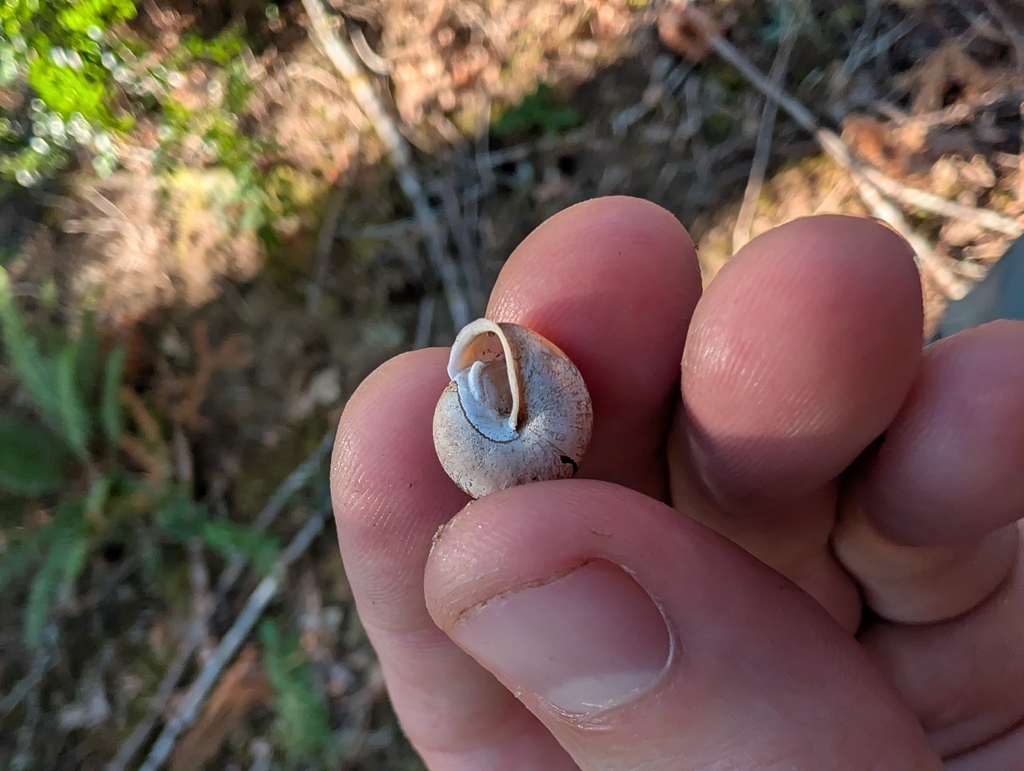
no rights reserved · CC0
Family: Polygyridae · Class: Gastropoda · Order: Stylommatophora
Conservation status: G3 S3
Vespericola shasta (Shasta Hesperian) is a California animal in the Polygyridae family.
The Shasta hesperian is a terrestrial gastropod mollusk in the family Polygyridae. This land snail is endemic to California, where it occurs in limited locations within the state's northern mountain regions. The species belongs to the genus Vespericola, which includes several other California endemic terrestrial mollusks. The Shasta hesperian is distinguished from related species by specific shell characteristics and anatomical features typical of the Polygyridae family. Like other members of this family, it possesses a coiled shell with distinctive whorl patterns. However, detailed morphological descriptions of this species remain limited in the scientific literature, reflecting the general lack of comprehensive studies on many terrestrial mollusk species. The species occurs in northern California, though its precise distributional limits have not been extensively documented. Based on available records, the Shasta hesperian appears to have a restricted range within the state's mountainous terrain. The species' common name suggests an association with the Shasta region, indicating its likely occurrence in areas of Shasta County or the broader Shasta-Cascade region. Habitat requirements for the Shasta hesperian have not been thoroughly studied, but terrestrial mollusks in the Polygyridae family typically inhabit forest floors, leaf litter, and areas with adequate moisture retention. These snails generally require environments that provide protection from desiccation and temperature extremes. The species likely depends on specific microhabitat conditions including appropriate substrate composition, moisture levels, and vegetation cover. Like other terrestrial gastropods, the Shasta hesperian is presumably hermaphroditic, with individuals capable of both egg and sperm production. Reproduction likely involves the exchange of sperm between individuals, followed by egg laying in suitable substrate. The species probably feeds on decomposing organic matter, fungi, and potentially live plant material, playing a role in nutrient cycling within its ecosystem. Seasonal activity patterns and specific dietary preferences have not been documented. The Shasta hesperian currently holds a global rank of G3 (vulnerable) and a state rank of S3 (vulnerable) in California, indicating that the species faces moderate risk of extinction. The species is included in the U.S. Fish and Wildlife Service's listing workplan for fiscal years 2024-2028 as part of the California Terrestrial Mollusks package, with a 12-month finding and potential listing consideration scheduled for FY24. The species appears on the federal list of eligible unlisted species for traditional conservation grants with an "Under Review" status and a priority ranking of 8. Threat assessment and population monitoring data for the Shasta hesperian are limited. Like many terrestrial mollusks, the species may be vulnerable to habitat loss, fragmentation, climate change effects, and ground-disturbing activities. The restricted range typical of many California endemic mollusks increases the species' vulnerability to localized threats. Conservation efforts would benefit from additional research on distribution, population status, habitat requirements, and specific threat identification to inform future management decisions.
Classification
Class: Gastropoda · Order: Stylommatophora · Family: Polygyridae
Conservation status
G3 S3
Frequently asked questions
How is Vespericola shasta classified?
Vespericola shasta belongs to class Gastropoda, order Stylommatophora, family Polygyridae.
What family does Vespericola shasta belong to?
Vespericola shasta is in the Polygyridae family.
Is Vespericola shasta protected or of conservation concern?
Vespericola shasta carries the following status: G3 S3.
What is Vespericola shasta?
The Shasta hesperian is a terrestrial gastropod mollusk in the family Polygyridae.
Is Vespericola shasta found in California?
Yes. Vespericola shasta is recorded in California in The California Species Project's catalogue.
Related species
Other California species in the same genus, family, or bioregion.
Data from The California Species Project — 14,000+ California species with verified data from CNPS, CDFW, USFWS, and more.