Vespericola sierranus
Siskiyou Hesperian
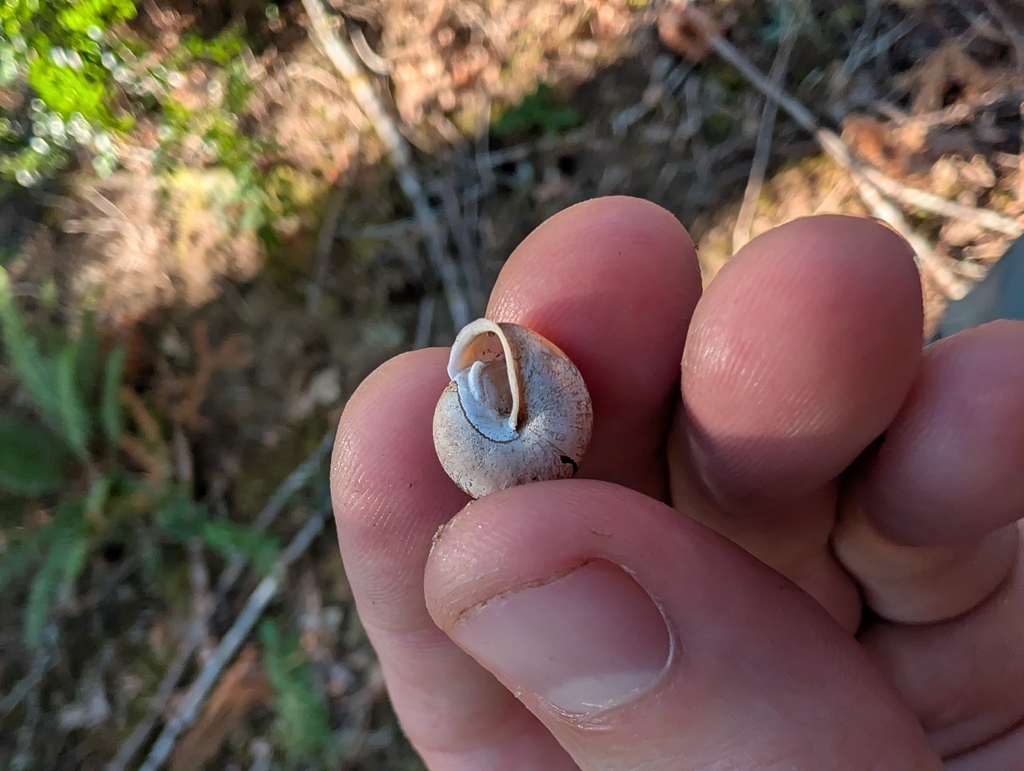
no rights reserved · CC0
Family: Polygyridae · Class: Gastropoda · Order: Stylommatophora
Conservation status: G3 S1S2
Vespericola sierranus (Siskiyou Hesperian) is a California animal in the Polygyridae family.
The Siskiyou Hesperian is a terrestrial gastropod mollusk in the family Polygyridae, endemic to the Cascade-Siskiyou region of southern Oregon and northern California. This land snail species represents one of the specialized endemic mollusks adapted to the unique geological and climatic conditions of the Klamath-Siskiyou ecoregion. Vespericola sierranus occurs at scattered sites throughout southern Oregon and northern California, with documented populations extending from Myrtle Creek in Douglas County, Oregon, eastward into the Siskiyou Mountains. The species' range is centered in the Cascade-Siskiyou National Monument area, where it inhabits the complex mountainous terrain characteristic of this biogeographically significant region. In California, the species is found in the northernmost counties where the Cascade and Klamath mountain ranges converge. The Siskiyou Hesperian inhabits multiple forest ecosystem types across its range. According to NatureServe records, the species occurs in North Pacific Oak Woodland, Mediterranean California Mixed Evergreen Forest, and Mediterranean California Lower Montane Black Oak-Conifer Forest and Woodland communities. These habitats typically feature diverse overstory compositions including oak species, Douglas fir, and various coniferous associates. The species appears to favor areas with complex microhabitat structure provided by fallen logs, leaf litter, and rocky substrates that create the moisture and shelter conditions required by terrestrial mollusks. Like other members of the Polygyridae family, V. sierranus is hermaphroditic and likely exhibits typical land snail reproductive behavior, though specific ecological studies of this species remain limited. The species presumably feeds on decomposing organic matter, fungi, and microorganisms found in forest floor environments. Activity patterns are likely influenced by seasonal moisture availability, with increased activity during wetter periods when desiccation risk is reduced. The species' distribution across multiple elevation zones suggests some tolerance for varying climatic conditions within its preferred forest habitats. The Siskiyou Hesperian carries a NatureServe Global Rank of G3, indicating it is vulnerable to extinction due to restricted range, relatively few populations, recent widespread declines, or other factors. In California, the species holds a state rank of S1S2, reflecting its critically imperiled to imperiled status within the state. The species is not currently listed under federal or state endangered species acts, but its restricted distribution and specialized habitat requirements make it vulnerable to various threats. The Xerces Society has been conducting surveys for imperiled mollusk species, including V. sierranus, within the Cascade-Siskiyou National Monument since 2021, highlighting ongoing conservation attention for this and other endemic species in the region. Potential threats to the species include habitat alteration from logging activities, altered fire regimes, and climate change impacts on the moisture-dependent forest ecosystems where it occurs.
Classification
Class: Gastropoda · Order: Stylommatophora · Family: Polygyridae
Conservation status
G3 S1S2
Frequently asked questions
How is Vespericola sierranus classified?
Vespericola sierranus belongs to class Gastropoda, order Stylommatophora, family Polygyridae.
What family does Vespericola sierranus belong to?
Vespericola sierranus is in the Polygyridae family.
Is Vespericola sierranus protected or of conservation concern?
Vespericola sierranus carries the following status: G3 S1S2.
What is Vespericola sierranus?
The Siskiyou Hesperian is a terrestrial gastropod mollusk in the family Polygyridae, endemic to the Cascade-Siskiyou region of southern Oregon and northern California.
Is Vespericola sierranus found in California?
Yes. Vespericola sierranus is recorded in California in The California Species Project's catalogue.
Related species
Other California species in the same genus, family, or bioregion.
Data from The California Species Project — 14,000+ California species with verified data from CNPS, CDFW, USFWS, and more.