Vespula pensylvanica
Western Yellowjacket
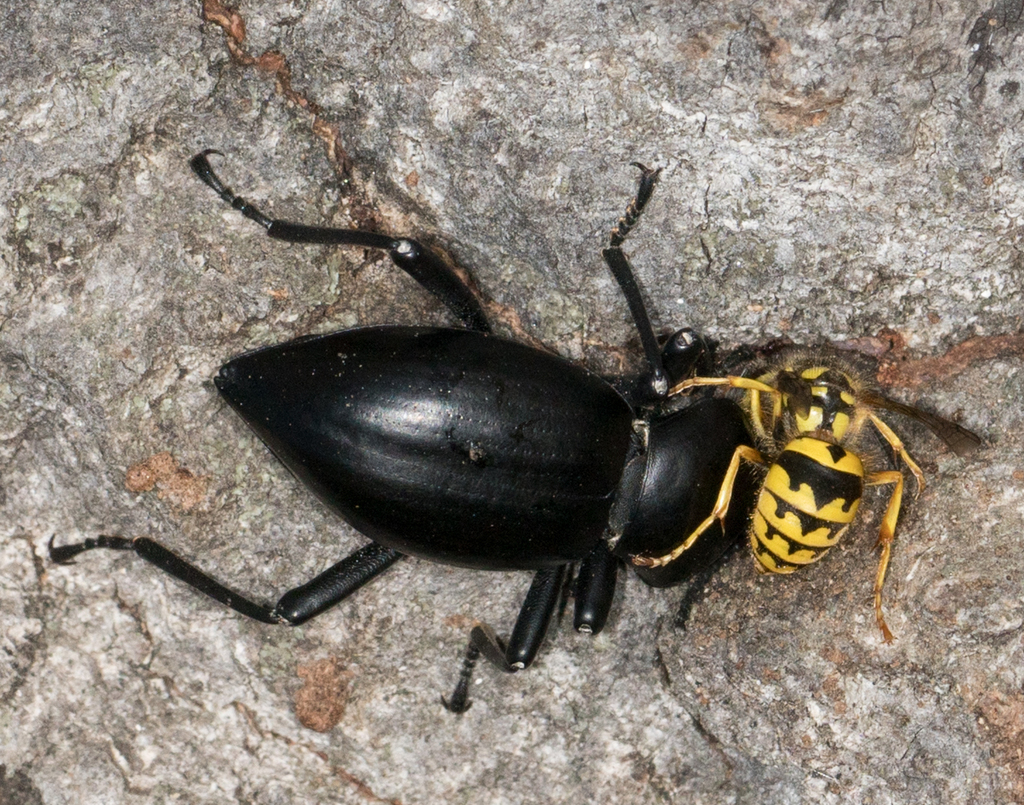
no rights reserved · CC0
Family: Vespidae · Class: Insecta · Order: Hymenoptera
Vespula pensylvanica (Western Yellowjacket) is a California animal in the Vespidae family.
The western yellowjacket is a social wasp species measuring approximately 10-16 mm (0.4-0.6 inches) in length. Workers display the characteristic yellow and black striped pattern typical of yellowjackets, with bright yellow markings on a black background. The head is predominantly yellow with black markings around the eyes, while the thorax shows distinct black and yellow banding. The abdomen features alternating yellow and black stripes, and the antennae are black with yellow at the base. Queens are notably larger than workers, reaching up to 18-20 mm in length. Vespula pensylvanica occurs throughout much of western North America, ranging from southern Canada south through the western United States into Mexico. In California, the species is widely distributed across diverse elevations and habitats, from coastal areas to mountainous regions. The species has also been introduced to Hawaii, where it has established populations and is documented as impacting native ecosystems. This species occupies a broad range of habitats including urban areas, suburban gardens, agricultural lands, oak woodlands, chaparral, coniferous forests, and riparian zones. Western yellowjackets construct their nests in various locations including underground cavities, wall voids, attics, and occasionally aerial sites in trees or shrubs. Colonies prefer protected locations with access to water sources and abundant prey. The species adapts well to human-modified environments and is commonly found around garbage receptacles, outdoor dining areas, and gardens. Western yellowjackets are predatory social insects that hunt a variety of arthropod prey including flies, caterpillars, beetle larvae, and other soft-bodied insects to feed developing larvae. Adult wasps also consume carbohydrates from nectar, tree sap, and human food sources, particularly sugary substances. Colonies are annual, initiated by overwintered queens in spring. Peak colony size occurs in late summer when populations can reach several thousand individuals. Mating flights occur in fall, after which new queens seek overwintering sites while the remainder of the colony dies with the first hard frost. The western yellowjacket holds no special conservation status and is considered a common, widespread species throughout its native range. However, the species has been documented as a significant ecological concern in Hawaii, where it was introduced and now threatens native insects. According to the U.S. Fish and Wildlife Service, V. pensylvanica poses direct predation threats to endangered Hawaiian yellow-faced bees (Hylaeus species) and competes with native Hawaiian honeycreepers for arthropod prey resources. The species' impact on native ecosystems in Hawaii has led to its inclusion in control and management strategies for protecting endangered Hawaiian fauna. In its native California range, western yellowjackets serve important ecological roles as both predators helping control pest insects and as prey for various bird species, though they can become nuisance pests around human activities during late summer when colonies reach peak size.
Classification
Class: Insecta · Order: Hymenoptera · Family: Vespidae
Frequently asked questions
How is Vespula pensylvanica classified?
Vespula pensylvanica belongs to class Insecta, order Hymenoptera, family Vespidae.
What family does Vespula pensylvanica belong to?
Vespula pensylvanica is in the Vespidae family.
What is Vespula pensylvanica?
The western yellowjacket is a social wasp species measuring approximately 10-16 mm (0.4-0.6 inches) in length.
Is Vespula pensylvanica found in California?
Yes. Vespula pensylvanica is recorded in California in The California Species Project's catalogue.
Related species
Other California species in the same genus, family, or bioregion.
Data from The California Species Project — 14,000+ California species with verified data from CNPS, CDFW, USFWS, and more.