Vespula sulphurea
California Yellowjacket
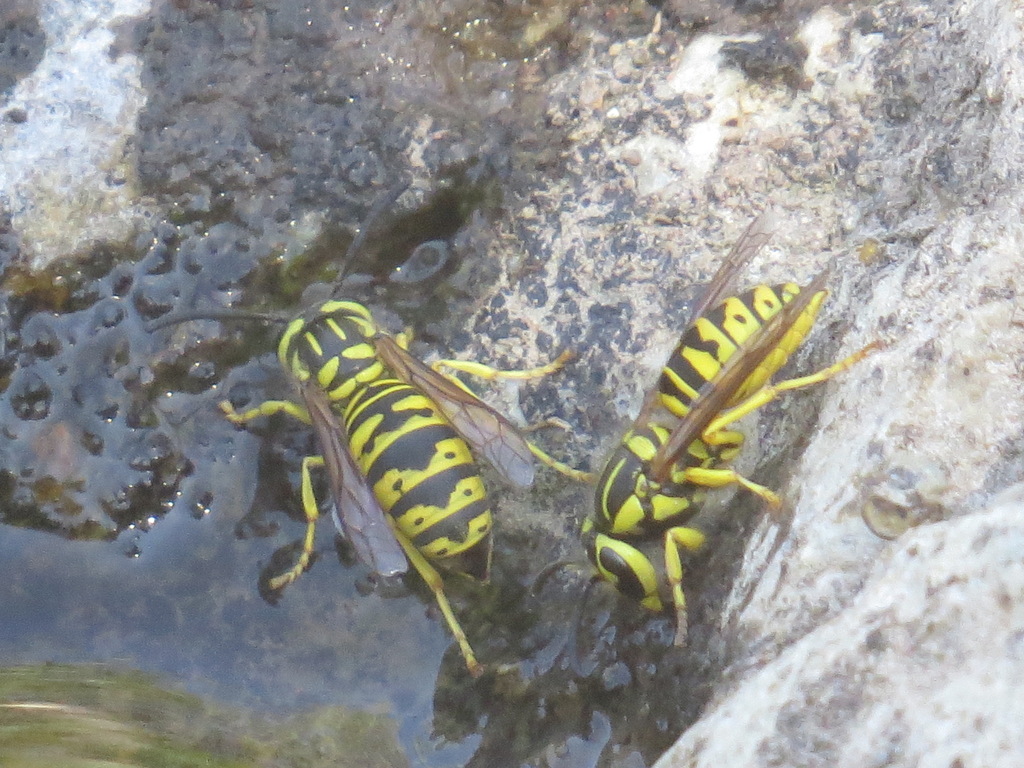
(c) Garth Harwood, some rights reserved (CC BY) · licence
Family: Vespidae · Class: Insecta · Order: Hymenoptera
Vespula sulphurea (California Yellowjacket) is a California animal in the Vespidae family.
The California yellowjacket (Vespula sulphurea) is a social wasp species in the family Vespidae, characterized by its distinctive yellow and black coloration pattern. Workers measure 9.5-11.0 mm in forewing length, while queens are larger at 15.0-16.5 mm and males approximately 12.5 mm (BugGuide). The species displays conspicuous yellow longitudinal stripes on the mesoscutum, a trait shared with the closely related southern yellowjacket (V. squamosa) but distinguishing it from other yellowjackets within its range (BugGuide). Unlike fuzzy-bodied bees, California yellowjackets have relatively hairless bodies with pointed abdomens and narrow waists typical of wasps. This species is endemic to California and the southwestern United States. The California yellowjacket occurs throughout much of California, from coastal regions to interior valleys and mountain areas. Its distribution overlaps with various native plant communities across the state's diverse elevation zones. California yellowjackets inhabit a variety of environments including chaparral, oak woodlands, mixed forests, and disturbed areas. Colonies typically nest underground in abandoned rodent burrows or other subterranean cavities, though they may occasionally use above-ground locations such as wall voids or hollow logs. The species shows adaptability to both natural and human-modified landscapes, often establishing colonies near residential areas where food sources are abundant. As social insects, California yellowjackets live in annual colonies founded by overwintering queens in spring. Queens emerge from hibernation and begin nest construction, initially caring for the first brood alone. Workers take over foraging and nest maintenance duties as the colony grows throughout summer. The species exhibits typical yellowjacket foraging behavior, with workers collecting protein sources including insects and carrion to feed developing larvae, while adults consume carbohydrates from nectar, tree sap, and sugary substances. Peak colony size occurs in late summer and early fall when reproductive castes are produced. Unlike many beneficial wasps that focus primarily on pest insects, yellowjackets are opportunistic scavengers that may become nuisances around human food sources. California yellowjackets play complex ecological roles as both predators and scavengers. Workers prey on various insects including caterpillars, flies, and other soft-bodied arthropods, providing some natural pest control benefits. However, they also scavenge carrion and food waste, sometimes bringing them into conflict with human activities. The species has been documented as a predator of monarch butterfly larvae and adults at overwintering sites, along with other invertebrate species (Xerces Society). Colony cycles are annual, with only mated queens surviving winter in protected locations such as logs, leaf litter, or other sheltered sites. This species holds no special conservation status and is considered common throughout its range. California yellowjackets are well-adapted to both natural habitats and human-modified environments, showing no evidence of population decline. Their opportunistic nature and broad habitat tolerance suggest stable populations across California as of December 2025.
Classification
Class: Insecta · Order: Hymenoptera · Family: Vespidae
Frequently asked questions
How is Vespula sulphurea classified?
Vespula sulphurea belongs to class Insecta, order Hymenoptera, family Vespidae.
What family does Vespula sulphurea belong to?
Vespula sulphurea is in the Vespidae family.
What is Vespula sulphurea?
The California yellowjacket (Vespula sulphurea) is a social wasp species in the family Vespidae, characterized by its distinctive yellow and black coloration pattern.
Is Vespula sulphurea found in California?
Yes. Vespula sulphurea is recorded in California in The California Species Project's catalogue.
Related species
Other California species in the same genus, family, or bioregion.
Data from The California Species Project — 14,000+ California species with verified data from CNPS, CDFW, USFWS, and more.